
You check your account near the bell because the closing price matters. It affects how your holdings are valued, how performance is reported, and sometimes whether an options position finishes in or out of the money. Then you see it. A sudden, sharp move in the final moments of trading that doesn't match the rest of the day.
That kind of move isn't always innocent. Sometimes it's ordinary closing activity. Sometimes it's index-related flow. And sometimes it's marking the close, a manipulation tactic designed to push the official closing price where someone wants it.
If you've been staring at an end-of-day print that looks wrong, your instinct may be better than you think. This is a real form of market abuse, and it can cause real losses. If you want a broader primer on these tactics, start with this explanation of market manipulation and how investors are harmed.
An Investor's Guide to Market Manipulation
A lot of investors first encounter marking the close in a frustratingly ordinary way. They don't discover it through a regulator's bulletin or a trading manual. They discover it because a holding in their account suddenly jumps or drops right at the end of the session, and the move makes no sense.
Maybe the stock traded in a narrow range most of the day and then lurched in the final stretch. Maybe a fund's value looked oddly inflated at month-end. Maybe an options-related position settled off a closing number that seemed disconnected from the rest of the market action. Those aren't proof by themselves, but they are the kind of facts that should make you stop and ask hard questions.
Closing prices aren't just cosmetic. They often become the official reference point that affects valuations, reporting, and settlement.
That's why this misconduct matters. A manipulated close can distort far more than a single print on a chart. It can affect what your account statement says, what a fund reports, and what a related derivatives position pays.
Investors often get dismissed when they complain about strange end-of-day activity. That's a mistake. The right question isn't whether the move looked dramatic. The right question is whether someone had a reason to force the closing price and used concentrated, aggressive trading to do it.
Why investors should take this seriously
If you're a retail investor, retiree, or family member reviewing an account after a loss, you don't need to master market microstructure before taking action. You do need to recognize that suspicious closing activity can be a sign of misconduct, not bad luck.
Watch for a pattern, not just a feeling:
- Repeated late-session moves: A one-off event may have an innocent explanation. Repeated end-of-day distortions deserve scrutiny.
- Positions tied to settlement values: If options, swaps, futures, or fund valuations depend on the close, the motive becomes more concrete.
- Broker silence or vague explanations: If your advisor can't explain why the price moved, or brushes it off without detail, keep digging.
What Exactly Is Marking the Close
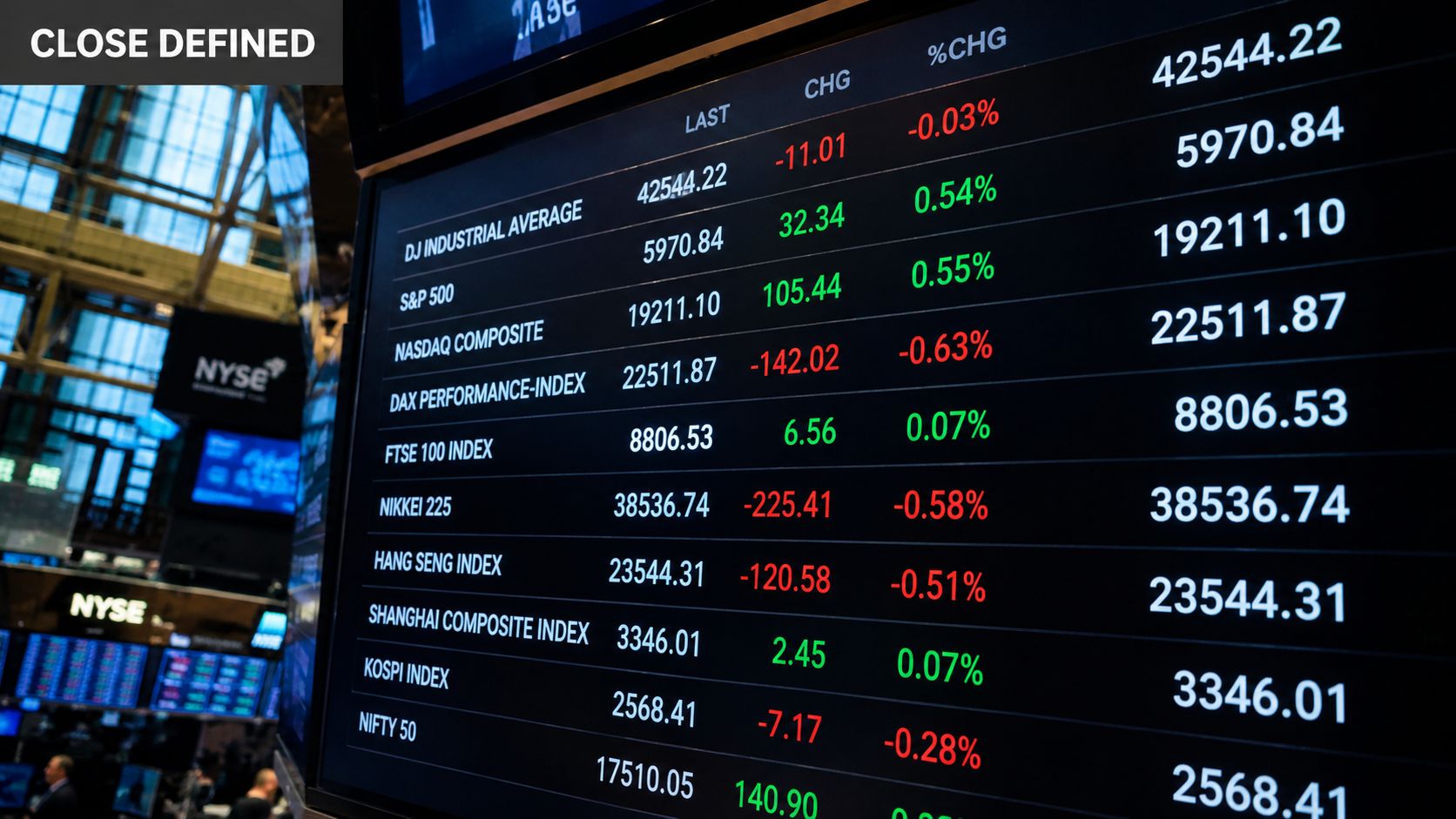
Think of a race where one runner shoves forward at the finish line, not to run the race better, but to distort the official photo. That's the basic idea behind marking the close. The trader isn't reacting to genuine supply and demand. The trader is trying to influence the official closing price.
In practical terms, marking the close is a manipulative scheme in which a person places disproportionate buy or sell orders in the final 10 to 60 seconds of the trading session to artificially push the closing price up or down, as described by Trading Technologies' discussion of the tactic and its settlement impact. That closing price matters because it often serves as a settlement benchmark for cash-settled derivatives such as options, swaps, and futures.
How the scheme works
The execution is usually simple, even if the motive is layered.
A trader who wants a higher close may buy aggressively at the offer near the end of the session. A trader who wants a lower close may sell at the bid. The point isn't efficient execution. The point is to force a particular print.
That matters because the close isn't just another trade. It's often the number that gets used for official end-of-day marks.
Practical rule: When someone pays up near the close or hits bids near the close for no legitimate economic reason, investigators will ask whether the trader was trying to buy a closing price, not a position.
Why it's illegal
The legal framework isn't new. The conduct is tied to Sections 10(b) and 9(a)(2) of the Securities Exchange Act, which address transactions designed to create actual or apparent trading activity or to raise or depress a security's price for the purpose of inducing others to buy or sell, as explained in this analysis of the legal basis for marking the close cases.
That legal structure exists for a reason. Markets depend on honest price discovery. If someone can manufacture the close, they can corrupt valuations, distort settlements, and shift losses onto investors who relied on the official number.
If you're trying to understand how this differs from other manipulative practices, compare it with wash trading and why fake activity matters. The tactics differ, but the core problem is the same. The market price stops reflecting real trading interest and starts reflecting an engineered outcome.
Real-World Examples and Red Flags
Start with a fund manager under pressure at month-end. The portfolio's reported value will turn on the closing prices of the holdings. If the manager buys aggressively in a thinly traded position near the close to lift that final mark, the account statement may look better, the fund's value may look stronger, and the reported performance may appear cleaner than it really is.
Now take a different actor. A trader holds an options position that benefits if the underlying stock closes at a particular level. The trader doesn't care much about owning more stock. The stock trade is just the lever. The primary payoff comes from moving the settlement-related closing print where the options position needs it.
Those two stories look different on the surface, but they share the same structure. The late trade isn't the economic objective. It's the tool used to influence a more important number.
Why these examples matter
Most investors focus on the visible trade in the stock. That's understandable, but incomplete. In many real disputes, the meaningful motive sits somewhere else, such as a fund valuation, a benchmark, or a derivatives payout.
That's why generic advice about “weird volume at the close” isn't enough. You need to ask who benefited and how.
For a broader checklist on recognizing investment red flags, it's useful to compare suspicious closing activity with other fraud warning signs investors often miss.
Red Flags for Marking the Close
| Red Flag | What It Looks Like | Why It's Suspicious |
|---|---|---|
| Unusual late-session burst | A sudden cluster of buying or selling in the final moments after a relatively calm session | It may suggest someone is targeting the closing print rather than trading naturally |
| Price move against the day's tone | The security drifts one way most of the day, then sharply reverses near the close | A manipulated close often looks disconnected from earlier trading |
| Aggressive order behavior | Orders appear to cross the spread decisively at the end of the day | That can indicate urgency to force a price level instead of obtain best execution |
| Thinly traded security | The move happens in a name where smaller trades can move the price more easily | Manipulators often prefer settings where price impact is easier to create |
| Related position benefits | Someone appears to hold options or another correlated position helped by the closing print | The separate economic motive is often the strongest clue |
| Quick reversal after the close or next session | The price snaps back once the official closing mark has been set | That can suggest the end-of-day move wasn't driven by genuine demand |
If suspicious late trading also appears alongside hype, pressure tactics, or broker misconduct, it's worth learning how pump-and-dump schemes violate securities law. The mechanics are different, but the investor harm often overlaps.
The Regulatory Framework Against Manipulation

Regulators don't treat marking the close as an obscure technical issue. They treat it as a core market integrity problem. That's the right approach.
FINRA's 2023 exam and risk-monitoring guidance explicitly lists marking the close among manipulative schemes firms should surveil for, including situations where trading in correlated products is used to influence the price at which a participant can establish or close an options position, according to FINRA's manipulative trading guidance. That matters because it places marking the close alongside other well-known abuses, not at the edge of enforcement priorities.
Why regulators focus on the close
The closing price has structural importance. Firms, funds, and market participants use it for end-of-day valuations, benchmark calculations, portfolio marks, and settlement-related purposes. If that price is manipulated, the damage spreads beyond the person who traded at the bell.
Investors often underestimate the seriousness of the conduct. They assume a small burst of trading near the close can't matter much. It can. The close is the number many systems rely on.
Regulators look at closing-price manipulation as a surveillance problem across stocks, ETPs, options, and related instruments, not just a narrow stock-trading issue.
What firms are expected to do
Brokerage firms and other regulated entities aren't supposed to shrug at this conduct. They're expected to monitor for it. That means looking for suspicious order timing, concentrated activity into the bell, and patterns suggesting a trader used one instrument to influence another.
If you've had problems with a broker or advisor and want context on who oversees misconduct investigations, review the basic roles of the SEC and FINRA in investor protection. Investors don't need to become regulators, but they should understand that firms have surveillance responsibilities and that those duties matter when a claim is evaluated.
How Marking the Close Causes Investor Harm
The harm from marking the close isn't theoretical. It shows up in account values, settlement outcomes, and reported performance. If a closing price is pushed down, your holdings may be marked lower than they should be. If it's pushed up, you may buy, hold, or evaluate a position based on a false signal.
The bigger issue is motive. A frequently missed nuance is that marking the close isn't just a stock-price manipulation story. In surveillance guidance, it's treated as a settlement-price issue that can be tied to derivatives exposure, especially when a trader holds overlying options or correlated positions that benefit from a closing print moving in a specific direction, as explained in Trading Technologies' surveillance discussion of settlement-price manipulation.
Direct and indirect harm
Direct harm is easy to picture. An investor's account reflects an artificial closing value. That distorted mark can affect perceived gains, losses, margin treatment, or fund pricing.
Indirect harm is often more important. The manipulator may be willing to lose money on the stock trade because the true profit sits in a separate position tied to the close. That means the visible trade can be the bait, while the true economic extraction happens elsewhere.
What recovery usually turns on
In investor claims, damages often turn on the gap between where the security or account was valued because of the suspicious close and where it likely would have been absent the manipulation. The exact calculation depends on the product, the account, the timing, and whether related instruments were involved.
That analysis is rarely simple, but the principle is. If someone engineered the official closing number and that distorted value harmed your account, the loss shouldn't be waved away as normal market movement.
- Portfolio injury: Your holdings may have been marked at an artificial end-of-day value.
- Fund impact: A manipulated close can distort NAV-related reporting or month-end statements.
- Derivatives fallout: The trader's real incentive may have been to improve options or related-instrument results at your expense.
Documenting Evidence and Pursuing a Claim

If you suspect marking the close affected your account, don't start by arguing with your broker on the phone. Start by building a record. Claims like this are won with documents, timing, and context.
Modern surveillance analysis doesn't just ask whether trading occurred near the close. It asks what the trading looked like and why it happened. As Trillium notes, investors often aren't told what evidence really matters, including order timing, aggressiveness, trade clustering, and whether the trader had a separate economic incentive, in this discussion of how surveillance distinguishes manipulation from legitimate end-of-day activity.
What to gather first
You want the paper trail before memories fade and platform data disappears.
Account statements and confirms
Pull monthly statements, trade confirmations, and any daily activity reports covering the suspicious period.Screenshots and notes
Save charts, account screenshots, and written notes of what you observed, especially if the move occurred in the final moments of trading.Communications with the firm
Preserve emails, text messages, portal messages, and advisor explanations. Weak or inconsistent explanations can matter.Related position details
If options, structured products, funds, or other instruments were tied to the close, document that link clearly.
What makes evidence stronger
Not every odd closing move is manipulation. You need facts that point away from innocent explanations such as routine end-of-day liquidity demand or benchmark-related trading.
Strong evidence often includes:
- Precise timing: Trading clustered right into the end of the session is more meaningful than a broad late-afternoon trend.
- Aggressive execution: Buying at the offer or selling at the bid may suggest price-forcing behavior.
- Concentrated pattern: A burst of trades can be more suspicious than one isolated fill.
- Economic motive: If a person or firm stood to benefit from a specific closing print, that fact can change the whole case.
What matters most: A persuasive claim usually connects suspicious end-of-day trading to a separate reason the actor wanted that exact close.
Where many investors go wrong
They focus only on the chart. The chart matters, but it isn't enough. Arbitration panels and regulators want to understand the conduct, the motive, and the account-level consequence.
They also wait too long. By the time many investors call counsel, they've lost access to records or allowed the firm's version of events to harden.
Why FINRA arbitration often becomes the path forward
For many investors with brokerage-related losses, FINRA arbitration is the practical forum for recovery. It's different from a court lawsuit. The process is usually governed by customer agreements, and disputes with brokerage firms are often routed there instead of traditional court.
That doesn't make the claim weaker. It means the presentation has to be disciplined. You need the trading facts, the account documents, the theory of manipulation, and the loss analysis lined up in a way an arbitration panel can follow.
A useful first step is simple:
- Create a timeline: Identify the dates, securities, and closing moves that concern you.
- Match the account impact: Show how those closing prices affected value, settlement, or reporting.
- Flag the motive question: Ask who benefited from that exact closing print.
- Get legal review early: A securities attorney can assess whether the facts support a viable manipulation claim or a supervision claim against the firm.
How Kons Law Can Help Recover Your Losses
Marking the close cases are difficult for one reason above all. The misconduct often hides inside ordinary-looking market activity. A broker, advisor, or firm may say the trading was routine, liquidity-driven, or just part of the close. That defense only works when nobody digs into the timing, motive, and account impact.
An experienced securities attorney does that digging. The work isn't just about identifying a suspicious chart. It's about connecting trading behavior to a legal theory, showing how the conduct harmed the investor, and presenting the claim in a forum that can award recovery.
This kind of case also requires judgment. Sometimes the strongest claim targets the manipulator directly. Sometimes the better claim is against the brokerage firm for failing to supervise, failing to detect obvious warning signs, or exposing the investor to a manipulated transaction or distorted valuation.
If you would like a free consultation to discuss the investment loss recovery process in more detail, call Kons Law Firm at (860) 920-5181 for a FREE, NO OBLIGATION consultation, as stated on the firm's investment loss recovery contact page.
If you suspect suspicious end-of-day trading distorted your account value, options settlement, or investment results, contact Kons Law to discuss your potential recovery options. An experienced securities attorney can review the trading pattern, evaluate whether the facts support a FINRA arbitration or court claim, and help you take the next step.
