You notice it in the tape before you can explain it. A thinly traded stock suddenly shows heavy activity, yet the price barely moves. A crypto token flashes constant volume, but the order book looks hollow when you try to trade. Your account statement shows you bought into what looked like momentum, and now you're left wondering whether the market interest was ever real.
That suspicion is often justified. Some trading activity is designed to be seen, not to transfer real risk. The point isn't investment. The point is to manufacture the appearance of demand, liquidity, or excitement so other investors step in.
That matters whether you're looking at equities, crypto, or event-driven markets. In newer markets especially, investors spend a lot of time trying to separate authentic participation from coordinated behavior. If you're interested in how traders analyze suspicious activity in prediction markets, Polycool's piece on identifying Polymarket informed traders offers a useful contrast between legitimate information-driven trading and conduct that only imitates market interest.
When investors ask me what wash trading is, they're usually asking a second question too. If the volume was fake, what does that mean for my losses, and can anything be done about it? That's where understanding the mechanics of manipulation starts to matter. If the conduct around a security or account points to fraud, supervision failures, or fictitious activity, it may fit into the broader category of stock fraud, and that can shape both your evidence and your recovery options.
Introduction Understanding Suspicious Trading Activity
Suspicious trading usually doesn't announce itself clearly. It shows up as patterns that don't make economic sense. Investors see repeated prints, unusual bursts of volume, or an asset that looks active on screen but becomes difficult to buy or sell at a fair price.
That disconnect is the first practical clue. Real markets can be volatile, emotional, and noisy, but they still reflect genuine buyers and sellers taking genuine risk. Manipulated markets often look busy while saying very little about actual supply and demand.
What investors usually notice first
A retail investor rarely starts with legal terminology. They start with an experience:
- Volume without conviction: The asset trades constantly, but price action remains strangely pinned or artificial.
- Liquidity that disappears: Quotes appear available until you try to execute.
- A sudden crowd effect: Online commentary, alerts, or platform rankings begin treating the asset as newly active for no clear business reason.
Suspicious volume is dangerous because investors often treat it as proof of market validation when it may only be proof that someone wants attention.
Why this matters beyond curiosity
The practical risk isn't just that a chart looks odd. It's that fabricated activity can influence your decision to enter, hold, or average down. Investors rely on volume as a signal. Algorithms do too. Once false activity gets accepted as real interest, losses can spread quickly to people who had nothing to do with the scheme.
What Is Wash Trading and Its Manipulative Purpose
Wash trading is a form of market manipulation in which the same trader, or colluding parties, buy and sell the same asset to create a false impression of trading activity, liquidity, or demand. The key feature is that beneficial ownership doesn't meaningfully change even though reported volume rises, so the trade creates appearance without genuine economic risk change, as explained by Investopedia's definition of wash trading.
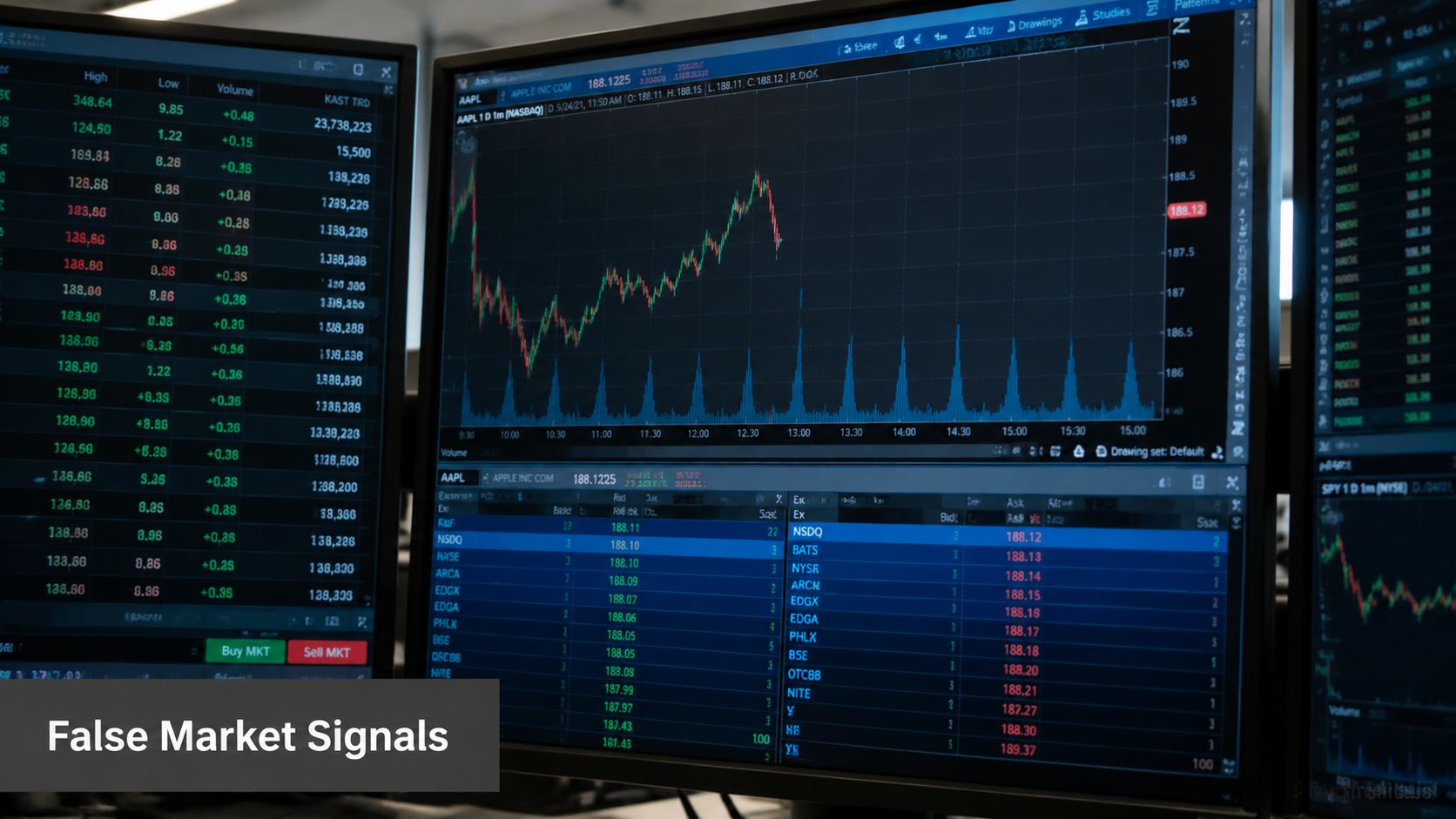
If you want the short answer to what is wash trading, that's it. But the legal definition only gets you halfway. Investors need to understand why someone does it.
The easiest way to think about it
Think of an auction where the owner secretly arranges for a friend to keep bidding. Other bidders see action and assume the item is attracting genuine interest. The fake bids don't reflect true demand. They create social proof.
Wash trading works the same way in financial markets. The manipulator wants the market to believe something is happening. Maybe the asset looks liquid. Maybe the price looks supported. Maybe screeners and ranking tools start surfacing the name because volume appears strong.
What the manipulator is trying to accomplish
The motive varies, but the purpose is usually one of these:
- Create fake liquidity: Investors are more likely to buy something that appears actively traded.
- Support a price narrative: Repeated activity can make an asset seem resilient or in demand.
- Attract outside buyers: Once real investors enter, the manipulator may use that demand to exit.
- Influence market metrics: Some platforms, funds, and traders screen assets by volume and activity.
That is why wash trading belongs within the larger category of market manipulation. The deception isn't accidental. The reported activity is part of the mechanism.
What works for manipulators and what doesn't
Manipulators benefit when investors rely on surface-level signals. Raw volume, leaderboard rankings, social chatter, and apparent momentum can all be exploited. What doesn't work, at least not for long, is scrutiny of who controlled the accounts, whether positions changed meaningfully, and whether the trading pattern had any legitimate economic rationale.
Practical rule: If the volume signal is the story, rather than a byproduct of a real investment thesis, slow down.
A legitimate trader can buy and later sell the same asset. That's normal. A wash trader structures activity so the trade itself creates a false market impression. The distinction matters because ordinary turnover involves real market risk. Wash trading imitates turnover while avoiding the substance of a true change in ownership.
Illegal Manipulation vs The IRS Wash Sale Rule
Investors often confuse wash trading with the wash sale rule. They sound similar, but they address different problems.
Wash trading is a market manipulation issue. The wash sale rule is a tax rule. Mixing them up can cause investors to misunderstand both their risk and their remedies.
The legal difference
The SEC definition focuses on whether a securities transaction involves no change in beneficial ownership. In other words, the activity is artificial rather than a real transfer of risk or position, as reflected in the discussion of the SEC definition in this academic source.
The IRS wash sale rule deals with something else entirely. It prevents taxpayers from deducting a loss if they sell a security and buy a substantially identical security within the restricted window described in tax law. That isn't the same as creating fictitious market activity.
Side by side comparison
| Issue | Wash trading | IRS wash sale rule |
|---|---|---|
| Core concern | Market manipulation | Tax loss deduction limits |
| Main question | Was there a real change in beneficial ownership? | Did the investor repurchase a substantially identical security too soon? |
| Who cares most | Regulators, exchanges, compliance, harmed investors | The IRS and taxpayers |
| Result | Potential fraud and enforcement exposure | Loss deduction may be disallowed |
Why the distinction matters in practice
Investors sometimes tell me, "I thought wash trading was just a tax issue." It isn't. If your losses relate to manipulated market activity, you're dealing with a very different problem than a denied tax deduction. The relevant legal lens is closer to stock manipulation definitions than tax compliance.
The tax rule can be frustrating, but it doesn't mean someone tricked you into buying at an artificial price. Illegal wash trading can.
How Wash Trading Schemes Appear in Markets
Wash trading rarely looks like a cartoon fraud. In real markets, it shows up as repeated, coordinated behavior that creates the illusion of healthy activity. Once you know the common patterns, the conduct becomes easier to recognize.
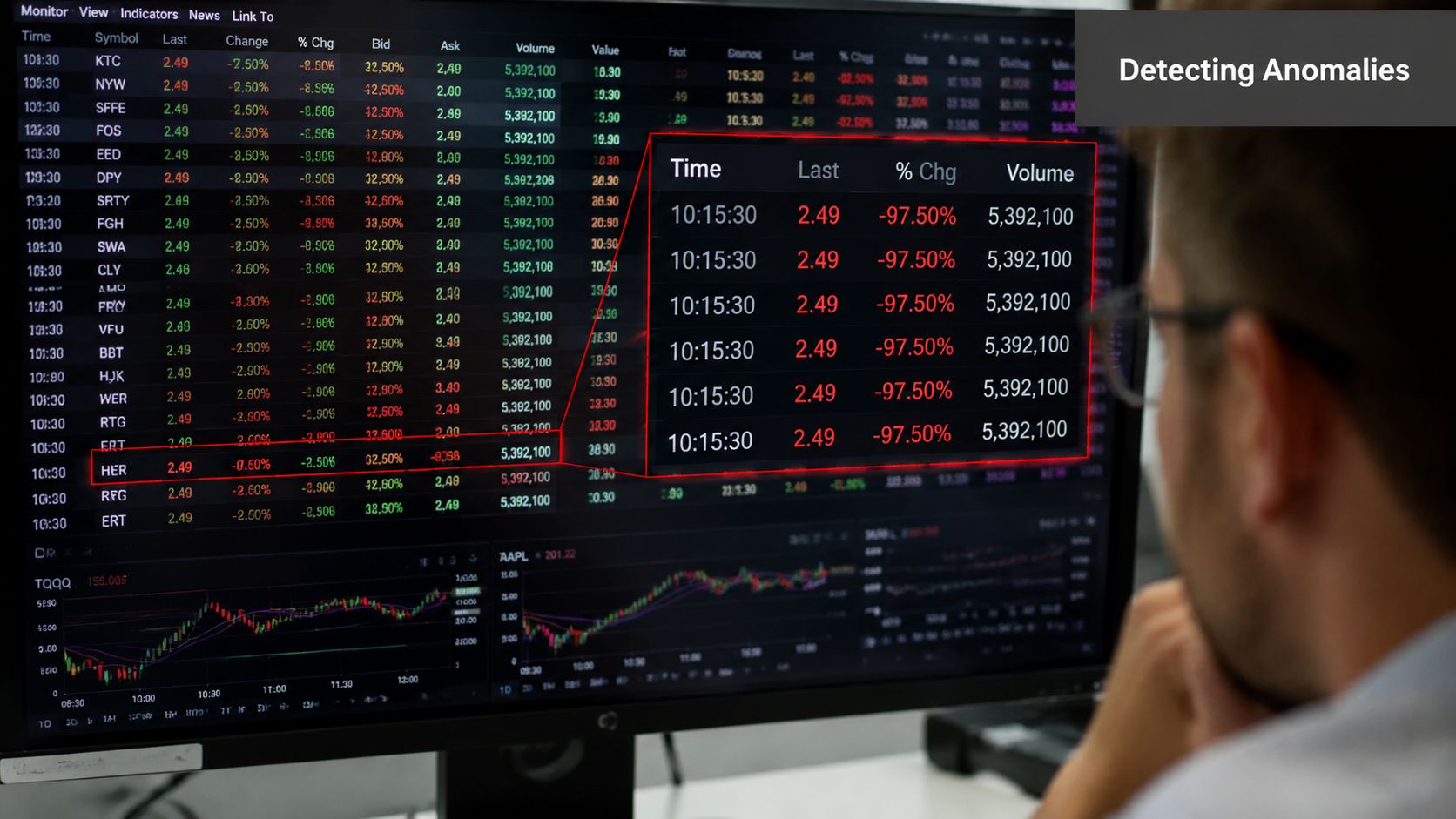
A major warning comes from crypto market research. A Yale-affiliated study of 29 cryptocurrency exchanges found wash trading volume averaged 77.5% of total trading volume across the exchanges studied, with a median of 79.1%, and reported that on average wash trades accounted for over 70% of total volume on each unregulated exchange. Another study reported suspicious volume exceeding 90% for most investigated exchanges, according to the Yale-affiliated crypto wash trading study.
What it can look like in practice
In a traditional securities setting, the pattern may involve accounts under common control trading with each other. The goal is to make a stock appear more active than it is. That false activity can influence retail buying, automated strategies, and broker communications about momentum or liquidity.
In crypto and other lightly supervised environments, the mechanics can be even simpler. A trader may control multiple wallets or accounts and move the same asset back and forth, generating prints that look like public demand. The blockchain record may show transfers. The market may show volume. But the economic reality hasn't changed much at all.
Typical footprints investors can spot
You won't usually have account-level surveillance data, but you can still notice patterns that deserve caution:
- Repetitive trading cadence: The same asset prints over and over in a rhythm that doesn't match ordinary interest.
- Heavy volume with weak price discovery: Reported activity rises sharply while price behavior remains oddly stagnant or forced.
- Illiquid asset, active tape: An obscure token, small cap, or thinly traded product suddenly looks popular without a corresponding business catalyst.
- Short-lived market depth: The market appears deep until genuine outside orders arrive.
A market can report a lot of activity and still offer very little real liquidity.
Why investors get trapped
Many investors don't buy because they studied beneficial ownership. They buy because market signals suggest validation. Volume says others are interested. A busy order book suggests easy entry and exit. A fast-moving chart implies urgency.
That's why wash trading is effective. It uses ordinary decision shortcuts against investors. It doesn't need every participant to be fooled. It only needs enough real buyers to treat the fabricated activity as a reason to join.
How SEC and FINRA Rules Prohibit Wash Trading
Wash trading isn't a gray-area tactic. U.S. securities rules prohibit fictitious and manipulative trading activity because markets depend on truthful signals. If the reported transaction doesn't reflect a real shift in ownership or exposure, regulators may treat it as a serious abuse.
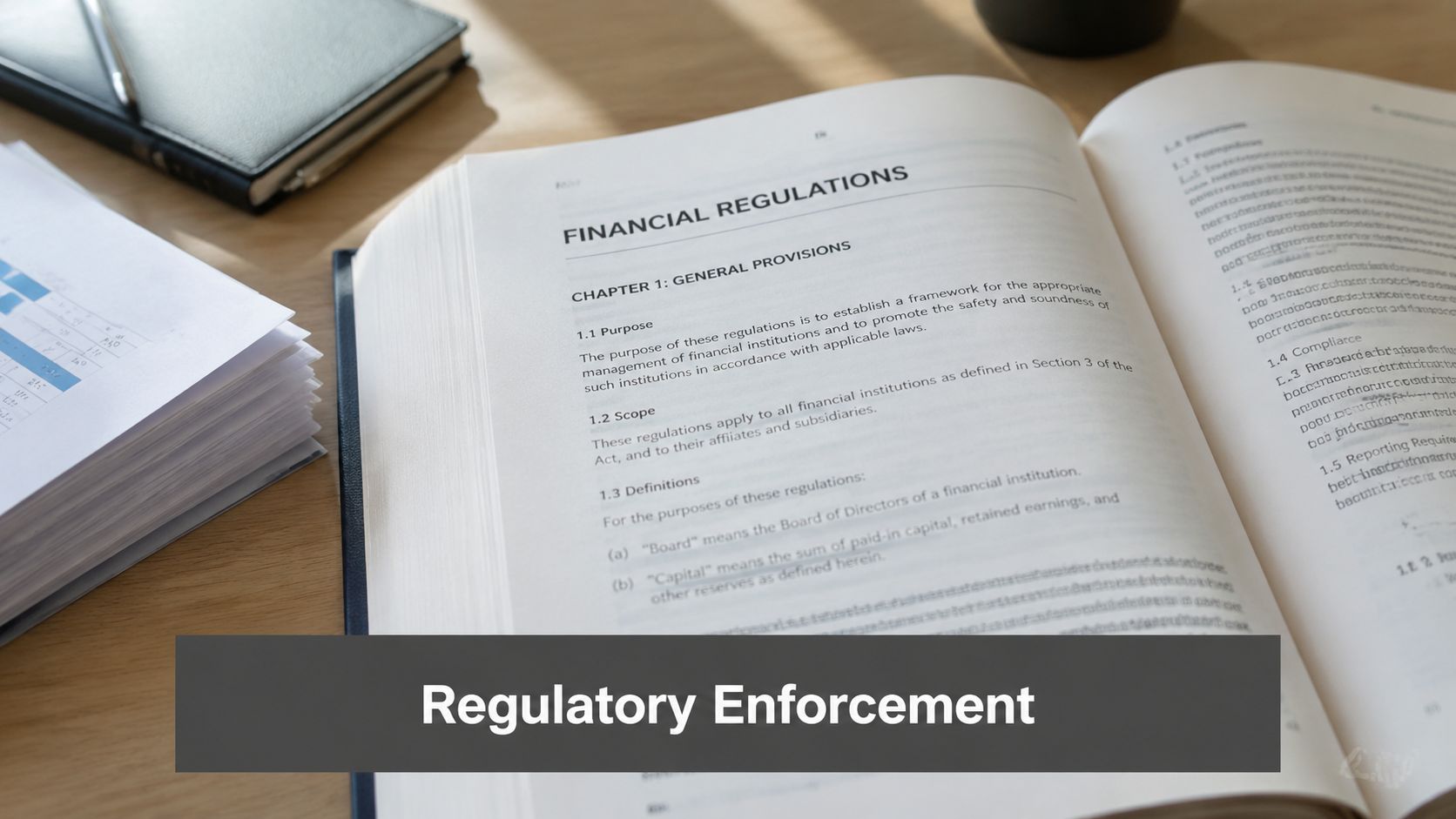
For investors, the practical point isn't memorizing every rule citation. It's understanding that brokerage firms and market participants are expected to prevent, detect, and respond to manipulative activity. When they don't, that failure can matter in a customer case.
Detection is more technical than most investors realize
Modern compliance systems don't just look for obvious self-trades. They flag patterns such as near-simultaneous opposite-side fills within the same millisecond and same trader ID, showing how surveillance relies on advanced pattern analysis, especially in high-frequency and crypto settings, as described by Trading Technologies' wash trading surveillance overview.
That matters for two reasons. First, firms can't credibly act as though wash trading is impossible to spot. Second, manipulation cases often turn on supervision, exception handling, and whether alerts were ignored, escalated, or misunderstood.
Where FINRA enters the picture
Broker-dealers operate under supervisory obligations. They also fall under FINRA's oversight. If a firm allows fictitious activity to move through its systems, publishes misleading communications, or fails to supervise the conduct of registered representatives, those failures may become central issues in a customer dispute.
For a plain-English overview of the regulatory bodies involved, investors can review SEC and FINRA roles in securities oversight.
What works and what fails in real supervision
A firm is in a stronger position when it can show consistent surveillance, documented escalation, and actual follow-through when suspicious patterns appear. What fails is box-checking. Written procedures don't help much if no one investigates the alerts that matter.
Firms don't need perfect surveillance. They do need competent supervision that treats artificial trading activity as a real risk.
For harmed investors, this is often the bridge to recovery. The claim may not depend on proving you personally saw every manipulative trade in real time. It may depend on showing the firm had duties, the warning signs existed, and the firm failed to act reasonably.
Protecting Your Investments and Pursuing Recovery
If you suspect wash trading affected an investment you bought through a broker or adviser, the next step isn't guessing. It's documentation. Investors lose their advantage when they rely on memory instead of records.

Start with what you can control. Save account statements, confirmations, emails, text messages, notes from calls, offering materials, screenshots of platform activity, and any recommendations you received. If the investment was described as active, liquid, institutionally supported, or heavily traded, those representations matter.
Red flags that justify a closer look
No single sign proves wash trading, but these patterns warrant attention:
- Strange volume behavior: Reported activity looks substantial, yet the asset remains difficult to exit at a fair price.
- Recommendation pressure: A broker or adviser pushes an investment by emphasizing buzz, momentum, or visible market activity rather than fundamentals.
- Thin product, thick story: The asset is obscure or complex, but it's presented as though broad market demand already exists.
- Post-purchase collapse: Once outside interest fades, the market support appears to vanish.
How recovery cases are built
In practice, investor recovery often focuses less on the abstract label and more on the misconduct around it. Questions that matter include:
- Who recommended or facilitated the investment?
- What did they know, or what should they have known?
- Were there supervision failures at the brokerage firm?
- Did false liquidity or fictitious activity influence the price or the sales pitch?
Those issues often fit naturally into FINRA arbitration, especially when the investor's relationship was with a brokerage firm or registered representative. Arbitration can allow investors to pursue claims based on unsuitable recommendations, misrepresentations, supervisory failures, unauthorized trading, or broader manipulative conduct tied to account losses.
Practical steps to take now
| Action | Why it helps |
|---|---|
| Preserve records | Your statements and communications often become the backbone of the claim. |
| Write a timeline | A dated sequence of recommendations, purchases, and losses helps clarify the story. |
| Avoid rewriting history | Don't alter messages or summarize from memory if the original documents exist. |
| Get the trading reviewed | An experienced securities attorney can assess whether the facts support a FINRA arbitration claim or another recovery path. |
If part of your concern involves digital assets or exchange conduct, it also helps to understand the larger compliance environment. Polytreasury's overview of crypto trading regulatory frameworks is a useful starting point for seeing how surveillance, AML, and KYC expectations intersect with manipulation risk.
When investors move quickly to preserve evidence, lawyers can evaluate not just whether the market looked suspicious, but whether a recoverable claim exists against the firm that handled the account.
Recovery doesn't happen because the market felt unfair. It happens when the facts are organized, the theory of liability is clear, and the claim is filed against the right party.
If you'd like to discuss the investment loss recovery process in more detail, contact Kons Law for a free, no obligation consultation. You can also call (860) 920-5181 to speak with an experienced securities attorney about potential recovery through FINRA arbitration or other legal action.
