A lot of investors land here after a familiar conversation. An advisor says there's a place to keep cash that can earn more than a bank product, won't swing much, and is “basically like cash.” The account statement later tells a different story. The value moves. The fund declines when you expected stability. Then the explanation changes.
That gap matters. An Ultrashort Bond Fund can be a legitimate fixed-income tool, but it is not the same thing as cash in a bank, and it is not the same thing as a money market fund. If an advisor presented it that way, especially to a retiree, a conservative investor, or someone who needed ready access to principal, the problem may be bigger than market disappointment. It may be a suitability or misrepresentation issue.
The Ultrashort Bond Fund Pitch and Its Hidden Dangers
One of the most common sales pitches sounds harmless. Your advisor says you have “too much idle cash” and suggests an Ultrashort Bond Fund as a better-yielding alternative. That recommendation may not be wrong by itself. What matters is what the advisor said next, what risks were disclosed, and whether the fund fit your needs.

Why investors get misled
These funds sit in an uncomfortable middle ground. They're often marketed as conservative, and many are conservative compared with longer-term bond funds. But “conservative” does not mean “can't lose money.”
An investor who needs cash for living expenses, home repairs, taxes, or a near-term purchase may hear only the upside. Better income. Limited volatility. Professional management. What often gets minimized is the legal and practical point that the net asset value can fluctuate, and the investor can lose principal.
Practical rule: If the recommendation was framed as a place for emergency cash, bill-paying cash, or a guaranteed parking spot, you should review exactly how the advisor described the product.
The legal issue behind the sales language
The product itself isn't the whole story. The legal issue is whether the recommendation was fair, accurate, and suitable for your stated objectives and risk tolerance. If you told your advisor you wanted principal stability and immediate liquidity, the difference between “low risk” and “cash equivalent” becomes very important.
That is where many disputes begin. Investors weren't always harmed because the market did something unusual. Many were harmed because the product was sold in a way that blurred real risks.
What Exactly Is an Ultrashort Bond Fund
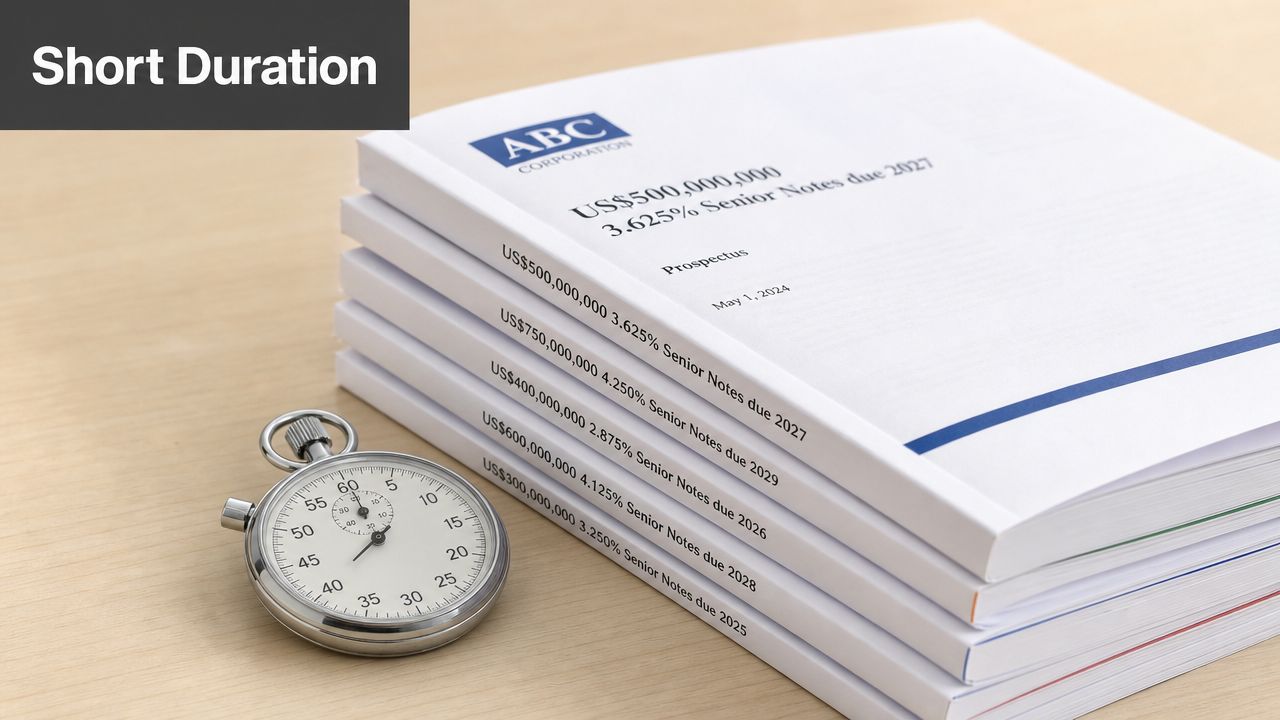
An Ultrashort Bond Fund is a fixed-income fund built around very short maturities. The SEC's investor guidance says these funds generally invest in fixed-income securities with extremely short maturities, and Investor.gov explains that they typically stay under one year of duration. That short duration is the core design feature.
What duration actually means
Duration is a measurement of how sensitive a bond portfolio is to interest-rate changes. A shorter duration usually means less price movement when rates change. That is why these funds often get described as a step out from cash rather than a traditional bond allocation.
A useful way to think about it is a ladder. A long-bond fund climbs high on the ladder and gets more yield potential, but it also sways more when rates move. An ultrashort fund stays on the lower rungs. It usually moves less, but it still moves.
What the fund may hold
Holdings can include government securities, corporate debt, asset-backed securities, and other income-producing instruments with short maturities. The manager may also seek extra income by making small extensions in maturity or accepting modestly lower credit quality.
That last point matters. The lower rate sensitivity in an ultrashort bond fund does not erase other risks. It instead changes which risks dominate.
Here are the practical characteristics investors should understand:
- Short maturity profile: The portfolio is generally structured to keep duration under one year.
- Lower rate sensitivity: Price swings from rate moves are usually more limited than in intermediate-term bond funds.
- Credit decisions still matter: Managers may add risk through issuer selection, sector exposure, or structured products.
- No bank guarantee: The fund is an investment product, not a deposit account.
These funds are designed to be cautious, not risk-free.
What they are not
They are not FDIC-insured deposits. They are not guaranteed principal products. They are not automatically suitable for emergency reserves or daily liquidity needs.
That distinction often gets lost in client conversations. In practice, the difference between “stable” and “guaranteed” is where many investors later discover they were sold something they didn't fully understand.
How Ultrashort Funds Differ From Other Cash-Like Options
Most confusion disappears when you compare an ultrashort bond fund to the products investors usually think they're buying. The right comparison isn't just “bond fund versus bond fund.” It's where the product sits between a money market fund and a short-term bond fund.
Where it fits on the spectrum
A money market fund is built for stability first. An ultrashort bond fund accepts somewhat more movement in pursuit of more income. A short-term bond fund generally moves further away from cash behavior and takes more duration exposure.
That's why product labels can mislead. “Short,” “ultra-short,” and “cash management” can sound interchangeable when they are not.
| Feature | Money Market Fund | Ultrashort Bond Fund | Short-Term Bond Fund |
|---|---|---|---|
| Primary objective | Principal stability and liquidity | Low volatility with more income potential | Income with moderate short-duration bond exposure |
| NAV behavior | Designed for a stable share price | NAV can fluctuate | NAV can fluctuate more noticeably |
| Interest-rate sensitivity | Very limited | Low, but present | Higher than ultrashort funds |
| Credit risk profile | Generally tighter constraints | Can take more credit risk | Often broader credit and rate exposure |
| Best fit | Immediate cash needs | Near-term funds that don't need daily certainty | Investors taking a clearer step into bond risk |
Why the middle category causes problems
Industry guidance notes that these funds can outperform money market funds over longer horizons by using slightly longer-dated and lower-quality investment-grade bonds, but that same hybrid structure creates path-dependent risk when markets reprice credit or liquidity, as explained by the Association of Corporate Treasurers on ultra-short duration funds. That is a technical way of saying the strategy can work fine until the market suddenly cares about the exact risks the fund took to earn more.
If you're deciding where true emergency reserves belong, a simpler framework often helps. Resources on emergency savings strategies for Canadians emphasize matching the account type to the purpose of the money. The same principle applies here. Money needed tomorrow belongs in a different bucket from money that can tolerate investment fluctuation.
A practical comparison investors can use
Ask three questions:
- When do I need this money: Immediate needs call for stability first.
- How much fluctuation can I accept: Even small NAV declines matter if the money is meant to cover bills.
- What am I being paid to risk: If the advisor emphasized yield but rushed past risk, that's a warning sign.
For investors also comparing deposit products, the distinction between investment risk and bank protection becomes sharper when you review brokered CD versus bank CD differences. That comparison often helps people realize they were evaluating products with very different protections.
Understanding the Real Yield and Risk Profile
The extra yield in an ultrashort bond fund doesn't appear by magic. A manager gets it by taking some combination of interest-rate risk, credit risk, and liquidity risk. The amounts may be modest compared with other bond strategies, but they are real.
Where the income comes from
Morningstar notes that ultrashort bond funds are not FDIC-insured and should not be treated as a cash substitute because NAV can fluctuate, and it reports category returns of 4.98% over the past 12 months and 5.27% annualized over three years in its discussion of the category's recent performance in Morningstar's ultrashort bond fund review. Those returns help explain why advisors like to present these funds as an appealing middle option.
But higher income usually comes from one of a few choices. The manager may buy securities with a bit more credit risk. The manager may extend maturity modestly. The manager may use sectors that are more complex or less liquid than a plain Treasury-heavy portfolio.
Why that matters in real accounts
Investors seeking a “cash alternative” are often trying to avoid exactly those trade-offs. They care less about squeezing out incremental yield and more about preserving principal and access.
That creates a common mismatch. The advisor talks about category income. The client thinks about safety. Those are not the same conversation.
Higher yield in a conservative fund often means someone accepted a risk that wasn't fully described to the client.
The risks that deserve plain-English disclosure
- Interest-rate risk: Even with short duration, bond prices can fall when rates move.
- Credit risk: An issuer's financial condition can weaken, or spreads can widen even without default.
- Liquidity risk: In stressed markets, short-duration holdings can still become harder to trade at favorable prices.
Some managers handle this conservatively. Others stretch. Investors usually don't see that difference from the fund name alone.
If your advisor recommended a fund because it paid more than a money market option, ask what risks were added to get there. That same basic question comes up often in other fixed-income disputes involving high-yield and junk bond recommendations, where the pursuit of income can overshadow a client's actual risk profile.
Warning Signs of Unsuitable Recommendations and Misconduct
Product education turns into investor protection. An ultrashort bond fund can be suitable for some investors. It can also be sold badly, documented badly, and explained badly. When that happens, the issue isn't just performance. It's whether the advisor met the required standard of care.

Statements that should make you stop
The SEC says these funds can vary significantly in risk and reward, and some can lose money despite a preservation-of-capital objective. Morningstar adds that they are generally better suited to a one- to two-year horizon, not daily cash needs, as described in the SEC's investor bulletin on ultra-short bond funds. That means certain sales phrases should immediately concern you.
Watch for these representations:
- “It's basically cash.” That compresses a real investment distinction into a misleading shortcut.
- “You can't really lose money here.” That is inconsistent with how these funds work.
- “This is just for parking cash safely.” Safety for near-term cash depends on the investor's time horizon and need for principal certainty.
- “Don't worry about the fine print.” The fine print often contains the very risks the client needed to hear.
Conduct that may signal a claim
Misconduct is not limited to obvious fraud. It often appears in ordinary account relationships through poor recommendations, inadequate disclosure, or careless documentation.
Examples include:
- Ignoring your stated risk tolerance: If you said you were conservative, retired, or needed principal for near-term use, the advisor had to take that seriously.
- Using the fund as a cash bucket: Putting emergency reserves, required living-expense funds, or other immediate-liquidity assets into a fluctuating bond product can be inappropriate.
- Overconcentration: Even a conservative product can become unsuitable if too much of the account is committed to it.
- Failing to explain what drives yield: If the advisor sold the income story and skipped the source of risk, that matters.
- Recasting the recommendation after losses: “I never said it was cash” is a common response when account statements turn negative.
Suitability problems often reveal themselves in the client notes, new account forms, and email trail.
Why legal standards matter
Brokerage firms and advisors have duties when they recommend investments. Those duties include understanding the product, understanding the client, and having a reasonable basis for the recommendation. If you want a plain-language overview of that framework, FINRA-related obligations are discussed in this guide to FINRA suitability rules.
A case does not require proof that every loss was avoidable. Often the key question is narrower. Was this the wrong product, sold for the wrong purpose, to the wrong investor, with the wrong explanation?
Taking Action After Suffering Investment Losses
Investors often wait too long because they assume a loss means they picked the wrong fund. Sometimes that's true. Sometimes the larger issue is that the fund was recommended in a way that never matched the investor's instructions, objectives, or tolerance for risk.
Start with the paper trail
The market for ultra-short bond funds was already substantial, with $322 billion in assets as of December 2020, and some individual funds later reached over $9 billion in assets under management, according to the cash-investor guide published through the Financial Professionals and ICI ecosystem. Size doesn't prevent unsuitable recommendations. Large, mainstream products can still be sold in misleading ways.
If you believe you were misled, gather documents before memories fade:
- Account statements: These show when the position was purchased, how large it became, and what losses occurred.
- New account forms and risk profiles: These often contain the objectives and risk tolerance the firm claims you had.
- Emails and text messages: These can preserve the actual sales language used by the advisor.
- Notes from meetings or calls: Even informal notes can help reconstruct what you were told.
Understand the recovery path
Many investor disputes against brokerage firms are resolved through FINRA arbitration rather than a courtroom trial. That process is formal, evidence-driven, and deadline-sensitive. It is also where unsuitable recommendation and misrepresentation claims are often evaluated.
If you want to understand the mechanics, this overview of how to file for arbitration gives a useful starting point.
What an attorney will evaluate
A securities attorney usually looks at a focused set of issues:
- What did the advisor recommend
- What did the client need
- What was disclosed
- How did the account perform
- What does the documentation show
Don't assume a modest-looking fund cannot support a serious claim. Many cases turn on purpose and presentation, not on whether the product name sounded aggressive.
A prompt legal review can help preserve records, identify viable claims, and clarify whether the losses may be recoverable.
Your Path to Clarity and Financial Recovery
An ultrashort bond fund is not automatically a bad investment. For some investors, in the right allocation and with the right time horizon, it can serve a legitimate role. The trouble starts when an advisor collapses important distinctions and sells the fund as if it were interchangeable with cash, a savings product, or a guaranteed reserve.
That matters most for retirees, older investors, and anyone who made it clear they needed principal stability. If the recommendation was packaged as “safe cash management” but the product carried fluctuating NAV, credit exposure, or liquidity risk that wasn't properly explained, your losses may deserve closer review.
You don't need to decide alone whether what happened was ordinary market risk or advisor misconduct. That evaluation should come from someone who understands securities rules, brokerage account documentation, and how these cases are proved.
If your account lost money in an ultrashort bond fund that was presented as a cash alternative, the next step is simple. Get the statements, gather the communications, and have the recommendation reviewed.
If you'd like a free consultation to discuss the investment loss recovery process in more detail, contact Kons Law at (860) 920-5181 for a FREE, NO OBLIGATION consultation.
