
You may be staring at account statements from years ago and wondering whether you waited too long. That fear is common, especially when the losses didn't make sense at the time, your broker kept reassuring you, or the underlying problem only became clear after the account had already unraveled.
For many investors, the first hard question isn't whether misconduct occurred. It's whether the claim can still be brought at all. In FINRA arbitration, that question often turns on FINRA Rule 12206, a rule that acts as a gatekeeper to the forum.
Is It Too Late to Recover Your Investment Losses

Investors usually don't discover timing problems on day one. They discover them after a second advisor reviews the account, after a tax surprise, after an illiquid product stops making payments, or after they finally compare what they were promised with what they invested in.
By then, several years may have passed. That is where FINRA Rule 12206 becomes critical. If the rule bars the claim, the arbitration panel may never reach the underlying misconduct. If the claim is still eligible, the case can move forward and the investor can try to recover losses.
Why this rule matters immediately
FINRA arbitration isn't a niche process used once in a while. It is an active dispute forum. From January 1, 2021 through December 31, 2025, parties filed 14,023 new arbitration cases and 16,343 cases closed, according to FINRA's Rule 12206 materials. That volume matters because eligibility disputes aren't theoretical. They come up in a forum handling a large number of investor claims.
Practical rule: Don't assume an old loss is automatically dead, and don't assume it's safe either. The dates have to be analyzed carefully.
The mistake investors make
A common approach is to count backward from when the loss was first noticed. That isn't always the right timeline. Rule 12206 focuses on the "occurrence or event giving rise to the claim." That phrase sounds simple, but in practice it can trigger major fights over when the six-year period began.
A brokerage firm often pushes for the earliest possible date. The investor usually needs a more fact-specific analysis. In some cases, the purchase date may matter. In others, the operative trigger may involve a later recommendation, a rollover, a concealment issue, or a continuing course of misconduct.
Here is the practical takeaway:
- Old losses can still be viable if the legally relevant event happened later than the original investment date.
- Newer discoveries can still be barred if the panel finds that the triggering event occurred too far back.
- Delay is dangerous because every month can matter when the case is close to the line.
If you're asking whether it's too late, you're asking the right question. But the answer depends less on when you became upset and more on what event started the Rule 12206 clock.
Understanding the FINRA Six Year Eligibility Rule
You may have a strong case on the facts and still lose access to FINRA arbitration if the filing comes too late under Rule 12206. That rule is a forum deadline. It asks whether FINRA will hear the dispute at all, based on when the underlying event happened.
This distinction is a common point of confusion.
Eligibility is not the same as a statute of limitations
Rule 12206 deals with eligibility for FINRA arbitration. A statute of limitations is a separate deadline that usually governs claims in court under state or federal law. Those are different clocks, and they do not always expire on the same date.
That creates a practical problem for investors. A claim can be timely enough to file in one forum and still face a deadline fight in another. I often see investors focus on when they discovered the loss, but Rule 12206 usually turns on an earlier or different event tied to the misconduct itself.
If you want a broader picture of how the forum works, FINRA's dispute process is outlined in this overview of FINRA dispute resolution.
What the rule does and what it does not do
Rule 12206 is a gatekeeping rule inside FINRA arbitration. It does not create a legal claim. It does not extend other filing deadlines. It also does not answer the separate question of whether a court claim is timely.
The practical question is narrower. Is the claim still eligible to be heard in FINRA based on the date of the occurrence or event giving rise to it?
That is why timeline analysis matters so much. In close cases, a brokerage firm will frame the triggering event as early as possible, often the purchase date or account opening date. The investor's side needs a more precise chronology that ties each claim to the event that caused it.
The practical reading investors need
The six-year rule is easiest to understand as a claim-by-claim timeline, not a single date circled on a calendar. For one claim, the operative event may be the recommendation to buy. For another, it may be a later rollover, a switch, an unauthorized trade, or a specific misrepresentation that induced the investor to stay in the investment.
That matters because firms often argue for one blunt trigger date across the whole case. Panels do not have to accept that if the facts support a different analysis.
A useful Rule 12206 review usually starts with the documents. Account forms, confirmations, emails, notes, product materials, and account statements often show when the recommendation was made, when money moved, and whether later conduct created a new basis for the claim. General allegations that the misconduct was "ongoing" usually are not enough. Specific events are what move the analysis.
What Occurrence or Event Starts the Six Year Clock
Winning or losing Rule 12206 cases frequently hinges on the accrual trigger, the core dispute defining the exact event that starts the six-year clock. Brokerage firms often argue that the clock starts at purchase, while other authorities emphasize case-by-case analysis and equitable tolling in concealment scenarios, as discussed in published commentary on FINRA's review of the eligibility rule.pdf).
Why the trigger date is disputed
A broker-dealer wants a clean, early date. The purchase date is attractive because it's easy to identify and often places the claim outside the six-year window.
But many investor cases aren't that simple. Misconduct can unfold over time. Recommendations can be repeated. Risks can be concealed. Accounts can be rolled from one unsuitable investment into another. In those situations, the right trigger may not be the first transaction date.
Potential Trigger Events for FINRA Rule 12206
| Type of Claim | Potential "Occurrence or Event" Trigger |
|---|---|
| Unsuitable recommendation | The date of the recommendation and purchase, or a later recommendation to hold if the facts support it |
| Unauthorized trading | The date of the unauthorized trade, or the dates of a pattern of unauthorized transactions |
| Churning or excessive trading | A course of trading over time rather than one isolated transaction |
| Misrepresentation in a private placement | The sale date, later communications repeating the misrepresentation, or a concealment-related event depending on the record |
| Failure to diversify | The point when the advisor concentrated the account through recommendations, rebalancing decisions, or a refusal to correct known concentration |
| Ongoing fraud | The initial sale may matter, but later concealment or repeated fraudulent conduct may also become part of the trigger analysis |
| Breach of fiduciary duty in account management | The conduct may be tied to repeated management decisions, not just account opening |
| Negligent supervision by the firm | Often linked to the underlying misconduct timeline and when the firm's supervisory failures materially affected the account |
The table doesn't create fixed legal rules. It shows why a one-line answer almost never works.
What usually helps investors
A useful timeline asks specific questions:
What exactly was recommended
Was this one sale, a series of sales, or a continuing strategy?What happened after purchase
Did the broker keep telling the client to hold, add more, or ignore red flags?Was the problem hidden
Concealment can matter because it changes how the event should be characterized.Was there a fresh act of misconduct
A later rollover, concentration decision, or repeated misstatement may matter more than the original sale.
A Rule 12206 analysis should be built claim by claim. One account can contain several different triggering events.
What does not work
Investors sometimes assume the panel will focus on fairness in the abstract. It usually won't. Arbitrators need facts tied to dates.
Broad statements such as "my broker lied for years" or "the losses kept getting worse" aren't enough by themselves. The argument needs structure. Which recommendation was false? When was it made? What did the records show? What conduct continued, and what was merely fallout from an earlier act?
That difference is often the whole case.
Who Decides if Your Claim is Eligible for Arbitration

A lot of investors assume a judge decides whether a FINRA case is timely. In most situations, that isn't how it works.
A major turning point came with the U.S. Supreme Court's 2002 Howsam v. Dean Witter Reynolds, Inc. decision, which held that eligibility disputes are for arbitrators, not courts, to decide. That allocation matters in a very active forum. Between 2016 and June 2025, 21,521 customer-filed cases were closed in FINRA arbitration, as summarized in this discussion of the eligibility rule and Howsam.
Why that matters for investors
If courts decided these questions routinely, brokerage firms could try to force a separate threshold fight before the arbitration ever got moving. Howsam cut against that approach by placing the eligibility issue with the arbitrators.
That means the same forum handling the merits usually decides the Rule 12206 dispute too. In practical terms, investors often argue timeliness to the FINRA panel rather than litigating a preliminary court battle over who gets to decide.
For a broader look at forum procedure, this summary of FINRA arbitration rules helps place Rule 12206 in context.
The practical effect inside a case
This structure changes how lawyers prepare the case. The timeliness argument isn't a side issue handled by a separate judge unfamiliar with FINRA practice. It is often presented to the panel that will be immersed in the facts of the investor dispute.
That can help when the timeline depends on industry practices, account history, product structure, and broker communications. Arbitrators in these cases are deciding a forum-specific question within the dispute process itself.
Investors should expect the brokerage firm to raise Rule 12206 as a threshold defense inside the arbitration, not as an abstract debate disconnected from the case facts.
That doesn't make the rule easy to overcome. It does mean the fight usually happens where the investor's broader story can be understood in context.
How Rule 12206 Interacts With Other Legal Deadlines
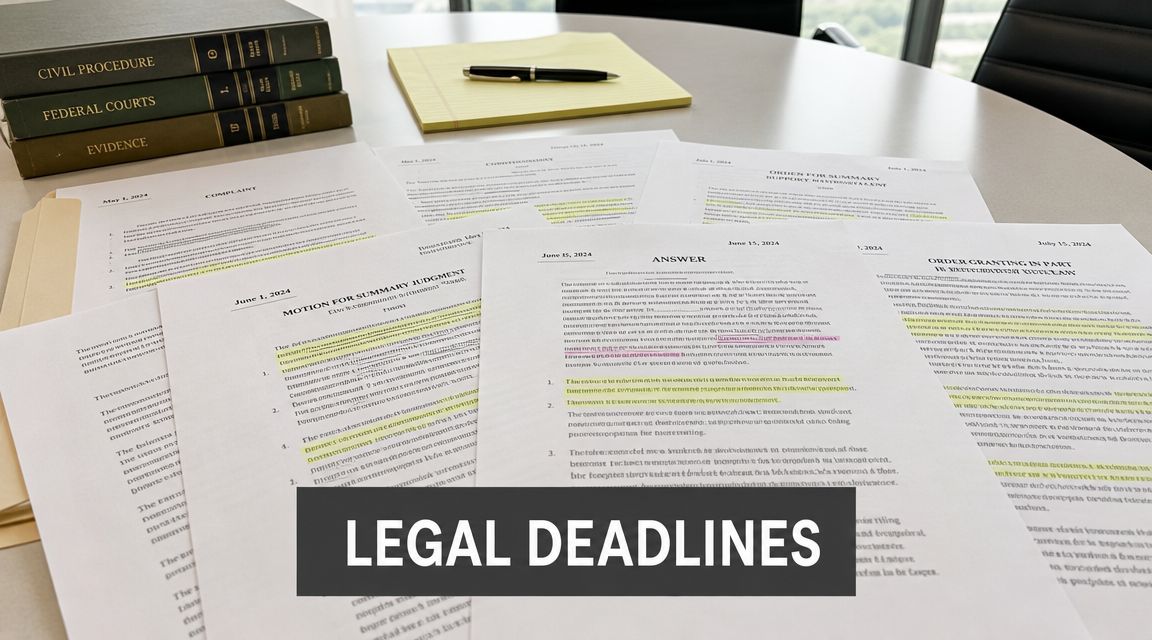
An investor may call my office with what looks like a timely case because the losses became obvious only recently. Then we map the timeline and find two different deadline problems. The arbitration claim may still fit within Rule 12206, while a related court claim is already being challenged as late. The reverse can happen too.
That is why Rule 12206 has to be read on a calendar, not in isolation.
Separate deadlines serve different purposes
Rule 12206 is a forum rule. It asks whether FINRA arbitration is available based on when the relevant occurrence or event happened. Statutes of limitation do something different. They govern when legal claims such as fraud, negligence, breach of fiduciary duty, or contract must be filed under state or federal law.
Those clocks do not always start on the same date.
In practice, that matters most in cases where the investor's theory depends on a later event. A bad recommendation in 2018, a hold recommendation in 2021, and a liquidation loss in 2023 may each matter to the case, but they do not necessarily matter the same way for every deadline. For a practical comparison of court filing deadlines, see this guide to the statute of limitations on securities fraud.
The tolling point investors often miss
If a claimant files first in court, Rule 12206 can stop running while that court keeps jurisdiction. That tolling point helps preserve FINRA eligibility during the court proceeding.
It does not extend the separate statutes of limitation that apply to the underlying legal claims.
That distinction changes strategy. Filing in court may protect one timing issue and do nothing for another. Before choosing a forum, counsel should identify the event that arguably starts the Rule 12206 clock, then compare that date against every other filing deadline that could control part of the case.
How this plays out in real cases
Three questions usually need separate answers:
FINRA forum eligibility
Is the claim based on an occurrence or event that falls within Rule 12206?Substantive claim deadlines
Are the fraud, negligence, fiduciary-duty, suitability, or contract claims still timely under the law that governs them?Forum selection risk
Will starting in court or arbitration create a timing advantage, or expose the case to an avoidable deadline fight?
I tell investors to resist the shortcut of asking only whether they are still "within six years." That question is too broad to be useful. The better question is six years from what event, for which claim, and in which forum.
What to collect before filing
The timeline has to be built from documents, not memory. Start with account applications, new account forms, subscription documents, trade confirmations, monthly statements, emails, text messages, notes of calls, written complaints, and any later recommendation to hold, switch, or add to the investment.
Then place each event on the timeline and assign legal significance to it. The purchase date may control. A later rollover, concentration decision, hold recommendation, or concealment may matter more. That timeline work often determines whether a case belongs in FINRA, whether related court claims survive, and whether filing first in one forum creates unnecessary risk in the other.
Common Defenses and How to Counter Them
When a brokerage firm raises Rule 12206, the defense is usually straightforward. The firm tries to choose the earliest possible event and present the case as old, fixed, and expired.
The investor's response has to be more precise.
The defense you should expect
The most common defense is that the relevant event was the purchase date. Firms like this argument because it gives them a clean anchor. They may also argue that later losses were only consequences of that original transaction, not new wrongdoing.
They may frame later communications as mere account servicing, not new recommendations. They may also argue that the investor had enough information earlier and therefore can't rely on a later discovery theory.
Counterarguments that often matter
A strong response depends on the facts, but these arguments frequently come into play:
Fraudulent concealment
If the broker or firm hid material facts, disguised the actual risk, or misled the investor after purchase, concealment may affect how the triggering event is analyzed.Continuing misconduct
Some cases involve more than one bad act. Repeated hold recommendations, repeated concentration decisions, or ongoing unauthorized trading may support a later trigger than the initial purchase.Later actionable recommendation
A later rollover, exchange, increase in position, or refusal to correct known unsuitability may itself be part of the claim.Claim-by-claim analysis
Not every cause of action rises or falls on the same date. Suitability, supervision, fiduciary-duty, and misrepresentation theories may require separate trigger analysis.
Brokerage firms often argue for one early date to bar the whole case. That shortcut can fail when the account history shows multiple actionable events.
What actually persuades
General unfairness arguments usually don't carry much weight by themselves. Panels respond better to organized evidence.
Useful proof often includes:
- account statements showing the sequence of trades or concentration,
- emails or notes reflecting later recommendations,
- offering materials that conflict with what the investor was told,
- complaint history showing when issues surfaced, and
- a chronology that ties each legal claim to a distinct event.
What hurts investors is inconsistency. If the statement of claim says the wrongdoing happened at purchase, but the timeliness opposition says the actual event happened years later, the firm will exploit that mismatch immediately.
How to Pursue Your Investment Loss Claim
Rule 12206 is often described as simple because it says six years. In practice, it isn't simple at all. The hard part is identifying the right event, the right claim structure, and the right filing strategy before the brokerage firm turns timing into a dismissal argument.
If you're evaluating a potential case, start with documents and dates. Build a timeline of recommendations, purchases, account changes, communications, losses, and any efforts by the broker or firm to explain away the problem. Then analyze each claim separately. Don't assume one date controls everything.
A practical filing guide is available in this overview of how to file for arbitration.
If you need legal help, one option is to speak with a firm that handles FINRA eligibility and time-limit analysis as part of investor recovery work. Kons Law handles FINRA arbitration claims and court actions involving broker misconduct, including disputes where Rule 12206 may affect whether the claim can proceed.
The key point is this: a Rule 12206 issue doesn't always end the case, but it does demand early, disciplined legal analysis. Investors lose viable claims when they wait too long or use the wrong trigger date. They also lose claims when they assume the purchase date is the only date that matters.
If you would like a free consultation to discuss the investment loss recovery process in more detail, call Kons Law at (860) 920-5181 for a FREE, NO OBLIGATION consultation.
