
If you're reading this after a payment stopped, a broker went quiet, or a leasing deal suddenly stopped making sense, you're in the position many investors face right before they learn they weren't looking at a bad investment. They were looking at a bad transaction. The paperwork looked routine, the equipment sounded tangible, and the returns or payment stream seemed grounded in something real. Then the details stopped lining up.
That moment matters. In equipment leasing fraud, delay helps the wrong side. Documents disappear, vendors dissolve, shell entities get abandoned, and people who were easy to reach become hard to find. What feels like confusion at first often turns into a pattern once the file is reviewed carefully.
Introduction The Growing Threat of Equipment Leasing Fraud
Equipment leasing has always appealed to investors because it sounds concrete. A machine, truck, medical device, or piece of industrial equipment seems easier to trust than something purely speculative. That sense of solidity is exactly why fraud in this area can be so damaging. Investors often believe there must be an asset behind the transaction, and by the time they test that assumption, the money is gone.
The risk is not theoretical. According to a landmark 2023 study by the Equipment Leasing & Finance Foundation, incidents of fraud in the equipment finance sector increased by at least 10% over the preceding two-year period, and over 80% of lenders surveyed said fraud is on the rise (MonitorDaily coverage of the ELFF study). That combination matters. It shows both a documented increase and broad industry confirmation that the problem is spreading.
Why investors get caught off guard
Most victims don't enter these deals expecting to underwrite a fraud examination. They rely on a broker, advisor, leasing intermediary, or offering materials that present the transaction as vetted. In many files, the investor's first clue is a practical problem, not a legal one. Payments stop. The borrower can't be reached. The vendor address doesn't look right. The equipment can't be located. The purchase option in the final contract doesn't match the sales pitch.
Practical rule: When the transaction only works if every participant is telling the truth, small inconsistencies deserve immediate attention.
That doesn't mean every failed leasing transaction is fraud. Some are just weak deals, poor underwriting, or operational collapse. But equipment leasing fraud often leaves a trail that looks different from ordinary business failure. The same names appear on multiple sides of the deal. Documents arrive late or in altered form. Titles, invoices, and ownership records don't match. A broker may have skipped basic diligence that should have happened before any money moved.
Why the recovery path is different
Investors often assume the only question is whether fraud occurred. In practice, the more important question is who can be held responsible for the loss. That may include the person who sold the investment, the brokerage firm that supervised the transaction, an advisor who failed to investigate obvious warning signs, or a financial intermediary that ignored basic due diligence.
Recovery usually depends on moving quickly, preserving evidence, and choosing the right forum. Some claims belong in FINRA arbitration. Others belong in court. The answer depends on the parties involved, the account documents, and the role each actor played in the loss.
Understanding Equipment Leasing Fraud
Equipment leasing fraud usually starts with a transaction that appears routine. Funds are advanced based on a simple premise: specific equipment exists, a legitimate vendor sold it, and a real business will use it and make the lease payments. In a fraudulent deal, one or more of those facts is false, and the paperwork is built to hide that problem until the money is gone.
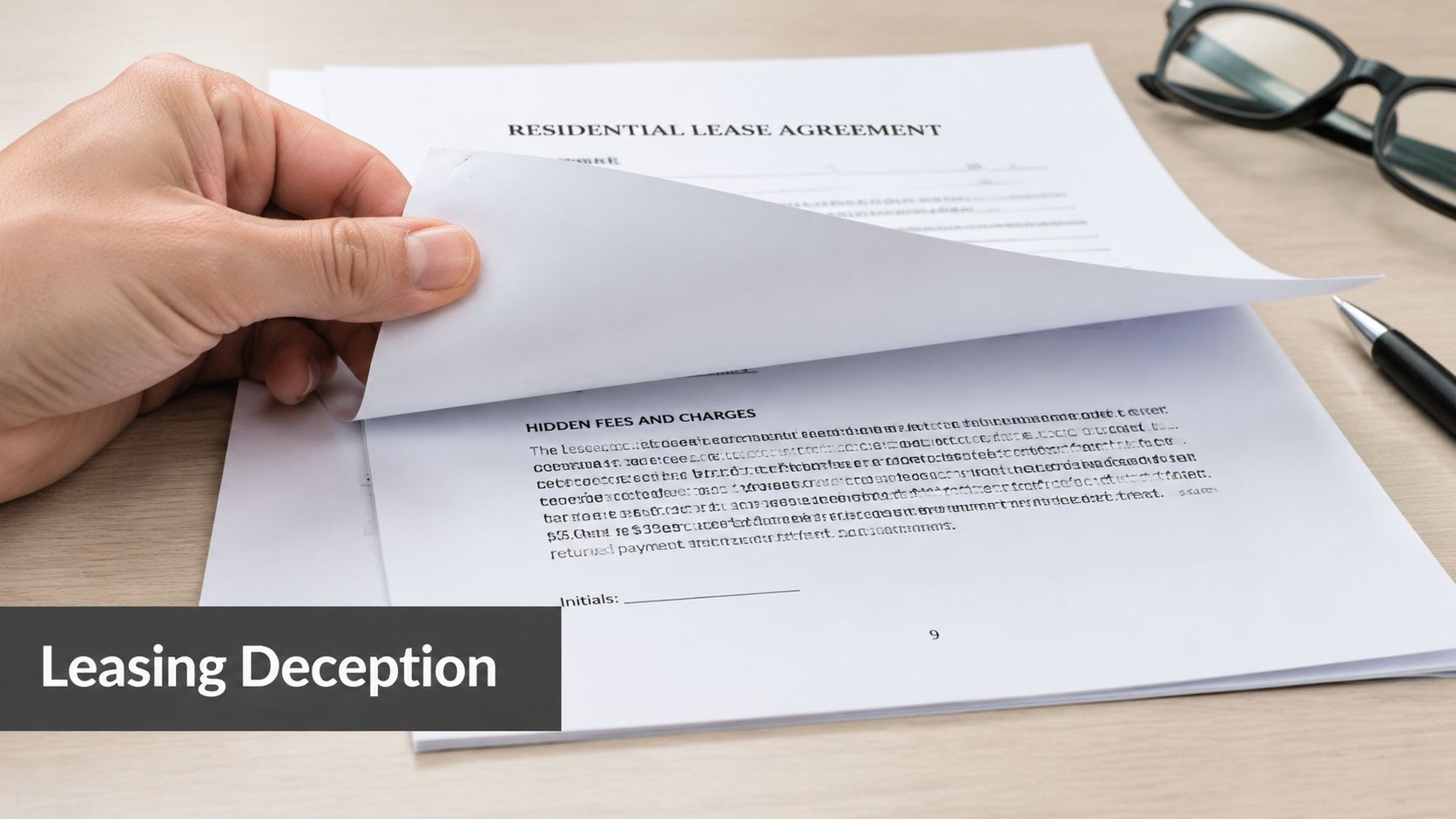
The structure is usually straightforward. A funding source provides capital. A borrower or lessee is presented as the business acquiring the equipment. A vendor or supplier is supposed to deliver the asset. Fraud enters the deal when one of those parties is fictitious, two supposedly independent parties are under common control, or the transaction is supported by false invoices, altered serial numbers, forged signatures, or fabricated delivery records.
The mechanics matter because recovery often turns on them. If the equipment never existed, the claim may focus on misrepresentation, conversion, or securities violations tied to the sale of the investment. If the equipment existed but was overvalued, double-pledged, or never properly titled, the dispute can shift toward due diligence failures, supervision issues, and what the selling firm should have verified before recommending the deal.
A common version is the fictitious lease. The fraudster creates or controls the supplier, invents or misstates the asset, and backs the application with documents designed to survive a quick review. The forms may look familiar because they borrow legitimate vendor language or recycled paperwork from real transactions. That is why these cases can deceive finance professionals, brokers, and investors who rely too heavily on polished documents instead of independent verification.
Identity abuse often sits underneath the transaction. Fraudsters may use stolen personal information, shell entities, or borrowed credentials to make the lessee or guarantor appear creditworthy. Good record handling helps reduce that risk, and investors reviewing deal materials should pay attention to AI Image Detector's data security advice, particularly on safeguarding sensitive information and spotting documentation misuse.
Many individual investors do not deal directly with the borrower or vendor. They enter the transaction through a broker, private offering, pooled investment, or advisor recommendation that presents the lease stream as stable income. In those cases, the legal analysis usually goes beyond the original fraudster. It includes whether the broker, advisory firm, or offering sponsor failed to investigate obvious warning signs, misstated the nature of the collateral, or sold an unsuitable investment.
That same pattern appears in other alternative investment disputes, including private placement fraud cases involving inadequate due diligence and unsuitable recommendations. The central problem is often not only a bad asset. It is a recommendation process that failed to test whether the asset, the vendor, and the payment stream were real in the first place.
A lease can appear conservative on paper and still rest on collateral that was never there.
Common Schemes and Critical Red Flags
An investor usually sees the problem late. The lease file looks orderly, payments may even start on time, and the sales story sounds routine. The trouble appears when someone tries to confirm the equipment, the vendor, or the repurchase promise and finds that the paper trail does not match the transaction.
One pattern appears often in these cases. The borrower and the vendor are connected, but that relationship is hidden. A shell company poses as an independent supplier, submits false invoices, and receives lease proceeds for equipment that is overstated, already pledged elsewhere, or never existed at all. By the time the fraud is exposed, the money is gone and the supposed collateral has little recovery value.
Equipment Leasing Fraud Schemes and Red Flags
| Fraud Scheme | Description | Key Red Flags |
|---|---|---|
| Fake supplier arrangement | The same person or group controls the borrower and the vendor, using false invoices and false applications to create a circular deal | New vendor, reluctance to permit direct contact with the lessee, payment instructions sent to an address different from the invoice, suspicious resale number information |
| Buyback scam | A promoter offers a leasing opportunity with assurances that the equipment or contract will be repurchased, but the promised back-end protection never materializes | Pressure to send funds quickly, vague repurchase terms, reliance on verbal promises instead of enforceable contract language |
| Document fee fraud | Upfront fees are demanded for approval, processing, or paperwork before financing is secured, with no real intent to close a legitimate transaction | Requests for document processing fees before meaningful diligence, shifting explanations for why more money is needed |
| $1 purchase option bait and switch | The investor or borrower is sold on end-of-term ownership for $1, then receives altered paperwork requiring a materially different end-of-term payment | Final agreement doesn't match the sales presentation, substituted pages, signature requests after last-minute changes |
| Collateral misrepresentation | Existing equipment is overstated, duplicated, previously financed, or doesn't exist in the form presented | Missing proof of ownership, no physical inspection for high-value assets, inconsistent serial or title information |
These schemes matter for a legal reason, not just a due diligence reason. The fraud theory often turns on what was represented, who said it, what documents were withheld, and whether a broker, advisor, or sponsor ignored obvious warning signs. A bad equipment deal can become a securities case if it was packaged and sold as an investment with false assurances about collateral, payment streams, or exit protection.
The red flags are usually mundane. That is why they get missed. A vendor refuses direct contact with the lessee. Payment instructions point to a different address than the invoice. A resale number is invalid or belongs to another business. The invoice is stale. The seller pushes hard for immediate funding before basic verification is complete. MonitorDaily's discussion of preventing equipment fraud describes several of these warning signs, and they show up repeatedly in files that later end up in arbitration or court.
I tell clients to pay attention to friction in the verification process. Honest deals may be slow, messy, or poorly documented. Fraudulent deals often become defensive the moment someone asks for serial numbers, proof of delivery, UCC history, insurance records, or the right to confirm the equipment directly with the user.
Some equipment leasing fraud matters also resemble promissory note fraud cases. The format changes, but the sales method is familiar. Investors receive formal-looking paperwork, promised income, and reassurances that an asset or repayment source stands behind the transaction, yet the underlying verification is thin or fabricated.
This point also affects recovery strategy. If you start seeing these signs, preserve invoices, emails, wire instructions, text messages, marketing decks, lease schedules, and version history for the contracts. Even basic administrative records can matter later, including proof of how filings were submitted or served. Investors and counsel sometimes end up dealing with issues tied to e-filing and faxing court documents once a claim moves into active litigation.
When a vendor resists ordinary verification, assume the paper may be doing work the equipment cannot.
Legal Pathways for Recovering Your Losses
Once fraud is suspected, investors usually want a straight answer to one question. Do you file in court, or do you pursue the claim through FINRA arbitration? The answer depends less on the label attached to the investment and more on who sold it, who supervised it, and what agreements govern the dispute.
When FINRA arbitration is the better path
If a broker or brokerage firm recommended the transaction, solicited the investment, or failed to supervise the conduct that led to the loss, FINRA arbitration is often the primary route. Many brokerage account agreements require disputes to be arbitrated rather than litigated in court. Arbitration can be a strong forum when the investor's real claim is not just against the underlying fraudster, but against the regulated firm that allowed the investment to reach the client.
Common theories in that setting include:
- Failure to supervise: A firm didn't monitor the broker's recommendations, outside business activities, or use of customer funds.
- Negligence: A broker or advisor ignored obvious signs that the vendor, borrower, or collateral had not been verified.
- Misrepresentation or omission: Material facts about the deal, the equipment, or the risks weren't disclosed accurately.
- Breach of fiduciary duty: The advisor put sales interests or personal interests ahead of the client's protection.
A particularly important negligence point in equipment cases is basic asset verification. For high-value equipment, physical inspection to confirm the asset's existence and proof of ownership is a critical due diligence step, and failure to perform it can become a central part of a negligence claim (ELFA takeaways on fraud in equipment finance).
When court litigation makes more sense
Court can be the better forum when the core defendants are outside the brokerage system. That may include shell vendors, leasing promoters, borrower principals, finders, or related entities that aren't subject to FINRA arbitration. Court also gives broader procedural tools in some situations, especially when you need formal discovery from multiple non-FINRA parties or you're tracing money through layered entities.
A practical comparison helps:
| Forum | Usually fits best when | Main trade-off |
|---|---|---|
| FINRA arbitration | Broker, advisor, or brokerage firm played a material role | Limited to parties and claims that properly belong in arbitration |
| Court litigation | Promoters, shell companies, vendors, or non-broker entities are central defendants | Can involve more procedure, more motion practice, and jurisdiction fights |
Many cases involve both tracks in the early analysis. The investor may have a FINRA claim against the selling firm and separate court-based claims against non-broker actors.
Procedure matters early
The first filing choice can shape the entire recovery strategy. Counsel will usually review account agreements, offering documents, communications, and the transaction chain before deciding where to proceed. For investors who want a plain-language overview of filing mechanics, resources on e-filing and faxing court documents can be helpful for understanding how formal submission requirements work in court practice.
Where a brokerage-related claim is involved, it also helps to understand the FINRA arbitration process for investor disputes, because deadlines, pleading strategy, and respondent selection all affect advantage.
The strongest claim isn't always the one with the most dramatic facts. It's the one tied to a defendant with legal responsibility and a realistic path to recovery.
How to Document Evidence and Preserve Your Claim
The first mistake many victims make is waiting for certainty. You don't need certainty to start preserving evidence. You need suspicion and discipline.

What to collect right away
Start with the complete transaction file. That means gathering:
- Contracts and amendments: Lease agreements, purchase options, side letters, subscription papers, notes, and any revised versions.
- Money movement records: Wire confirmations, checks, ACH records, capital call notices, and account statements showing when funds moved.
- Marketing and sales materials: Emails, pitch decks, offering memoranda, text messages, and handwritten notes from calls or meetings.
- Identity and entity documents: Vendor invoices, borrower applications, certificates of title, resale number information, entity formation records, and insurance documents.
- Communications with the seller: Every email, voicemail summary, and text with the broker, advisor, promoter, or leasing contact.
Don't clean up the file. Preserve drafts, envelopes, metadata-bearing email files, and messages that seem unimportant. In fraud cases, the timing and sequence of documents often matter as much as the documents themselves.
Why UCC searches matter
A particularly important record set is the Uniform Commercial Code filing history tied to the borrower. An unusually high number of UCC filings, or filings inconsistent with the borrower's purported business size, can be a strong fraud indicator and should be documented (Equipment Leasing & Finance Foundation guidance on fraud growth and prevention).
That kind of evidence can support multiple points at once. It may show that the borrower had excessive debt, that the same collateral was being used repeatedly, or that the deal should have triggered more scrutiny before any recommendation was made.
Save the file as it existed when the deal was sold, not as the other side rewrites it later.
Deadlines and forum issues
Statutes of limitation don't wait while investors try to sort out the facts. Neither do contractual deadlines or arbitration eligibility arguments. The clock may begin based on the purchase date, the discovery of the misconduct, or another event that depends on the claim being asserted. Jurisdiction also matters. The right forum can depend on where parties are located, what the account agreement says, and whether the target defendant is a FINRA member, an associated person, or neither.
That is why evidence preservation and venue analysis should happen together. A good legal strategy doesn't start with filing. It starts with securing the proof before it degrades.
The Typical Recovery Process and What to Expect
A common fact pattern starts like this. An investor is told the lease portfolio is secured by real equipment, the paperwork appears complete, payments stop, and the assets cannot be located or do not match what was sold. At that point, recovery turns on process. The question is no longer whether the deal feels wrong. The question is who can be pursued, in which forum, and with what proof.
Early investigation and forum selection
The first step is to test the loss against viable legal claims. Counsel will usually trace who sold the investment, who received compensation, who controlled the vendor or borrower, and whether the same people appeared across multiple entities. That work often shows whether the case belongs in FINRA arbitration, civil court, or both at different stages against different defendants.
That choice matters.
If a broker-dealer or registered representative was involved, FINRA arbitration is often the fastest path to a recoverable award. It has its own pleading standards, discovery limits, and hearing process. If the main targets are vendors, borrower principals, or other non-FINRA parties, court may offer broader subpoena power and more tools for third-party discovery. In some matters, the practical strategy is to start with the claims that can be filed fastest while preserving claims in the other forum before a deadline expires.
Investors looking for securities litigation attorneys who handle investor recovery claims should ask a direct question early: who is the best defendant with assets, insurance coverage, or supervisory responsibility, not just who behaved badly.
Pleadings, discovery, and settlement pressure
Once the forum is chosen, the case becomes more disciplined. In FINRA, that usually means filing a statement of claim, serving supporting documents, addressing answers and defenses, and working through document production before a final hearing. In court, motion practice often arrives first. Defendants may challenge jurisdiction, venue, or the legal sufficiency of the complaint before full discovery begins.
Settlement discussions can start early, but they usually become serious only after the record is organized. A respondent who sees altered invoices, inconsistent signatures, missing collateral records, compensation trails, or ignored red flags will evaluate the case differently than one facing only a general accusation of fraud.
Patience helps, but pressure matters too.
Strong cases do not always resolve quickly. Some defendants pay to reduce risk once the evidence is pinned down. Others force claimants through discovery and motion practice, hoping delay, cost, or deadline confusion will weaken the claim. Investors should expect an ordered process with deadlines, objections, document fights, and periodic settlement windows, not a single demand letter that produces a check.
The practical goal is recovery, not rhetoric. That means building a claim that can survive procedural attacks, prove who is legally responsible, and show damages in a form an arbitrator or court can award.
When to Contact a Securities Litigation Attorney
If you suspect equipment leasing fraud, the right time to talk to counsel is earlier than commonly believed. You don't need a confession, a regulator's finding, or a completed forensic report. You need enough concern to ask whether the loss involved misconduct and whether someone with assets or insurance can be held responsible.
These cases get complicated quickly. Shell vendors, altered invoices, missing collateral, and overlapping roles across borrower and supplier entities can make a straightforward claim look messy. Add a broker or advisory relationship, and the analysis becomes even more technical. You may need to decide between arbitration and court, identify viable defendants, preserve electronic evidence, and evaluate negligence theories tied to due diligence failures.
That isn't work for a generalist. It calls for counsel who understands securities claims, broker supervision issues, and the practical differences between pursuing a case in FINRA and in court. For readers weighing next steps, information from experienced securities litigation attorneys for investors can help clarify what should happen first and what mistakes to avoid.
The core point is simple. If the deal was sold as secure because equipment existed, a vendor was legitimate, and a professional had vetted the transaction, those representations should be tested immediately. Waiting usually weakens the claim. Prompt review usually strengthens it.
If you would like a free consultation to discuss the investment loss recovery process in more detail, call Kons Law at (860) 920-5181 for a FREE, NO OBLIGATION consultation.
