
Lost money in a structured note, reverse convertible, or autocallable? You're dealing with the exact kind of product that looks simple in a sales pitch and gets complicated the moment losses show up. Structured products are often sold as advanced, yield-focused investments with built-in protection, but risk usually sits in the fine print, the issuer's credit, and the payoff trigger rules. That is why investors get hurt, especially when a broker presents the product as safer than it really is. If that sounds familiar, move fast, keep your documents, and get legal help before deadlines and records become a problem. For reference, see the official terms of RizeTrade.
1. Equity-Linked Notes
Equity-Linked Notes, or ELNs, are debt instruments whose payout depends on a stock, stock index, or basket of stocks. In plain English, you are not buying the underlying equity directly, you are buying a promise from the issuer, and that promise changes based on how the linked market performs. That makes ELNs one of the clearest structured products examples for investors who were told they were getting market upside with less risk than stocks.

The mis-selling pattern is predictable. Brokers highlight the coupon or principal repayment language, then downplay the fact that the issuer controls the payment obligation. The product can also hide caps, participation limits, or conditions that make the upside much smaller than the investor expected.
Practical rule: If the salesperson won't explain the payoff in a single plain-English sentence, the product is too complex for a retail account.
For recovery purposes, ELN cases often turn on unsuitability, misrepresentation, and failure to disclose the issuer's credit risk. A broker who sells an ELN to a conservative investor, or who fails to explain how principal repayment depends on the product terms and issuer solvency, creates a serious dispute. That is the exact point where a FINRA arbitration claim may be viable.
Before you buy or challenge one of these notes, demand the full prospectus, the offering memorandum, the issuer's credit information, and a written explanation of how the note behaves if the market drops. If the product was sold as “safe income” without those disclosures, that omission matters.
For a plain-English breakdown of the structure behind these notes, review structured notes explained.
2. Reverse Convertibles
Reverse convertibles look like high-coupon debt, but the actual bargain is conditional and usually one-sided. If the linked stock stays above the barrier, you collect coupons and get cash back at maturity. If it falls below the barrier, you can end up receiving shares instead of your principal, which means you're exposed to the same downside you thought you were avoiding.
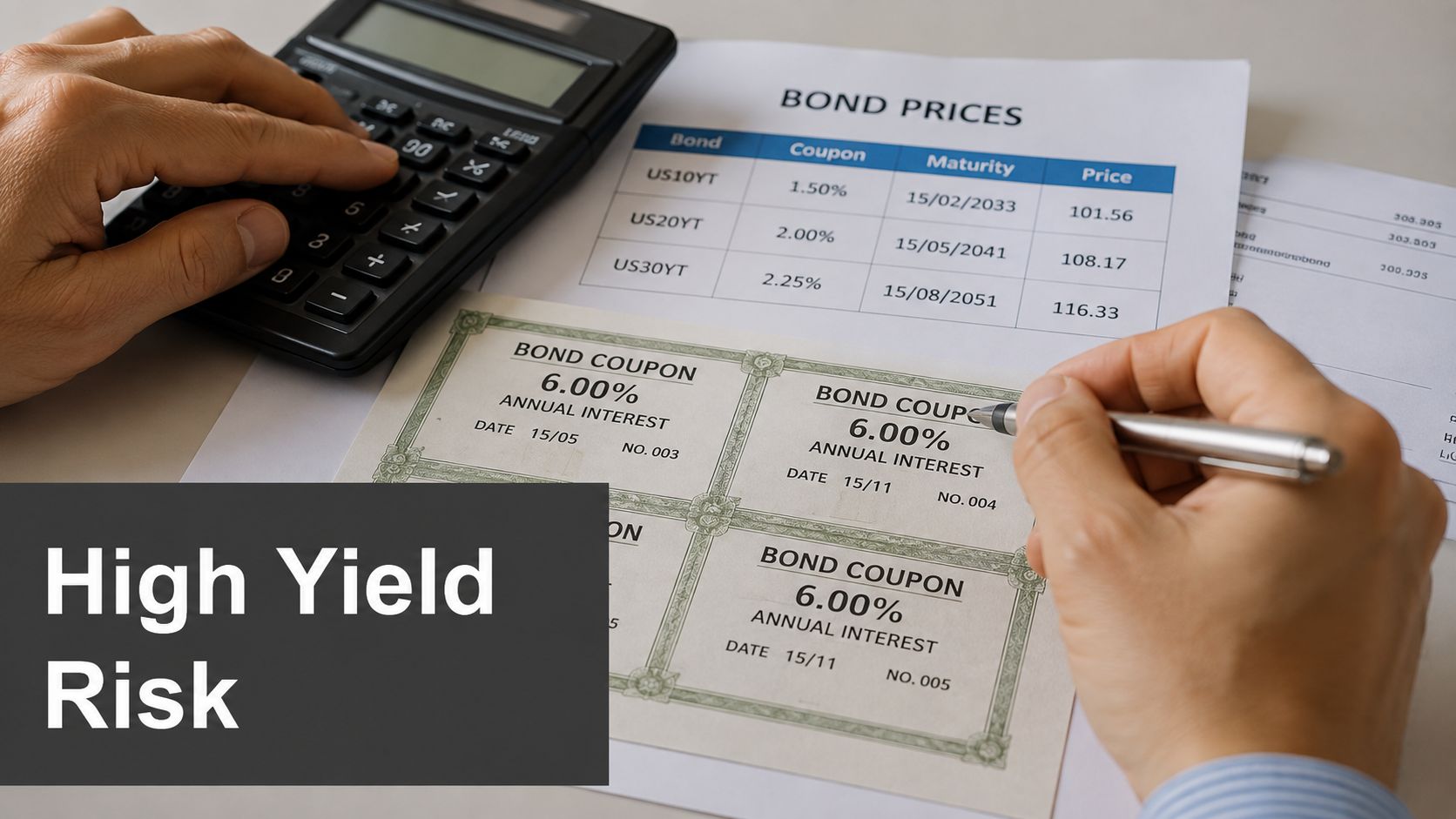
Many retail investors can be misled. They hear “coupon” and assume bond-like safety, but reverse convertibles are often sold to clients who do not want equity risk in the first place. When the underlying stock breaks the barrier, the investor learns the note was really an amplified stock bet with a coupon attached.
A proper review starts with the economics, not the sales pitch.
- Check the barrier: Know exactly where the conversion trigger sits and what happens if the stock finishes below it.
- Count every coupon: The promised yield only matters if it offsets the loss exposure.
- Review the issuer: The note is only as strong as the institution backing it.
- Test the downside: Ask what happens if the stock falls sharply before maturity, not just on the final date.
When losses hit, the legal focus is usually whether the recommendation matched the investor's objectives and risk tolerance. If the broker placed a volatile equity-linked note in a conservative income strategy, that can support claims for unsuitability and inadequate disclosure. If the advisor ignored concentration risk or presented the product as “protected,” those facts matter too.
For investors trying to understand where these products fit in the bigger universe of structured instruments, the key point is simple. Reverse convertibles are not conservative bonds, they are conditional equity exposure wrapped in debt form.
3. Barrier Notes and Knock-In/Knock-Out Notes
Barrier notes are built around a trigger level. If the underlying asset crosses that level, the payoff changes, sometimes dramatically. Knock-in structures activate only after a barrier is breached, while knock-out structures stop or terminate once the barrier is reached.
That mechanics-driven design is exactly why they are easy to mis-sell. A broker can describe the note as offering “protection” or “enhanced yield,” while the actual payoff depends on a path the underlying takes over time, not just where it ends. The investor often doesn't realize that a brief move through the barrier can reset the economics of the whole product.
The barrier is not a minor footnote. It is usually the deal.
Real-world examples include currency knock-in notes tied to EUR/USD, index knock-out notes linked to the S&P 500, and commodity barrier notes tied to oil or gold. Each one sounds specialized, but the legal issue is the same. If the client wanted simple market exposure and got a path-dependent derivative instead, the recommendation deserves scrutiny.
The recovery theory often starts with misrepresentation. Many disputes arise when the salesperson emphasizes yield and minimizes the risk of barrier breach, especially where the barrier observation method is hard to understand. Continuous observation and periodic observation are not the same, and investors need to know which one applies.
If you were sold one of these products, insist on a written explanation of the barrier, the trigger method, the payoff sequence, and every scenario that changes your return. A broker who could not explain that clearly may have sold the wrong product to the wrong client. That is the kind of record that can support a claim in arbitration.
4. Contingent Convertible Notes
Contingent Convertible Notes, or CoCos, sit in the awkward middle ground between debt and equity. Banks issue them, they usually pay attractive income, and they convert into equity or suffer a write-down if the bank's capital ratio falls below a trigger. That structure is why these notes are marketed as advanced capital instruments and why retail investors often misunderstand them.
The hidden risk is obvious once you strip away the marketing. You are lending to a bank that can force loss absorption if its capital weakens. In other words, the very stress event that raises concern about the bank is the event that can wipe out or convert the instrument.
For a damaged investor, the legal questions are direct.
- Was the trigger explained? If not, the product may have been sold without meaningful disclosure.
- Was the buyer well-informed? CoCos belong with investors who understand capital structure and regulatory triggers.
- Was the bank's condition discussed? A recommendation made while the issuer's capital position was deteriorating can be highly problematic.
- Was conversion risk minimized? Sales language that sounded like a bond, but behaved like equity in stress, is a red flag.
CoCos are not simple yield products. They are bank-loss-absorption tools, and that reality must be spelled out before a client buys them. If a broker treated them like a fixed-income substitute without explaining the write-down mechanics, the recommendation may have been unsuitable from the start.
For a more detailed discussion of the risk profile, see structured product risks.
5. Autocallable Notes
Autocallable notes are sold with a simple promise that rarely survives the fine print, attractive income and early redemption if the underlying asset performs well. That early call feature sounds helpful until you realize it often triggers during rallies, forcing the investor out before the best part of the market move. If the note is never called, the final payout can look very different from what the salesperson emphasized.
The problem is not just complexity. It's timing. Investors may get redeemed when the market briefly rises, then miss later upside while still having carried the downside risk during the holding period. The note can also include memory coupons, which sound generous but often just add another layer of conditionality.
A careful investor should demand a clean scenario analysis before buying. If the salesperson cannot walk through what happens on each observation date, the product is not being sold responsibly.
Practical rule: A note that calls away your capital during a rally can leave you worse off than a plain ETF position.
Autocallables are often mis-sold as a balance of income and protection. In practice, the “protection” may disappear in a drawdown, while the call feature removes your upside in a rebound. That mismatch creates classic suitability issues, especially for retirees and income-focused investors who thought they were buying something conservative.
When reviewing losses, focus on whether the client was told how early redemption works, whether the downside buffer was real or illusory, and whether the product fit the investor's time horizon. If the answer is no, the claim should be evaluated quickly.
6. Steepener and Flattener Notes
Steepener and flattener notes are interest-rate bets dressed up as structured investments. A steepener pays more if long-term rates rise relative to short-term rates. A flattener pays more if the yield curve compresses. That means the investor is really taking a view on central bank policy, bond markets, and rate spreads, not just “earning yield.”
These notes are often pushed to clients who do not trade rates professionally. That is a serious problem because the payoff depends on curve behavior that can move in ways a retail investor does not anticipate. A small shift in rate expectations can overwhelm the coupon story and leave the note underperforming simpler fixed-income choices.
If you were sold one of these products, ask whether the advisor modeled the rate curve or just repeated the coupon rate. The difference matters. A well-informed investor should also compare the note to straightforward Treasury exposure or other basic rate products before taking on a more complex structure.
The legal analysis usually centers on whether the client had the expertise to understand the bet and whether the advisor explained the embedded financial enhancement. If a broker sold a curve-sensitive product to someone who wanted stable income, that recommendation is vulnerable. The fact pattern often looks like a standard bond sale on the surface and a speculative macro bet underneath.
For the investor trying to recover, the strongest documents are the offering materials, the account profile, and any communication showing how the advisor framed the product. If the language sounded conservative while the mechanics were clearly speculative, that mismatch can support a claim.
7. Buffer Notes and Range Notes
Buffer notes and range notes promise structure around uncertainty, but the protection is narrower than most investors think. Buffer notes may soften losses only up to a set amount, after which principal starts to erode. Range notes pay enhanced coupons only if the underlying stays within a specified band, which means the investor can lose the coupon if the market moves too much in either direction.
That structure attracts people who want downside comfort, but it can fail exactly when the market gets rough. Once the buffer is exhausted, the investor is exposed. Once the range is broken, the coupon may vanish. Many clients never hear that side of the story.
A broker who recommends these notes should be able to explain the following without hesitation.
- When the buffer starts and ends: Partial protection is not full protection.
- What happens outside the range: Coupons can stop even if the investment is still held to maturity.
- How far the market can move: The investor should understand the consequences of a 5%, 10%, 20%, or 30% decline in plain English.
- Why this product is better than allocation: If the note is just replacing a normal portfolio mix, the client may be paying for complexity they don't need.
For harm recovery, focus on the mismatch between the product's marketing and the client's objectives. Range notes in particular are often sold as income tools, when they are really conditional payoff products. If the client needed liquidity or uncomplicated exposure, the recommendation may have been unsuitable.
For a detailed look at the structural issues that often accompany these products, review market-linked CDS.
8. Principal-Protected Notes and Credit-Linked Notes
Principal-Protected Notes, or PPNs, are sold on the promise that your initial principal is safe at maturity. Credit-Linked Notes, or CLNs, tie returns to the credit performance of one or more referenced entities. Both sound reassuring on the surface, and both can fail badly when the issuer or reference credit goes south.
The biggest trap is the word “protected.” Investors often think that means guaranteed, but protection depends on the issuer's solvency and the exact terms of the note. If the issuer cannot pay, the protection language may be worthless in practice. CLNs create a different hazard, because the investor may be taking exposure to a credit event without fully understanding the named reference entities.
That is why these products are frequent sources of litigation. They are marketed to risk-averse clients, then explained in a way that leaves out the very credit exposure that drives the return. The client thinks they are preserving capital, but they are often taking on issuer risk, reference credit risk, or both.
Practical rule: If the note's safety depends on the seller's own financial health, it is not a cash substitute.
A recovery claim here may involve misrepresentation, failure to disclose issuer solvency risk, and unsuitable recommendation. If the broker said the product was principal protected without explaining the counterparty dependency, that issue should be investigated. The same is true if the client never agreed to own the issuer's bonds in economic substance.
For a more complete discussion of the product structure, see structured note investment.
8-Item Structured Products Comparison
| Product | Implementation complexity | Resource requirements | Expected outcomes | Ideal use cases | Key advantages |
|---|---|---|---|---|---|
| Equity-Linked Notes (ELNs) | High, embedded options and custom terms | Prospectus review, issuer credit check, option-pricing analysis | Equity participation with conditional principal protection; upside limited by participation rates; counterparty risk | Investors seeking equity exposure with fixed‑income features and willingness to accept complex terms | Customizable risk/return, income generation, diversification |
| Reverse Convertibles | Moderate–High, barrier and conversion mechanics | Break‑even and probability analysis, issuer credit due diligence | Above‑market coupons but risk of forced conversion into depreciated shares at maturity | Yield‑seeking investors tolerating equity assignment risk | High coupon income, defined conversion mechanics |
| Barrier / Knock‑In / Knock‑Out Notes | Very high, path‑dependent barrier mechanics | Advanced scenario modeling, continuous/periodic observation analysis | Highly conditional payoffs; potential for zero or terminated payouts if barrier events occur | Sophisticated investors expressing specific market views or hedging complex risks | Enhanced yields for tailored market views, cost‑efficient complex exposures |
| Contingent Convertible Notes (CoCos) | High, regulatory trigger and loss‑absorption rules | Regulatory capital analysis, bank stress tests, issuer monitoring | High coupons with risk of conversion to equity or principal write‑down if capital triggers hit | Institutional or sophisticated investors with deep bank/credit understanding | High yield, designed to absorb bank losses before equity |
| Autocallable Notes | High, periodic observation and early‑call features | Call‑probability modeling, payoff scenario analysis across observation dates | Potential early redemption (limits upside); conditional downside protection that can fail in stresses | Investors seeking defined income with acceptance of early‑call and path risk | Potential for early return of capital plus accrued coupons |
| Steepener / Flattener Notes | Very high, yield‑curve dependent and leveraged payoffs | Yield‑curve modeling, interest‑rate sensitivity and leverage analysis | Payoff driven by curve shape; leverage amplifies gains and losses | Sophisticated macro or institutional investors with rate‑view expertise | Efficient expression of yield‑curve views, potential outsized returns |
| Buffer Notes / Range Notes | Moderate–High, buffer/range path dependence | Scenario testing of buffer depletion and range breach probabilities | Limited initial protection up to buffer level or coupon contingent on staying within range | Moderately risk‑averse investors who understand conditional protection and path risk | Apparent downside cushion or enhanced coupons within defined ranges |
| Principal‑Protected Notes (PPNs) & Credit‑Linked Notes (CLNs) | Moderate, protection tied to issuer solvency or credit events | Rigorous issuer credit evaluation; for CLNs, analysis of reference credits | PPNs: principal returned if issuer solvent; CLNs: enhanced yield with exposure to credit events and potential loss | Risk‑averse investors trusting issuer credit (PPNs); credit‑aware investors seeking yield (CLNs) | Conditional principal protection (PPNs), higher yields via credit exposure (CLNs) |
What to Do If You Suspect Investment Misconduct
Recognizing these structured products examples is only the start. If your broker sold you a note, reverse convertible, autocallable, or credit-linked product that did not match your goals, or if the risks were described in a way that hid the downside, treat that as a potential recovery case. The legal issues are usually straightforward, unsuitability, misrepresentation, failure to explain issuer credit risk, and incomplete disclosure of how the payoff functions.
You should gather every account statement, trade confirmation, offering document, email, and text message tied to the recommendation. Then compare the sales story to the actual terms. If the product was pitched as conservative income, capital protected, or appropriate for a retirement account, and the losses say otherwise, a FINRA arbitration claim may be the correct path.
Recovery claims move faster when an attorney reviews the chronology early. Deadlines, documents, and broker communications matter, and the strongest cases usually come from clear paper trails showing what the advisor said and what the investor was led to believe. An experienced securities lawyer can identify whether the recommendation was unsuitable, whether the disclosures were inadequate, and whether the losses belong in arbitration.
If you would like a free consultation to discuss the investment loss recovery process in more detail, call Kons Law Firm at (860) 920-5181 for a FREE, NO OBLIGATION consultation. You can also review understanding mis selling in BFSI to better understand how a misleading sales process can turn into a recoverable investment loss.
Kons Law helps investors review losses tied to structured products, including notes that were sold as safer or simpler than they really were. If you think a broker put you in the wrong product, visit Kons Law to discuss your options and start the recovery process with a securities attorney.
