You thought you bought a serious energy deal. The deck looked polished, the sponsor sounded confident, and the paperwork probably had the right jargon. Then the distributions slowed, the explanations got slippery, and the story you were told no longer matches the documents in your file.
That is the moment to stop guessing. Oil and gas investment fraud usually isn't one obvious lie, it's a stack of misrepresentations wrapped in a private placement, a lease, and a lot of financial smoke. If you're trying to figure out whether you were sold a bad deal, a hidden commission scheme, or a recoverable fraud, you need to focus on evidence, filings, and the forum where the claim belongs, not on the sales pitch you were handed.
What This Guide Is For and Who Should Read It
Read this if you put money into an oil or gas venture and the result now bears little resemblance to the pitch. The returns may never have arrived. The sponsor may have gone quiet. The package may have included documents, signatures, and a broker, yet the economics still do not hold up.
That is the right place to start, because oil and gas investment fraud usually hides inside a private offering that looks legitimate on the surface. The usual features are misleading Reg D placements, hidden commissions, inflated reserve claims, and diversion of investor money. The SEC told Reuters in 2013 that it was handling an average of more than 20 fraud cases per year involving private oil and gas ventures, and that these cases were “rare” in 2005 and 2006. That history matters because it shows this is a recurring enforcement problem, not a one-off anomaly. Reuters on SEC oil and gas fraud enforcement
This guide is built for investors who need to sort out what happened and what comes next. It covers the fraud patterns that show up again and again, the warning signs that matter in modern private offerings, the records you should pull, and the recovery forums people use, mainly FINRA arbitration and court action. It does not promise that every loss is recoverable. It does show you how to separate a bad investment from a fraud claim with real teeth.
Practical rule: If the story changed after you invested, treat the offering as evidence first and an investment second.
The enforcement backdrop is ugly too. NASAA's 2011 enforcement report reflects a large volume of investigations and enforcement actions across securities matters, along with substantial investor restitution, and a heavy share of actions involving unregistered securities and unregistered firms or individuals. NASAA's own reporting shows why oil and gas offerings draw scrutiny when promoters hide behind the private-placement label. NASAA 2011 enforcement report
Defining Oil and Gas Investment Fraud
Oil and gas investment fraud happens when someone sells exposure to wells, leases, drilling programs, or production interests with false or incomplete information that matters to the investment decision. The well can exist. The lease can be real. The fraud is usually in the economics, the disclosures, the use of proceeds, or the identity of the people taking the money.
Private oil offerings often work like a used-car sale from a private seller where the odometer may or may not match the engine. The vehicle is there, and the seller may even hand over paperwork. If the mileage is fake, the engine history is hidden, or the seller padded the price with junk charges, you did not buy what you thought you bought. Private oil offerings use the same playbook when the sponsor buries the truth in technical language.
The Reg D shell can look legitimate
A lot of these deals are sold as private placements under Reg D, and that is exactly why they fool investors. The paperwork looks professional. There may be subscription documents, offering memoranda, and escrow language. None of that proves the economics are honest.
The structure itself can be lawful while the conduct is not. A sponsor can use a legitimate-looking private-offering wrapper to obscure reserve quality, overstate projected production, hide related-party payments, or route funds into unrelated expenses. The investor sees a drill program. The sponsor sees a fundraising vehicle. If you want a plain-English example of how these offers are packaged, review this discussion of private placement fraud.
The SEC's enforcement history shows one specific version of this playbook. In one case, promoters failed to disclose that about 30% of investor funds would be paid out as sales commissions, used unregistered brokers to sell the interests, and made unsubstantiated, highly inflated production projections for the wells. That is classic fraud by omission and misstatement, dressed up as a mineral or drilling opportunity. SEC complaint on undisclosed commissions and inflated projections
What the legal label misses
A private-placement label does not answer the key question, which is whether the money raised matched the story told. If the sponsor promised production, investors need to know whether the proceeds went to drilling, whether the lease was viable, and whether the projections had a factual basis. If the answer is no, the legal wrapper does not save the deal.
That is why oil and gas cases often turn on documents investors never saw at the front end, not on the glossy pitch deck. The hard proof usually sits in use-of-proceeds records, reserve reports, investor updates, and third-party production data. When those records do not line up, the offering starts to look less like a failed venture and more like fraud built into the structure itself.
Common Scheme Patterns Investors Should Recognize
Oil and gas fraud comes in recognizable mechanical forms. If you can identify the mechanism, you can usually tell whether the case is just a loss or something stronger. The trick is not the label, it's how the money moved.
The deal that pays old investors with new money
A Ponzi-style structure in this space often starts with early “returns” that appear to validate the project. Those payments can come from new investor capital, not production. Once the cash inflow slows, the sponsor can't keep the story alive.
That pattern isn't unique to oil and gas, but it shows up there because investors are used to hearing about future production, future wells, and future upside. The sponsor can delay scrutiny by blaming drilling timelines, market swings, or operational setbacks. By the time the story falls apart, the money is usually already gone.
The commission-heavy private placement
Another recurring pattern is the offering where a large slice of the money is diverted before a well is ever drilled. The SEC's complaint example involving about 30% of investor funds going to commissions is the clearest version of that problem. If too much of the raise disappears into sales compensation, there may be little capital left to support the business the investor thought they were funding.
Investor takeaway: If the deal depends on aggressive fundraising just to pay selling costs, you're looking at a fundraising machine, not a capital allocation plan.
The unsuitable concentration problem
There's also the advisor-driven version, where a broker or financial professional keeps pushing oil and gas deals into accounts that were never built for that kind of risk. The issue there isn't just the sponsor's conduct. It's the salesperson's recommendation, suitability analysis, and disclosure to the customer.
A useful way to sort the pattern in your own case is to ask who controlled the narrative. Was it the sponsor, the broker, or both? If the broker was the gatekeeper, the recovery path often looks different than if the sponsor sold directly.
| Scheme Pattern | How It Works Mechanically | Primary Red Flag |
|---|---|---|
| Ponzi-style oil program | Old investors get paid with new money instead of production revenue | Distributions keep coming even when operations don't support them |
| Commission-heavy placement | A large share of funds is siphoned off at the front end | The use of proceeds is vague or grossly front-loaded |
| Non-traded private offering | The deal is sold as a private placement with little outside scrutiny | The sponsor controls the numbers and the investor can't verify them |
| Unsuitable advisor push | A broker or adviser concentrates clients in risky energy deals | The recommendation fits the salesperson better than the client |
For a deeper look at how private placements are used in these cases, review this discussion of private placement fraud.
Red Flags That Show Up in Modern Private Offerings
The old boilerplate warning signs still matter, but they're not enough. Modern offerings often look polished, data-driven, and institutional. That polish is part of the risk.
The presentation looks professional, but the proof is missing
A fake-looking website is easy to spot. A slick deck that mimics a real sponsor is harder. That's why investors need to ask whether the visuals are backed by filings and third-party records. If a sponsor won't let you visit the site, refuses to produce an independent engineer reserve report, or won't explain the numbers in plain English, the presentation is just marketing.
The SEC's investor publication on oil and gas scams stresses the kinds of warning signs that show up repeatedly in these offerings, including the absence of basic registration and disclosure safeguards. SEC investor publication on oil and gas scams
The questions that cut through the hype
Use the documents as a cross-examination tool.
- No Form D filed: If there's no Form D, where was the offering filed, and who reviewed it?
- No reserve report: What number supports the projected returns if no independent engineer has tested the reserve assumptions?
- No site visit allowed: What is on the lease if the sponsor won't let investors verify the property?
- Equipment or service markups: Why are the costs so far above what the project should reasonably bear?
- Escrow language with no real segregation: Where is the money held, and can you trace it to a separate account?
Those questions matter because fraudsters don't just lie about profits. They hide in paperwork that looks official enough to lower your guard. A clean deck without clean support is a warning, not a comfort.
Don't confuse professional design with professional diligence. A good-looking placement memorandum can still sit on top of bad reserves, bad economics, and bad faith.
State alerts make the same point in a more practical way. They tell investors to verify registration, check the salesperson's background, confirm escrow segregation, and get the legal description of the lease. If those items aren't available, the investor is being asked to trust the sponsor's voice instead of the underlying asset.
How to Vet an Oil and Gas Deal Before You Invest or Sue
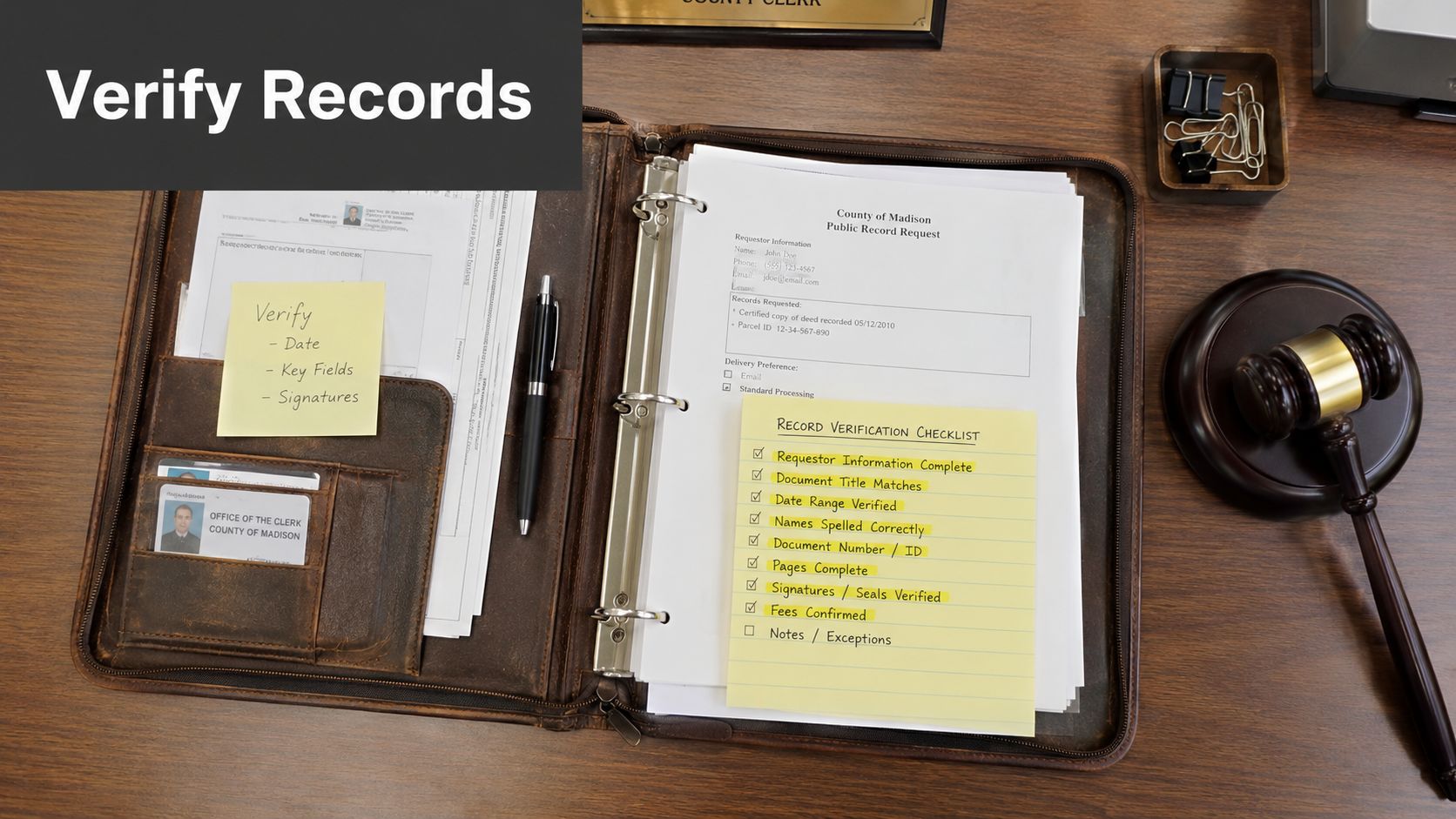
Start with public records, not the sales pitch. The Louisiana securities alert gives a solid checklist, and it's the kind of checklist I'd want an investor to use before wiring money or before filing a claim. Confirm whether the offering is registered or exempt, identify the salesperson and review the background, check whether proceeds go into a separate escrow account and are not commingled, and obtain a legal description of the lease plus how and when it was acquired. Louisiana securities alert checklist
If you already invested, use the same checklist as a reconstruction tool. Compare the lease description to the documents you received. Compare the salesperson's explanation to the regulator records. Compare the promised use of proceeds to bank activity and investor statements.
Production and pricing checks that actually matter
Once the basic paper trail is in hand, test the economics. A reported volume variance below 3% is described as normal, while a variance above 10% is suspicious. A company realization per barrel that is more than 15% above Brent after quality adjustment is also suspicious, because that points to misreported pricing, hidden related-party sales, or unsupported differential assumptions. Forensic production and pricing check reference
That is the part investors often miss. They look at headline revenue or EBITDA and assume the deal is working. A sponsor can make a weak asset look profitable on paper if the lifting data, custody-transfer records, and price realization numbers aren't checked against the issuer's own investor materials.
Use a due diligence workflow, not a gut feeling
A serious review pulls from multiple sources, not one sponsor email. Public filings, state commission records, reserve support, and actual production data need to line up. If they don't, you've got a problem worth escalating.
For a practical template on financial review discipline, the Finzer financial review essentials resource is useful because it reinforces the habit of checking the underlying numbers instead of taking the pitch at face value. Pair that mindset with the private-placement checklist in this due diligence guide, and you'll be asking the right questions before money moves or after losses start.
FINRA Arbitration vs Court Action for Oil and Gas Losses
The forum matters because it shapes discovery, cost, and the balance of power. For many retail investors, FINRA arbitration is the default when the claim is against a brokerage firm or registered representative, because the customer agreement usually pushes the dispute there. That's not a flaw. It's often the better forum for securities claims tied to broker misconduct.
When arbitration is the better fit
If a broker sold you an unsuitable oil and gas private placement, hid the risks, or pushed the deal without proper due diligence, FINRA arbitration is usually the first place to look. Arbitrators in that system hear securities disputes all the time, and the process is generally faster and more focused than full civil litigation. Discovery is narrower than in court, but that can cut both ways, since a disciplined case can move with less drag.
For a plain-English comparison of the two paths, this arbitration versus litigation overview is worth reading before you choose a forum.
When court makes more sense
Court action is often the better fit when the defendant is the sponsor, promoter, issuer, or another non-broker entity. It can also make more sense when you need the broader tools of civil procedure or when the claims are anchored in statutory theories that work better in court than in arbitration.
That's the clean recommendation. If your claim is against the brokerage side, arbitration is usually the faster, more securities-literate path. If your claim is against the deal sponsor or promoter, court is often the better vehicle. Don't let the label on the offering dictate the forum. Let the defendant and the evidence do that work.
What should drive the choice
The choice should come down to four things, speed, cost, discovery needs, and where the strongest defendant sits. If the broker was the one who placed the oil and gas product into your account, FINRA often gives you the cleaner path. If the sponsor ran the sham from the beginning, a civil complaint may give you more reach.
Bottom line: The forum is not a formality. It can decide how much evidence you get, how fast you get it, and whether the case has enough leverage to settle.
Evidence, Statutes of Limitations, and the Recovery Roadmap
Start by freezing the file. Save account statements, offering documents, subscription agreements, K-1s, emails, call notes, text messages, and recordings of meetings if you have them. If there were pitch decks, add those too. The goal is simple, preserve what was said, when it was said, and who said it.
Then move from preservation to pressure. Have counsel contact the broker, advisor, sponsor, or insurer in a structured way. A sloppy demand letter helps nobody. A precise record demand can force the other side to explain missing documents, shifting explanations, and failed disclosures.
Build the record before you file
Regulatory complaints come next when the facts support them. The SEC and state securities regulators are often the right place to notify because they can see the pattern even when one investor only sees a single account. That matters in private-placement cases, where the misconduct may span multiple sales, multiple states, and multiple customer files.
You also need to think about authenticity. If you're relying on screenshots, voice messages, or digital documents, keep originals and metadata where possible. For a helpful reference on preserving and testing digital proof, browse the evidence authentication tag before you let anything get altered, deleted, or casually forwarded.
Don't miss the deadline
Statutes of limitations are unforgiving. FINRA rules and state and federal securities laws set deadlines that can erase an otherwise strong claim if you sit too long. That's the part too many investors learn after the fact, when the story is compelling but the filing window is gone. Review the limitations issue early, not after you've spent months debating what happened. Statute of limitations on securities fraud
Damages usually start with out-of-pocket loss, then add interest and, where the law allows, attorneys' fees or other relief. Recovery is never guaranteed, and the Texas receivership example is a sober benchmark, not a promise. In that case, two executives were convicted in September 2022 for a $150 million scheme, later asset recovery found only $12 million in claimed assets, and investors were expected to recover about 8 cents on the dollar. Texas oil-investment fraud receivership example
If the paper trail is thin, the deadline becomes even more important. Deadlines don't care that the sponsor kept stalling.
How Kons Law Helps Investors Recover Oil and Gas Losses
Kons Law fits into this process where the case turns from suspicion into action. The firm handles investor-loss claims in FINRA arbitration and court, including claims against brokerage firms, financial advisors, investment advisers, sponsors, and promoters. It brings 18-plus years of securities litigation experience and says it has recovered more than $50 million across 700+ matters.
For oil and gas cases, that matters because the claim is rarely just “the investment failed.” Questions that matter are whether the deal was sold with misleading projections, whether the broker ignored concentration and suitability problems, whether the sponsor buried commissions or use-of-proceeds issues, and whether the evidence still supports a recoverable claim. Kons Law offers free consultations and typically works on a contingency-fee basis, which means the fee structure is tied to recovery rather than hourly billing. Clients also work directly with an experienced securities attorney from intake through resolution.
That direct access is not a small thing. These cases move on documents, timelines, and forum choice, and investors need straight answers, not a call center. If your oil and gas deal looks more like a private-placement trap than a real investment, the next step is to get the file reviewed before the deadline problem gets worse.
If you think your oil and gas deal was sold through false projections, hidden commissions, or a private-placement structure that masked the truth, Kons Law can review the documents and explain your recovery options. Call (860) 920-5181 for a free, no-obligation consultation, or visit Kons Law to get started before the statute of limitations runs.
