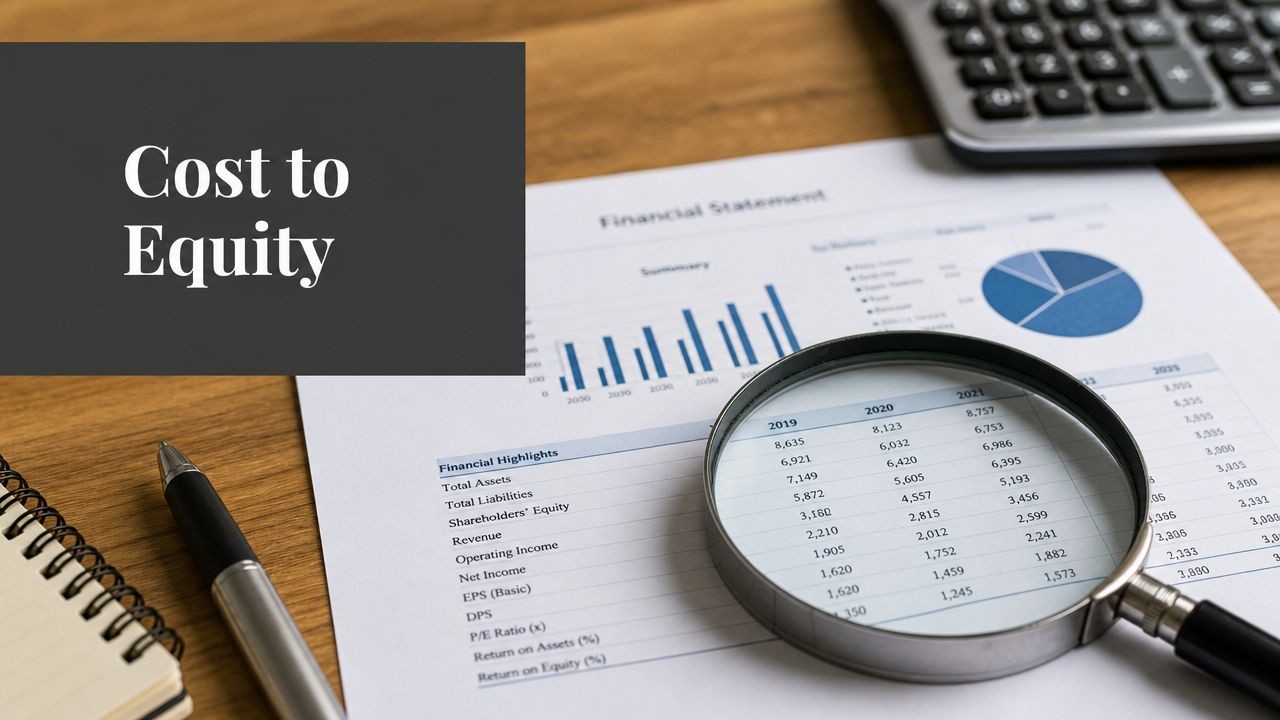
You open your brokerage statement and see activity everywhere. Buy orders. Sell orders. More switches. More “rebalancing.” Yet your account is flat or down, and the explanation from your advisor never gets more precise than “the market has been difficult.”
That situation isn't just frustrating. It's often the moment investors realize the actual problem may not be the market at all. It may be cost.
A brokerage account can be so burdened by commissions, fees, and trading expenses that it starts every year in a hole. If your account has to climb a steep hill just to break even, the strategy may have been doomed from the start. That's where the cost to equity ratio becomes useful. It cuts through the sales language and asks a blunt question: how much did your account need to earn just to cover the broker's costs?
If you're already dealing with losses, you also need to understand the tax side of the damage. A practical primer on managing capital losses can help you understand what those losses mean outside the brokerage statement itself. But tax treatment is only part of the story. If the losses were caused by misconduct, the legal analysis matters more.
Many investors don't realize that excessive trading, unsuitable recommendations, and fee-driven account activity can cross the line into actionable misconduct. If you need a basic overview of what qualifies as investment fraud, start there, then come back to the numbers in your own account.
Introduction Why Are My Investments Losing Money
You're probably not reading this because you're curious about finance theory. You're reading it because something feels off.
Maybe you trusted a broker who seemed engaged because the account was always active. Maybe you were told the trades were tactical, protective, or necessary. But after months or years of activity, you're left with losses, confusing statements, and the sinking feeling that your advisor may have made money even when you didn't.
The pattern investors describe
I hear the same story in different forms. A retiree says the account was supposed to produce income, but the statements show constant turnover. A working professional says the advisor promised active management, but the account never seemed to make real progress. An older investor says every call ended with another recommendation, another transaction, another fee.
That pattern matters because high activity plus poor results isn't random noise. It often points to a measurable problem.
Practical rule: If your account was traded heavily but failed to produce results, don't start by asking whether the market was bad. Start by asking how expensive the strategy was.
The cost to equity ratio gives you a way to do that. It doesn't care about polished explanations. It focuses on the breakeven burden imposed on your account.
Why this metric matters to harmed investors
Investors often assume losses must be tolerated because investing involves risk. That's only partly true. Risk is part of investing. Unnecessary cost is not.
A strategy can be risky and still be suitable. A strategy can lose money and still be defensible. But a strategy that piles on enough cost to make success unlikely deserves hard scrutiny. If your broker created a setup where your account needed exceptional performance just to stand still, that isn't prudent management. It may be evidence of misconduct.
Here's the direct recommendation. Pull your monthly statements, trade confirmations, and any emails or notes from calls with your advisor. Look for frequent trading, recurring charges, and vague explanations. Those documents often tell a much clearer story than the broker does.
If you would like a free consultation to discuss the investment loss recovery process in more detail, call Kons Law Firm at (860) 920-5181 for a FREE, NO OBLIGATION consultation.
Understanding Cost of Equity: The Basics

You put money into an investment account expecting growth. Your broker put that same money at risk under a strategy that had to earn enough to justify the risk in the first place. That expected return is the starting point for understanding cost of equity.
In corporate finance, cost of equity means the return investors require before they commit capital to a business. It is the company's cost of using shareholder money. This is not a cash fee or an invoice. It is the return investors expect in exchange for taking risk.
That distinction matters.
A lender gets interest. An equity investor gets no guaranteed payment, so the expected return has to be high enough to compensate for uncertainty. The greater the risk, the higher the required return. That principle sits at the center of modern finance, and it also helps explain why some brokerage strategies are unsuitable from the start.
Why investors should care about an academic term
Cost of equity may sound like boardroom jargon, but it has real value for injured investors because it frames a hard question: How much return should be required before risk makes sense at all?
That question becomes legal, not just academic, once a broker loads an account with commissions, markups, margin interest, or excessive turnover. At that point, you are no longer judging investment judgment alone. You are judging whether the account was managed under conditions that made a reasonable outcome far less likely.
Cost of equity is not the same as cost to equity ratio
Investors often hear these terms and assume they mean the same thing. They do not.
- Cost of equity is a finance concept about the return investors demand for bearing risk.
- Cost to equity ratio is a securities case metric that examines how much your account had to earn just to overcome the costs imposed on it.
- Cost of equity helps explain what level of return might justify risk.
- Cost to equity ratio helps show whether your broker created a breakeven hurdle so high that the strategy was unfair, abusive, or consistent with churning.
Here is the practical takeaway. Cost of equity belongs to finance theory. Cost to equity ratio takes that theory and applies it to the facts in your account. That is why this topic matters in securities law. If your broker built a strategy that needed unusually strong performance just to offset trading costs, the problem was not only market risk. The problem may have been the broker's conduct.
How Financial Experts Calculate Cost of Equity

A financial expert evaluating your losses does not start with a gut feeling. The work usually begins with the Capital Asset Pricing Model, or CAPM, because it gives a disciplined way to estimate the return an investor should demand for taking market risk.
The formula is:
Cost of Equity = Risk-Free Rate (Rf) + Beta (β) × (Expected Market Return - Rf)
You do not need to memorize the symbols. You do need to understand what each input is doing, because that logic later helps explain why excessive account costs can make an investment strategy unreasonable.
The three core inputs
| Component | Plain-English meaning | Why it matters |
|---|---|---|
| Risk-Free Rate | The return available from a very low-risk alternative, often a Treasury benchmark | It sets the starting point |
| Beta | How much an investment tends to move relative to the broader market | It measures sensitivity to market swings |
| Expected Market Return minus Rf | The extra return investors expect for accepting market risk | It reflects the price of uncertainty |
Experts may debate the precise inputs, especially in a disputed case. They still follow the same framework. Start with a low-risk baseline. Add a premium for market risk. Adjust for how volatile the specific investment is expected to be.
That matters for harmed investors because brokerage cases often turn on whether the account ever had a fair chance to succeed.
A portfolio already faces the ordinary burden of earning a return that justifies its risk. If a broker piles on commissions, turnover, markups, margin interest, or other recurring charges, the account must earn enough to satisfy finance theory and enough to overcome the costs imposed on it. That is the bridge between academic cost of equity and the legal analysis that follows in a churning case.
In arbitration, lawyers often use a damages expert or investment expert witness to translate that math into a clear opinion about suitability, excessive trading, and economic harm. Good experts do more than recite formulas. They show whether the structure of the account made reasonable success less likely from the outset.
The point is simple. Investment risk should serve your pursuit of returns. Once trading activity primarily feeds broker compensation, that purpose is undermined.
What this means in real life
A disciplined strategy gives your capital room to earn an appropriate return over time. A cost-heavy strategy raises the breakeven threshold before market performance is even measured.
That is why investors should pay attention to this formula even if they never plan to build a valuation model themselves. Cost of equity sets the baseline for what risk should be worth. If your account was burdened with unnecessary costs on top of that baseline, the math can support a much stronger argument that the problem was broker conduct, not just bad luck.
The Cost to Equity Ratio in Securities Litigation
The cost to equity ratio becomes especially powerful when a legal claim involves excessive trading. In securities litigation, the question is no longer abstract. It's whether the broker used your account in a way that served you, or used it in a way that generated fees for the firm.
The breakeven hurdle that exposes churning
In FINRA arbitration and securities cases, the cost equity ratio is used to determine whether an account was churned. Churning means excessive trading designed to generate commissions or fees rather than to advance the customer's interests.
According to this discussion of the cost equity ratio in churning claims, a 10% ratio means the account had to grow by 10% annually just to break even against trading costs. The same source explains that when the ratio is high and returns are negative, it becomes a primary statistical indicator of broker misconduct and a foundational part of claims against brokerage firms.
That's the legal force of the ratio. It converts a vague complaint, “my broker traded too much,” into a measurable argument, “my broker imposed a cost burden that made profitable investing unlikely.”
Why arbitrators pay attention to it
Arbitrators and courts want more than anger. They want proof.
The cost to equity ratio helps show that the strategy may have been unsuitable from the start. If the account needed an unusually strong return just to overcome transaction costs, and the account instead produced flat or negative results, the numbers support the investor's story. That matters in claims involving securities litigation, breach of fiduciary duty, unsuitable recommendations, and financial elder abuse.
A broker doesn't get credit for “active management” when the activity itself created the damage.
The ratio is strongest when paired with context
By itself, the number is important. Combined with the surrounding facts, it becomes much stronger evidence.
Look at the account through these lenses:
- Trading frequency: Did the broker buy and sell relentlessly?
- Account objective: Was this supposed to be conservative, income-focused, or preservation-oriented?
- Net results: Did the account fail despite all that activity?
- Broker explanation: Were the trades clearly explained in advance, or justified only after losses appeared?
A bad year in the market doesn't prove misconduct. A cost structure that made success unrealistic is different. That's why this ratio shows up repeatedly in serious investor claims. It tells the story with less room for spin.
Spotting the Red Flags in Your Portfolio
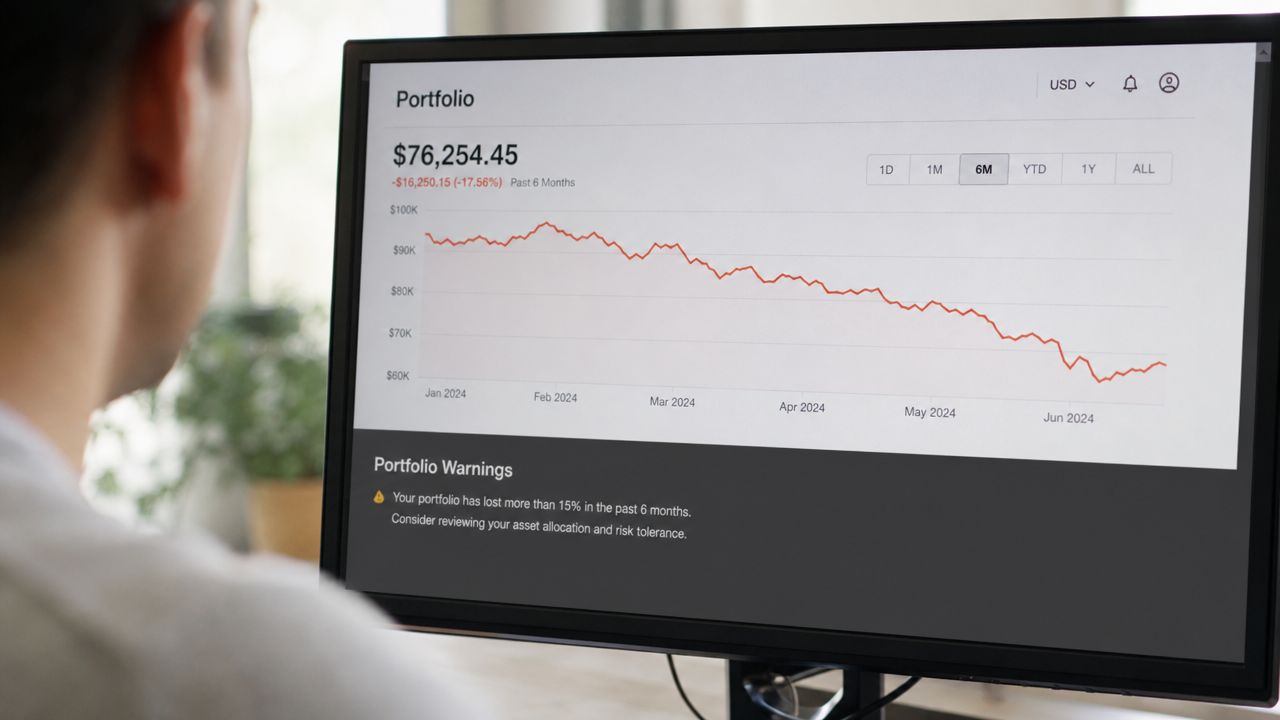
Most investors don't calculate a cost to equity ratio until after the damage is done. That's understandable. Brokers rarely volunteer a metric that may expose the strategy they used.
Still, your account statements usually contain enough warning signs to tell you whether closer review is warranted.
The benchmark problem
In churning analysis, investors and attorneys often scrutinize whether the ratio exceeded 10% or 15%, because high costs at those levels can make profitable returns mathematically difficult when actual performance is weak, as described in the earlier linked discussion of churning claims. You don't need to perform the legal analysis yourself to recognize the practical takeaway. If a large slice of your annual return had to go to fees and costs before you earned anything, the strategy may have been structurally unsound.
There's a useful analogy from business finance. Allianz Trade notes that a strong business equity ratio is 50% or above, signaling greater financial stability and lower bankruptcy risk in its discussion of the equity ratio. The same structural principle applies here in a simpler way. A healthy portfolio strategy keeps costs from consuming the equity base.
Red flags you should not ignore
- Frequent unexplained trades: You shouldn't need a decoder ring to understand your own account. If transactions appear constantly and you can't explain why they happened, that's a warning.
- Costs that feel disproportionate: Review commissions, advisory fees, margin charges, and transaction expenses together. Investors often look at each line item separately and miss the cumulative burden.
- Pressure to stay active: If your advisor kept pushing trades, switches, or new products regardless of market conditions or your stated goals, ask who really benefited.
- Poor results despite constant movement: A busy account that goes nowhere deserves more scrutiny than a quiet account that suffers in a broad downturn.
- Documents that don't match your risk tolerance: If you asked for safety or income but got high-turnover speculation, the paper trail may expose it. This issue also overlaps with fraud in financial statements when account documentation misstates financial reality.
Review the account as a system, not as isolated trades. Misconduct often hides in the pattern.
A simple way to review your statements
Use this quick screen before you do anything else:
| Question | Why it matters |
|---|---|
| Was the account traded often? | High turnover may signal fee generation |
| Did you understand each strategy change? | Confusion often tracks poor disclosure |
| Did costs seem to stack up month after month? | Cumulative burden matters more than single charges |
| Were results consistently disappointing? | Negative or flat performance strengthens the concern |
If you answer yes to several of those questions, don't dismiss your instincts.
How a High Ratio Exposes Advisor Misconduct
A high cost to equity ratio doesn't only matter in classic churning cases. It can also expose other forms of advisor misconduct that investors miss because the account looks “professionally managed” on paper.
When the strategy never fit the client
Take a retiree who wanted conservative income. The advisor placed the account into a high-turnover strategy, switched positions frequently, and described the activity as responsive management. The problem isn't just that the account lost money. The deeper problem is that the structure of the strategy may have been unsuitable for that client from the beginning.
A high ratio supports that argument because it shows the account faced a severe cost burden before any net gain was possible. That can help prove unsuitability, especially when the customer's objectives were preservation, income, or low volatility.
When the promises don't match the math
Now consider a different investor. The advisor pitched dependable growth and minimized the effect of trading costs. If the account was run in a way that created a steep breakeven hurdle, the promises and the numbers don't line up.
Schwab explains that investors often prefer a company's debt-to-equity ratio to be less than 1 for financial stability, while a ratio of 2 or higher raises significant risk concerns in its overview of key financial ratios for stock analysis. That comparison is useful here. Just as a high debt load raises questions about sustainability, a high cost to equity ratio in a managed account raises questions about whether the strategy was ever sustainable for the investor.
Advisors often defend bad outcomes by pointing to market risk. A high cost burden can show the problem was embedded in the strategy itself.
That's why this metric can support claims involving breach of fiduciary duty, misrepresentation, failure to supervise, and unsuitable recommendations. It shifts the conversation from excuses to structure.
What to Do If You Suspect Investment Losses

If this article sounds uncomfortably familiar, don't sit on it. Investors lose their advantage when they wait, misplace records, or keep accepting explanations that don't hold up.
Start with the paper trail
Gather the full file, not just the latest statement.
- Account statements: Pull monthly statements for the full period in question.
- Trade confirmations: These show what was bought, sold, and when.
- Emails and text messages: Preserve communications with the advisor.
- Notes from calls or meetings: Even informal notes can matter.
- New account documents: These often reveal the risk tolerance and objectives the firm recorded.
Your documents matter because memory fades, but statements don't.
Avoid the most common mistake
Don't call the advisor and announce that you think you were churned or misled. That usually helps the firm, not you.
Once an investor raises a complaint informally, the advisor may start framing the record, documenting self-serving explanations, or pushing the client into statements that sound like consent. Silence is often the smarter first move.
Save records first. Talk later.
Get an independent review
You need a neutral assessment of what happened in the account. That may include a review of turnover, costs, suitability, and whether the strategy matched your objectives. The right analysis can clarify whether you suffered ordinary market losses or losses tied to misconduct.
Use a checklist like this:
- Compare objectives to activity: Did a conservative account behave like a speculative one?
- Review cost patterns: Were fees and transaction costs persistent and heavy?
- Check for concentration or repeated switching: These patterns often appear in problematic accounts.
- Assess explanations against documents: If the broker's story doesn't match the paper trail, pay attention.
Speak with a securities attorney
This is the step that moves the matter from suspicion to action. A securities attorney can evaluate whether the facts support FINRA arbitration or another claim, identify what records matter most, and tell you whether the cost structure in your account supports a misconduct case.
A good legal review is not just about whether you lost money. It's about why you lost money, who benefited, and whether the account was managed in a way that violated industry rules or fiduciary obligations.
If you would like a free consultation to discuss the investment loss recovery process in more detail, call Kons Law at (860) 920-5181 for a FREE, NO OBLIGATION consultation.
