
You log into your brokerage account and the numbers don't make sense. The losses are larger than you expected. The investments don't look like what you thought you agreed to buy. Your broker may have told you the account was positioned for safety, income, or retirement stability, yet the statements show concentrated positions, frequent trading, illiquid products, or a pattern you never understood.
That moment is usually followed by doubt. Was this just a bad market, or did someone mishandle your money? Many investors assume they have no claim unless they can prove outright fraud. That's not how these cases work. A brokerage firm can be legally responsible for losses caused by unsuitable recommendations, poor supervision, undisclosed conflicts, unauthorized trading, or other rule violations.
That matters because the modern brokerage industry carries a great deal of responsibility. As of 2024, the United States had about 3,340 broker-dealers overseeing roughly $6.4 trillion in assets, according to the SEC's broker-dealer data release. When firms handle that volume of customer assets, their duties to supervise brokers, maintain controls, and treat retail investors fairly aren't abstract. They're central to whether injured investors can recover losses.
Understanding Your Rights After Investment Losses
Investors often focus on the individual financial advisor because that's the person they spoke with, trusted, and relied on. In many cases, though, the legal claim is broader. The brokerage firm itself may be liable because it approved the account, processed the trades, collected commissions or fees, and had a duty to supervise the representative.
That distinction matters. An individual broker may leave the industry, move firms, or deny what happened. The firm usually has deeper resources, clearer supervisory obligations, and a larger documentary record. If you're trying to recover investment losses, you need to evaluate the conduct of both the person and the firm.
What investors usually want to know first
Individuals in this situation ask three questions:
- Do I have a claim: A claim usually starts with a mismatch between what you were told and what was done in the account.
- Who can be held responsible: Liability may reach the brokerage firm, supervisors, and in some situations others involved in the misconduct.
- What should I do right now: Preserve documents, stop guessing, and get the account reviewed before memories fade and records become harder to collect.
A useful starting point is understanding how securities claims are investigated and pursued in practice. This overview of what securities litigation involves helps frame the difference between a bad outcome and a legally actionable one.
Practical rule: Losses alone don't prove misconduct, but unexplained losses paired with risky recommendations, surprise transactions, or misleading sales language often justify a legal review.
Why broker-dealer liability matters
Broker dealer liability gives investors a path to recovery when the firm failed in its own duties. That may mean weak supervision, approval of inappropriate products, tolerance of conflicted recommendations, or failure to stop conduct that should have triggered intervention.
You don't need to know every FINRA or SEC rule before speaking with counsel. You do need to recognize when the account history doesn't line up with your investment goals, your risk tolerance, or the way the investment was presented.
If you'd like to discuss the investment loss recovery process in more detail, call Kons Law Firm at (860) 920-5181 for a FREE, NO OBLIGATION consultation.
What Is Broker Dealer Liability
Broker dealer liability is the legal responsibility a brokerage firm may bear when its broker, advisor, or internal supervisory structure causes investor harm. The firm doesn't escape responsibility merely because one representative was the person who made the calls or sent the emails.

A simple analogy helps. If a hospital lets a physician treat patients under its systems, branding, and oversight, the hospital may face responsibility when those systems fail. Brokerage cases work in a similar way. The broker acts through the firm's platform, licenses, approvals, compliance structure, and supervision.
The firm's duty goes beyond avoiding fraud
Many investors think liability only exists if the broker lied outright. That's too narrow. A brokerage firm may face claims based on negligence, failure to supervise, breach of fiduciary duty in appropriate circumstances, and failure to disclose material information.
Courts have also recognized that broker-dealer liability can extend beyond a neat account-opening relationship. As discussed in this analysis of failure-to-warn and related broker-dealer duties, liability may arise through theories such as breach of fiduciary duty or negligent hiring and supervision, and in some situations duties may extend to customers of a registered representative even without a formal account directly at issue.
When the firm is exposed
In practical terms, a firm may be exposed when it:
- Approved an unsuitable strategy: The account was opened as conservative, income-focused, or retirement-oriented, but the actual recommendations carried materially different risks.
- Ignored warning signs: Complaints, concentration, excessive turnover, or repeated exception reports can show the firm should have stepped in.
- Failed to disclose what mattered: Material facts about risks, conflicts, liquidity, or a broker's conduct weren't conveyed when they should have been.
- Let supervision become a paper exercise: Written policies don't help investors if supervisors never enforced them.
The strongest cases usually show both salesperson misconduct and a firm-level control failure.
A practical way to think about liability
The question isn't only whether the broker acted badly. The question is whether the firm had a duty, whether it breached that duty, and whether that breach contributed to your losses.
That same framework appears across regulated financial systems. For readers interested in how control structures are assessed outside the U.S. securities context, this guide on UK financial crime compliance is a useful comparative resource because it shows how firms are judged not just by written rules, but by how supervision and risk controls function in practice.
Common Grounds for Broker Dealer Claims
Most investor claims don't begin with a legal label. They begin with a story. A retiree asked for income and principal protection but ended up concentrated in risky products. A widow gave limited trading authority for convenience and then found frequent trades she never approved. A long-term investor was told to stay patient while the account filled with recommendations that generated fees and losses.
Unsuitable recommendations
Suitability claims often arise when the investment didn't fit the investor's age, objectives, liquidity needs, tax posture, or tolerance for risk.
A common example is a retiree who asked for steady income and access to cash, then was sold a speculative or illiquid product that couldn't easily be exited when conditions changed. The issue isn't merely that the investment went down. The issue is that it may never have belonged in that account to begin with.
If you want a closer look at how these cases are evaluated, this discussion of FINRA suitability rules gives useful context.
Reg BI and conflicted recommendations
Regulation Best Interest changed how many retail recommendation cases are analyzed. The focus isn't limited to whether one trade looked facially suitable. The inquiry can include whether the overall recommendation pattern served the customer's best interest.
The discussion of early Reg BI enforcement themes explains that the analysis is fact-specific and can turn on series of trades, concentration, and compensation conflicts, even when each trade might appear acceptable in isolation. That's important in real accounts, where harm often comes from an accumulation of recommendations rather than one dramatic event.
A practical example is the investor whose account was repeatedly rolled from one product to another, each recommendation accompanied by a plausible explanation. Looking at any single trade, the broker says it was reasonable. Looking at the full pattern, the recommendations may reveal conflict-driven advice.
Unauthorized trading
Unauthorized trading cases are usually straightforward on the facts and heavily disputed on the details.
An investor sees purchases, sales, or switches that were never discussed. The broker responds that there was an oral approval, a standing understanding, or implied discretion. These cases often turn on the account agreement, the customer's communication history, and whether the trading pattern matches the investor's past behavior.
Churning and excessive trading
Churning happens when a broker trades the account excessively to generate commissions or fees rather than to advance the investor's goals.
Consider an investor who wanted a long-term growth account but received rapid in-and-out trades with no coherent strategy. The statements show constant activity. The explanations are vague. Tax consequences grow, losses mount, and the investor is left with an account that looks busy but not sensibly managed.
If your monthly statements show activity you can't explain, don't dismiss that as “how the market works.” Ask why each trade was necessary.
Misrepresentation and omission
Some claims are rooted in what the broker said, or failed to say, before the investment was made.
That might involve describing a risky product as “safe,” minimizing liquidity restrictions, failing to explain concentration risk, or presenting a complex product as simple income. These cases often depend on comparing sales conversations to the product's actual characteristics and to the client profile the firm kept on file.
Failure to supervise
Sometimes the clearest claim is against the firm's supervisory system itself.
A broker may have repeated a problematic sales practice across many customers. A branch manager may have approved account activity that should have triggered concern. Compliance may have seen red flags but treated them as routine exceptions. When that happens, the misconduct isn't just personal. It reflects a breakdown in the firm's controls.
Breach of fiduciary duty in the right setting
Not every broker-customer relationship is fiduciary in the same way, but fiduciary-based theories still matter in many cases. They often appear where the customer relied heavily on the broker's guidance, where the broker occupied a position of trust, or where the firm's customer-facing role created duties to disclose material information.
For investors, the practical point is simple. You don't need to sort the legal theory before asking whether you were misled, oversold risk, or placed into a strategy that served the firm more than it served you.
Proving Your Case Through Evidence and Documentation
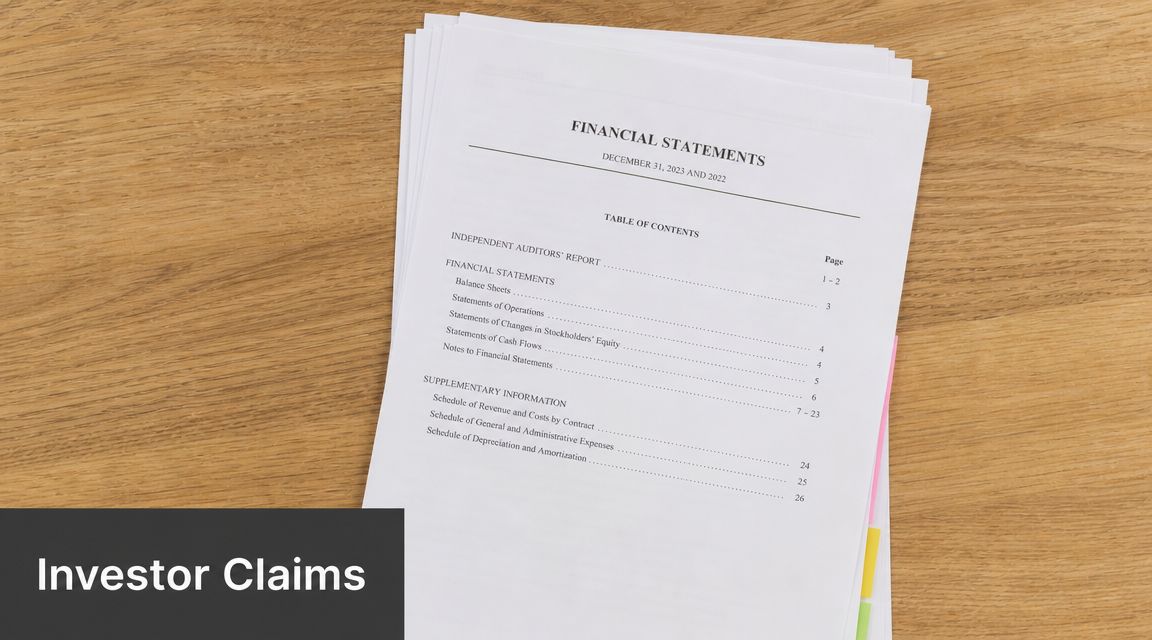
A strong broker dealer liability claim is built on records. Memories matter, but documents usually decide the fight. If you think your account was mishandled, start gathering the full paper trail before anything gets lost, overwritten, or discarded.
The core documents to collect
Start with these items:
- Monthly account statements: These show the timeline, holdings, concentration, gains and losses, and trading frequency. They often reveal patterns that a client didn't notice in real time.
- Trade confirmations: These help identify exactly what was bought or sold, when it happened, and at what price.
- New account forms and updates: These documents matter because they usually state your investment objectives, net worth, liquidity needs, time horizon, and risk tolerance.
- Emails, texts, and letters: Written communications can show what the broker promised, what risks were described, and whether concerns were brushed aside.
- Your own notes: Notes from calls or meetings can be useful, especially if they were made close in time to the events.
Why each piece matters
Statements can expose unsuitable concentration or a pattern consistent with excessive trading. New account paperwork may show the firm coded you as conservative while recommending aggressive products. Communications can bridge the gap between the official file and what you were told.
If the broker claims you approved everything, contemporaneous records become critical. A short email saying “I'm uncomfortable with this risk” can be more important than a later polished explanation from the firm.
Save the ordinary documents. Investors often keep the glossy brochures and throw away the monthly statements, but the statements usually carry more evidentiary value.
Practical steps before you confront the firm
Before you call the branch office in anger, organize what you have.
- Create a timeline: Note when the relationship began, when recommendations were made, and when losses or concerns became clear.
- List disputed transactions: Identify the trades, products, or strategies you believe were improper.
- Preserve digital records: Download emails and account documents rather than assuming they'll remain accessible through the portal.
- Check recording laws first: If you're considering recording a conversation with the broker, review the legal rules in your state first. This guide on how to legally record conversations is a useful starting point.
- Get discovery guidance early: Investors often underestimate what can be obtained from the firm once a claim begins. This overview of the FINRA discovery process explains the kinds of records that may later support your case.
What doesn't work
Don't rely on the broker's oral reassurance that losses are temporary if the account records show something else. Don't assume the firm will voluntarily explain internal supervision failures. And don't wait too long because you hope the account will recover and make the problem disappear.
Early organization often changes the quality of a claim. It helps counsel evaluate liability, damages, and the defenses the firm is likely to raise.
FINRA Arbitration Versus Court Litigation
Most customer disputes against brokerage firms end up in FINRA arbitration, not a courtroom. That surprises many investors. They expect a judge, a jury, and public hearings. In reality, account agreements often require arbitration of disputes with the firm.
That doesn't mean arbitration is unfair by definition. It does mean the process is different, and those differences affect strategy from the start.
The practical comparison
| Feature | FINRA Arbitration | Court Litigation |
|---|---|---|
| Decision-maker | One or more arbitrators decide the case | Judge or jury decides the case |
| Procedure | More streamlined, with forum-specific rules | More formal rules of procedure and evidence |
| Discovery | Usually narrower and document-focused | Often broader, with more motion practice |
| Appeal rights | Very limited in most situations | Broader opportunities to appeal |
| Privacy | Generally less public than court proceedings | Court filings are often public |
| Speed | Often more direct than court litigation | Can take longer because of docket and procedure |
| Cost structure | Forum fees and expert costs still matter, but process is usually narrower | Litigation costs can expand through motion practice and broader discovery |
For a more detailed comparison, this explanation of the differences between arbitration and litigation is worth reviewing.
Why most investor claims are arbitrated
Brokerage account agreements commonly contain mandatory arbitration provisions. If you signed the standard account-opening documents, the firm will likely insist that the dispute proceed in FINRA's forum.
That's not always a disadvantage. Arbitration can be more focused. Many claims turn on account records, supervisor approvals, communications, and expert analysis of suitability or trading patterns. Those issues can be presented effectively to arbitrators.
The trade-offs investors should understand
Arbitration's biggest strength is efficiency. Its biggest weakness is finality. If the panel gets it wrong, overturning an award is difficult.
Court litigation offers more procedural tools and, in some cases, a broader chance to challenge legal rulings. But court can also mean slower movement, more formal motion practice, and more expense before the core facts ever reach a decision-maker.
A useful way to think about venue is this:
- Arbitration works well when: The documents tell a strong story, the account history is clear, and the misconduct can be explained plainly.
- Court may matter more when: There are parallel claims, non-signatory parties, or legal issues that fall outside the arbitration agreement.
Choose the strategy that fits the facts, not the forum that sounds more dramatic.
What investors often misunderstand
Many clients think arbitration is “informal,” as if preparation matters less. The opposite is true. Because the process is more compressed, weak case organization hurts faster. Your account documents, witness preparation, damages model, and theory of liability need to be coherent from the beginning.
That's one reason early case assessment matters. In practice, the venue shapes the tactics, but the fundamentals remain the same. You still need to prove duty, breach, causation, and loss with credible evidence.
Potential Damages and Common Broker Defenses
Investors usually want a direct answer to one question: what can I recover? The honest answer is that recovery depends on the product, the trading history, the legal theory, and how clearly the losses tie back to misconduct rather than general market movement.

What damages are commonly pursued
In many broker dealer liability cases, the main category is out-of-pocket loss. That is the economic harm tied to the improper recommendation, unauthorized trade, or misconduct-driven strategy.
Depending on the case, investors may also pursue:
- Rescission-based relief: A theory aimed at unwinding the transaction or restoring the investor to the position they should have been in.
- Interest: Sometimes sought to account for the time value of money lost through the misconduct.
- Fees or costs in limited circumstances: These depend on the claims asserted and the forum rules.
The damages analysis has to match the legal theory. A concentration case is measured differently from an unauthorized trading case. A private placement claim may require a different approach from a churning claim.
The defenses firms raise
Brokerage firms rarely concede that losses came from misconduct. Their defenses tend to follow familiar patterns.
- You understood the risks: The firm points to account forms, risk disclosures, or signed documents and argues you knowingly accepted the investment.
- The market caused the loss: The defense says the account declined because markets fell, sectors weakened, or volatility affected everyone.
- You approved or ratified the activity: The firm argues you received confirmations and statements, didn't object, and therefore accepted the trades.
- You were experienced: The defense tries to portray the client as having sufficient experience to understand the strategy and its risks.
Supervisory defenses are often narrower than they sound
Firms also try to distance management and compliance personnel from the conduct. But supervisory responsibility isn't judged only by job title. The SEC has emphasized that ultimate responsibility for a broker-dealer's compliance resides with the CEO and senior management, and that compliance or legal personnel can be treated as supervisors when they have the requisite degree of responsibility, ability, or authority to affect business conduct, as discussed in this WilmerHale summary of SEC staff supervisory liability guidance.
That doesn't mean every compliance employee is liable. It does mean firms can't always hide behind organizational charts when the facts show someone had the power to prevent or stop the misconduct.
A signed form helps the defense. It doesn't end the case if the recommendation was still unsuitable, misleading, conflicted, or improperly supervised.
The realistic outlook
Some investors recover a substantial portion of their losses. Others recover less than they hoped. What usually leads to better outcomes is a claim built around a specific theory, a clean damages presentation, and evidence that answers the defense before it takes hold.
Your Next Steps When Facing Investment Losses
If you suspect misconduct, speed matters. These claims are time-sensitive, and delay can damage them in two ways. First, filing deadlines may limit or bar recovery. Second, the practical evidence gets worse over time because memories fade, texts disappear, and the investor's own timeline becomes harder to reconstruct.
What to do this week
Start with action that is simple and concrete:
- Download everything: Statements, confirmations, tax forms, account-opening documents, emails, and messages.
- Write a chronology: Include what you asked for, what you were told, what was recommended, and when the losses became apparent.
- Stop informal discussions with the broker: Don't let repeated reassurance replace a real review of the account.
- Get the account evaluated: An experienced securities attorney can separate market loss from potentially recoverable misconduct.
Many investors wait because they hope the account will rebound. That can be an expensive mistake. A later recovery in the market doesn't erase an unsuitable recommendation, undisclosed conflict, or unauthorized trade. It only makes the case harder to evaluate cleanly.
What a case review should answer
A serious review should tell you:
- Whether the facts support liability
- Which claims are strongest
- Whether the likely forum is FINRA arbitration or court
- What damages theory fits the account
- What defenses the firm is likely to raise
That review doesn't require certainty on day one. It requires enough records and facts to identify whether the loss was merely unfortunate or legally actionable.
For investors looking at representation options, Kons Law handles securities and investment loss recovery matters involving brokerage firms, advisors, and related financial entities through FINRA arbitration and court actions.
The hardest part for many clients is taking the first step. They worry they'll sound uninformed, emotional, or unsure of the legal theory. That's normal. You don't need to arrive with the law fully mapped out. You need the account history, the documents, and a willingness to ask whether the firm failed you.
If you want to discuss whether your losses may support a broker dealer liability claim, contact Kons Law for a free, no-obligation consultation. An experienced securities attorney can review your account activity, explain whether FINRA arbitration or court is the better path, and help you assess the chances of recovering your investment losses.
