
A lot of investors reach the same point in the same way. A broker or advisor recommends a private placement, a non-traded REIT, a business development company, an oil and gas deal, or another “income” product that’s described as conservative, exclusive, or insulated from market swings. Months later, distributions slow down, account statements become harder to understand, and the sponsor stops communicating clearly. Then the value drops, redemptions freeze, or the investment implodes.
At that moment, the questions become urgent. Was this even legal? Was the product properly approved for sale in your state? Did anyone check whether it should have been sold to a retiree, a widow, or a client who needed liquidity?
Many investors assume the answer starts and ends with federal law or FINRA rules. It doesn’t. State securities laws, commonly called blue sky laws, can be one of the most important sources of investor protection after a serious loss. In many situations, those laws create claims that are separate from federal claims and separate from a standard suitability case.
These laws matter most when the investment was risky, thinly disclosed, illiquid, or sold under an exemption that let it avoid a full federal registration process. They also matter when a broker used a product that never should have been pushed into a retirement account in the first place. Investors who practice effective risk management often focus on position sizing, diversification, and exit discipline. That’s sensible on the front end. But once misconduct has already caused losses, legal risk management means identifying every viable recovery route, including state law remedies many people never hear about.
Blue sky states aren't all the same. Some states give regulators stronger screening power. Some preserve useful anti-fraud tools even when federal law preempts state registration review. Some regulators move aggressively. Others do very little unless private counsel forces the issue.
If you’ve lost money in a private placement, alternative investment, annuity, non-traded REIT, BDC, or another broker-sold product, the state-by-state differences can change your strategy, your bargaining power, and sometimes your recovery.
An Investor's Guide to State-Level Securities Protection
A retired investor in one state may have a much stronger practical case than a retired investor in another, even if both bought the same failed product from the same national firm.
That’s one of the least understood realities in securities litigation.
Blue sky laws were designed to protect investors from speculative offerings sold on hype rather than substance. In practice, they can become highly effective tools after losses caused by unsuitable recommendations, unregistered securities, omission of risks, or defective private placement sales. They often matter most when the investor was told the product was “safe,” “income-producing,” or “appropriate for retirement,” and those descriptions were nowhere close to the truth.
Why investors miss this issue
Reviewers often don’t know to ask state-specific questions when they review a loss. They focus on what the broker said, whether the account declined, and whether the sponsor failed.
Those facts matter. But so do questions like these:
- Where did the investor live at the time of sale: State notice filing and exemption rules often turn on investor residence.
- What exactly was the product: A publicly traded stock, a Rule 506 private placement, and a non-traded REIT raise different blue sky issues.
- Who sold it: Liability may extend beyond the issuer to the brokerage firm, investment advisor, or individual representative.
- What did the state allow or prohibit: Some states take a much more active role in screening or policing these offerings.
Practical rule: If a broker sold you an illiquid alternative investment and your explanation for the recommendation still doesn’t make sense, a blue sky review should be part of the case analysis.
Where real leverage comes from
Clients often contact counsel after they’ve already heard some version of the same defense. The market changed. The sponsor failed. The product was risky. You signed the papers.
None of those statements automatically defeats a claim.
A strong recovery strategy looks past the sales pitch and into the legal plumbing of the transaction. That means checking registration status, exemption status, state filings, offering documents, account suitability, concentration, liquidity needs, and whether the broker or advisor had any business recommending the product at all.
In many cases, blue sky laws provide the pressure point that turns a disappointing loss into a viable recovery claim.
What Exactly Are Blue Sky Laws
The term blue sky laws comes from an old criticism of speculative investments that had little behind them except promises and open air. The idea remains useful today. These laws were meant to stop sellers from offering securities backed by little more than optimism.
That makes the phrase memorable, but the legal function is what matters.

Federal disclosure versus state merit review
Federal securities law often works like a disclosure system. In simple terms, the issuer tells investors what the product is, what the risks are, and how the proceeds will be used. The emphasis is on disclosure.
Many blue sky states go further. They use merit review, which means a state regulator may examine the fairness of the offering itself. If the terms are unfair, unjust, or inequitable, the state may stop the offering from being sold to residents.
A practical analogy helps. Federal law is like a label that lists ingredients. Merit review is closer to a regulator deciding the product shouldn’t be sold at all.
That difference is not academic. According to Thomson Reuters’ discussion of blue sky laws, states with strong merit review laws, including states adopting versions of the Uniform Securities Act, have rejected 5-10% of filings, blocking some high-risk offerings such as certain private placements and non-traded REITs before sale to investors (Thomson Reuters on blue sky laws).
Why this matters after you’ve already lost money
If a state had the power to reject or scrutinize an offering more closely, that can become relevant in a later investor case. It may support arguments that the product carried known structural problems, that the offering terms were questionable, or that the broker ignored state-specific compliance obligations when recommending it.
That’s also why a generic national explanation of these laws often isn’t enough. The useful question isn’t “what are blue sky laws” in the abstract. The useful question is whether your state’s law created protections that were overlooked in your transaction.
For a more basic overview of the doctrine itself, see this discussion of what are blue sky laws.
The core point investors should remember
Blue sky laws do two things that matter in real cases:
- They regulate offerings at the state level
- They preserve anti-fraud remedies that can support recovery
- In some states, they allow stronger pre-sale screening than federal law alone
- They offer additional recourse when a broker sold an alternative investment without respecting state requirements
A bad investment outcome isn’t always actionable. A bad investment sale often is.
That distinction is where blue sky states become important.
The Patchwork of Protections Across States
Two investors can buy the same product and face very different recovery scenarios because their states take different approaches to securities regulation.
Some blue sky states still emphasize merit review. Others rely more heavily on disclosure concepts that resemble the federal model. Many use a hybrid structure. Then there’s the practical layer that matters just as much as the statute itself. A state can have investor-friendly law on paper and still provide weak real-world protection if enforcement is underfunded or passive.
The three broad models
Here is a simple way to think about the political environment.
| Types of State Blue Sky Law Regulation | ||
|---|---|---|
| Regulatory Model | Description | Example States |
| Merit review | Regulator can assess fairness and may reject offerings deemed unfair or inequitable | California, New York |
| Disclosure-focused | Greater emphasis on disclosure and anti-fraud rules, with less aggressive substantive screening | Varies by jurisdiction |
| Hybrid | Combines filing, exemption, anti-fraud, and selective review features | Many states using mixed frameworks |
That table simplifies a complicated field, but it captures the main point. State law isn’t uniform, and strategy shouldn’t be uniform either.
Law on the books versus law in action
A second problem is enforcement disparity. The written statute only tells part of the story.
According to the discussion cited by Cummings.law, 37 states recognize OTCQX securities, affecting over 190 million people, yet practical enforcement still varies sharply because state budgets, staffing, and priorities differ (Cummings.law on blue sky enforcement variation). For investors, that means your chances of meaningful regulatory involvement may depend less on broad legal theory and more on whether your state actively pursues securities misconduct.
What this means for a recovery strategy
An investor usually has three separate questions to answer.
First, what protections existed under that state’s statute?
Second, how does that state regulator behave?
Third, which forum gives the strongest pressure point against the selling firm?
Those questions don’t always point in the same direction.
- Strong law, weak enforcement: The state statute may look favorable, but private litigation or FINRA arbitration often provides the effective resolution.
- Moderate law, aggressive regulator: A regulatory complaint can become a useful advantage even if the investor’s private cause of action is narrower.
- Multi-state sales practice: If the advisor sat in one state, the investor lived in another, and the issuer was somewhere else, choice-of-law and filing issues become more complex fast.
- National brokerage firms: Large firms often rely on standardized product approvals, but state-level compliance failures still happen in individual sales.
What works and what doesn’t
What works is a state-specific investigation. Counsel should examine the investor’s residence, the product structure, the timing of the sale, the exemption claimed, and any available filing history.
What doesn’t work is assuming all “blue sky” issues are interchangeable.
Case evaluation mistake: treating a private placement loss as only a market-loss case without checking state exemption, notice, and anti-fraud issues.
Another common mistake is relying solely on the regulator to solve the problem. Some state agencies act decisively. Others won’t deliver meaningful investor recovery on their own, even when they agree the conduct was troubling.
A serious review of blue sky states is less about abstract labels and more about where the claim gains real traction.
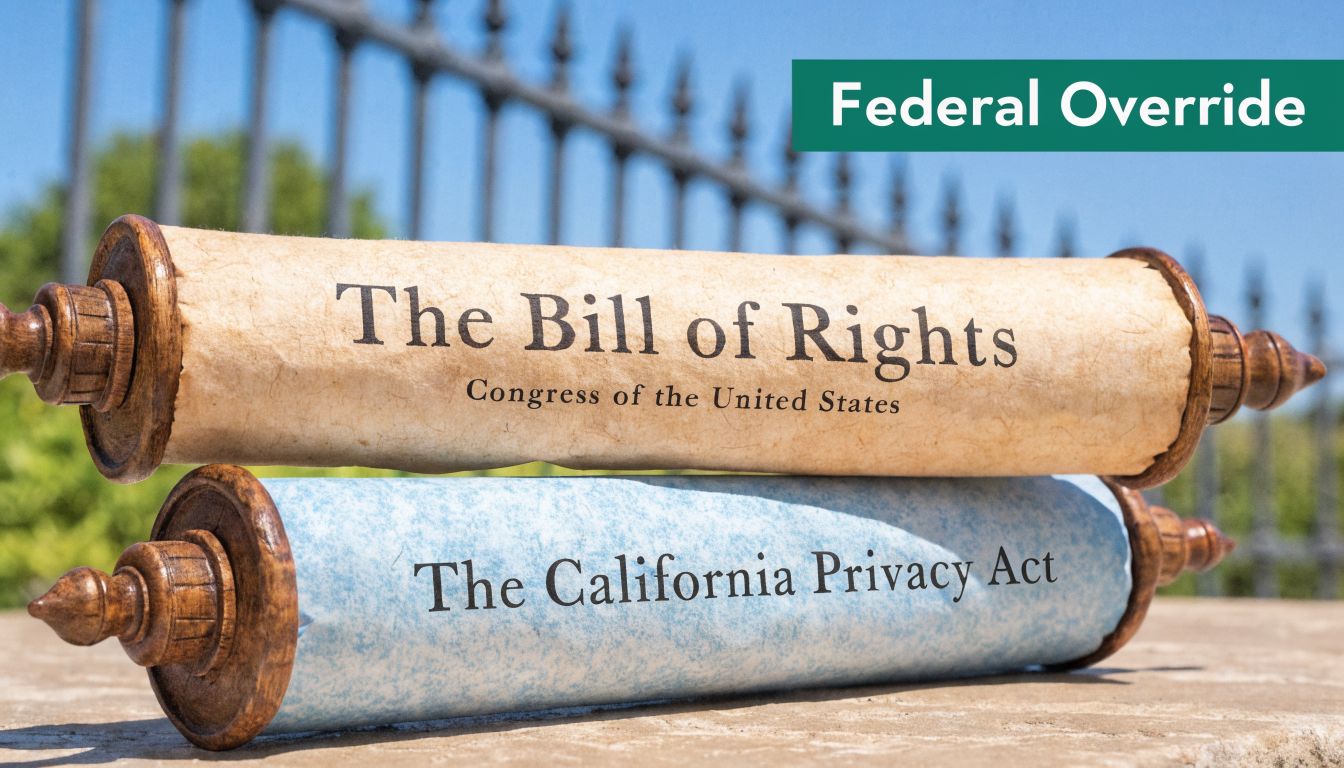
When Federal Law Overrides State Protections
The phrase many investors hear is “federal preemption.” It sounds technical, but the idea is straightforward. In some securities offerings, federal law limits what states can do on the registration side.
The main statute behind this is the National Securities Markets Improvement Act of 1996, usually called NSMIA.
For many private placements sold under Rule 506(b) or Rule 506(c) of Regulation D, states can’t apply their own merit review in the usual way. That often surprises investors. They assume a state regulator had to approve the product on the merits before it could be sold. Often, that didn’t happen.
What preemption actually removes
For covered securities, NSMIA generally strips states of the power to require full registration merit review. If the offering fits within the federal exemption, the issuer doesn’t have to run the full fifty-state qualification gauntlet on the merits.
That does not mean states become irrelevant.
It means the fight shifts.
What states still keep
Even when federal law preempts state merit review, states still retain important powers. The most important for investors are these:
- Anti-fraud enforcement: States can still pursue fraudulent conduct.
- Notice filing requirements: Issuers still may have to make state filings when investors in that state buy the offering.
- Fee collection and procedural compliance: Missing required filings can create legal exposure.
- State-specific remedies: Some state statutes give investors rescission or related relief when the seller failed to comply.
The notice-filing piece is often the overlooked issue that changes a case.
According to the Investment Company Institute paper, for Rule 506 offerings, federal law preempts state merit reviews but still requires issuers to make a notice filing, typically Form D, in each state where an investor resides. Non-compliance occurs in an estimated 15-20% of private funds and can give investors rescission rights, allowing them to seek a full return of principal plus interest (ICI on Blue Sky notice filing requirements).
Why “just paperwork” can matter so much
Brokerage firms and issuers sometimes treat blue sky notice filings like administrative cleanup. That’s a mistake.
If a product was sold into a state without the required filing, that failure may strengthen claims that the sale was unauthorized, improperly supervised, or legally defective. In some matters, the filing problem becomes more persuasive than arguments about the product’s eventual performance.
This is especially important in cases involving private placements, oil and gas partnerships, non-traded alternatives, and other exempt offerings sold to retirees who were told they were buying something suitable and professionally vetted.
The practical review investors should demand
A serious legal review should look at more than account statements. It should include:
- The exemption used for the offering
- Whether Form D was filed federally
- Whether notice filings were made in the investor’s state
- Whether the broker had a reasonable basis to recommend the investment
- Whether the firm supervised concentration, liquidity risk, and client suitability
Investors who want a practical primer on the regulatory overlap can review this page on the SEC and FINRA, but the key point is simple. Preemption narrows some state powers. It doesn’t erase them. In many cases, it creates a different and very useful path for recovery.
Your Avenues for Recovery After Investment Losses
After a blue sky issue surfaces, investors usually have more than one possible route. The right path depends on the product, the selling firm, the account agreement, the investor’s state, and whether the goal is compensation, influence, regulatory pressure, or all three.
State court claims
A state court action may make sense when the investor has direct statutory claims under the applicable blue sky law, plus common-law claims such as fraud, negligence, breach of fiduciary duty, or misrepresentation.
Advantages
- Public filing can increase pressure on the defendants
- Broader pleading options in some cases
- Useful when multiple defendants are involved, including issuers and sellers
- Can fit disputes that go beyond a standard brokerage arbitration framework
Trade-offs
- Litigation can move slowly
- Motion practice can be expensive and time-consuming
- Jurisdiction and forum fights can delay the merits
- Defendants often push hard on arbitration clauses
Complaints to state regulators
A complaint to the state securities division usually won’t replace a private damages action, but it can still matter.
Regulators may investigate sales practices, filing failures, licensing issues, and broader misconduct patterns. In the right case, a regulatory inquiry creates an advantage that private counsel can use in parallel settlement discussions or in an arbitration setting.
This route tends to work best when the product was sold to multiple residents, when elderly investors were involved, or when the misconduct appears systemic rather than isolated.
If the facts suggest a pattern, not just a one-off bad recommendation, a regulatory complaint may help expose documents and conduct the investor couldn’t uncover alone.
FINRA arbitration
For many investors, FINRA arbitration is the primary recovery path because most brokerage account agreements require disputes with broker-dealers to be arbitrated rather than litigated in court.
Arbitration is often the right forum for claims involving unsuitable recommendations, failure to diversify, overconcentration, misrepresentations, unauthorized trading, due diligence failures, and negligent supervision tied to broker-sold alternatives.
A detailed overview of the process appears in this guide to the FINRA arbitration process.
A practical comparison
| Recovery path | Where it can help most | Main limitations |
|---|---|---|
| State court | Statutory state-law claims, multiple defendants, broader fact patterns | Slower process, forum fights, public proceedings |
| State regulator complaint | Pressure, investigation, pattern misconduct, public interest concerns | Usually not a direct compensation vehicle by itself |
| FINRA arbitration | Broker-dealer disputes, suitability, supervision, concentration, faster private forum | Limited appeal rights, narrower procedural tools than court |
What tends to work best
The strongest strategy is often coordinated, not isolated.
A lawyer may pursue FINRA arbitration against the brokerage firm while evaluating state statutory claims, preserving court options against non-FINRA defendants, and preparing a regulator complaint where it adds pressure. That combination often matters in private placement and alternative investment losses because blame is usually spread across several actors.
What doesn’t work is choosing a forum based on convenience alone.
A broker’s sales pitch, the product’s exemption status, and the investor’s state can all alter the best route. Investors who move quickly usually preserve more options. Investors who wait often let one route expire while the others become harder to prove.
Understanding Critical Deadlines and Statutes of Limitation
A strong case can still fail if it’s filed too late.
That’s what a statute of limitations does. It sets the deadline for bringing a claim. Miss that deadline, and the court or arbitration panel may never reach the merits, no matter how troubling the misconduct was.

The discovery rule matters in investment cases
In many investment disputes, the key issue is not when the product was sold. It’s when the investor discovered, or reasonably should have discovered, that something was wrong.
That distinction matters because many products are designed to look stable until they aren’t. A private placement may continue issuing statements long after its real value has deteriorated. A non-traded product may report a steady value while liquidity disappears. An annuity or alternative investment may not reveal the true damage until surrender problems, missed payments, or adverse disclosures emerge.
A common real-world pattern
An investor buys a private placement after being told it’s conservative income. For a period of time, statements appear ordinary. Then distributions stop. Redemption requests are denied. A negative disclosure, legal filing, or sponsor collapse finally reveals the risk that should have been disclosed from the start.
That later event may become central to the limitations analysis.
Why state law needs close attention
Blue sky claims don’t all run on the same timetable. The applicable limitation period can vary by state and by claim type. Court claims and arbitration claims can also raise different timing questions.
On top of that, state protections are not static. The Missouri Law Review material referenced in the verified data notes that investors in private placements and alternative assets sold under federal exemptions like Rule 506 often don’t realize state anti-fraud authority still remains, and changes such as Florida’s 2024 update to bad actor disqualification rules show that state protections continue to evolve (Missouri Law Review discussion of post-NSMIA state protections).
That matters because the legal theory available today may not be obvious from the documents you signed years ago.
What investors should do immediately
- Preserve documents: Keep account statements, emails, texts, notes, subscription documents, and offering materials.
- Write down the timeline: Record when you first became concerned and what triggered that concern.
- Don’t rely on reassurances: Brokers often try to calm clients after a product starts unraveling. Those conversations can complicate a deadline analysis.
- Get the timing reviewed quickly: A lawyer can evaluate both state-law deadlines and arbitration eligibility issues.
For a general discussion of timing in these cases, review this page on the statute of limitations on securities fraud.
Delay helps the defense. Early analysis protects the claim.
How Kons Law Can Champion Your Recovery
Blue sky states create opportunity for investors, but they also create complexity. The law differs by jurisdiction. Enforcement intensity differs by regulator. Federal preemption changes the analysis for many private placements. Filing defects can matter. Suitability evidence matters. Timing always matters.
That combination is why many investors lose their advantage when they try to handle the claim informally.
A securities loss case involving a private placement, non-traded REIT, BDC, annuity, oil and gas partnership, structured product, or other alternative investment needs more than a general complaint letter. It needs a focused legal review of the sale itself, the product structure, the account profile, and the state-specific rules that may create additional remedies.
Kons Law is built for that type of work. The firm is a nationwide securities and investment litigation practice that represents investors in FINRA arbitration and court actions involving broker misconduct, advisor negligence, unsuitable recommendations, concentration, unauthorized trading, unregistered securities, fraud, and financial elder abuse. The firm has more than 18 years of experience, has recovered over $50 million, and has handled 700+ matters for investors harmed by financial services misconduct.
Why that matters in blue sky cases
These cases often require several things at once:
- Product-level analysis: Was the investment unsuitable, illiquid, or misrepresented?
- Seller-level analysis: Did the broker or advisory firm breach fiduciary duties or ignore concentration and liquidity concerns?
- State-law analysis: Did the sale violate notice, exemption, anti-fraud, or other blue sky requirements?
- Forum strategy: Should the claim proceed in FINRA arbitration, court, or alongside a regulatory complaint?
Investor-friendly representation
Many harmed investors hesitate to call a lawyer because they assume legal fees will create another financial burden. In these cases, that concern shouldn’t stop the conversation. Kons Law typically represents clients on a contingency-fee basis, which means the firm is generally paid only if it recovers money for the client.
| Kons Law Firm Call to Action |
|---|
| Free consultation available. Call Kons Law Firm at (860) 920-5181 for a FREE, NO OBLIGATION consultation. |
When retirement savings, inherited assets, or years of disciplined investing have been damaged by misconduct, a prompt legal review can preserve claims and identify recovery avenues that aren’t obvious from the account statement alone.
Frequently Asked Questions About Blue Sky Claims
What if the company that issued the investment has gone bankrupt
That doesn’t necessarily end the case. Many investor claims focus on the broker, brokerage firm, investment advisor, or other seller who recommended the product. If that person pushed an unsuitable private placement or failed to disclose the pertinent risks, liability may still exist even if the issuer later collapsed.
What if I live in a different state than my financial advisor
That’s common. In many cases, the investor’s state of residence matters because blue sky notice and exemption issues often track where the investor lived when the sale occurred. The advisor’s location also matters. So does the brokerage firm’s location. Jurisdiction and choice-of-law issues can be worked through, but they should be analyzed early.
How much does it cost to pursue a claim with Kons Law
Kons Law typically handles these matters on a contingency-fee basis. That means you generally don’t pay attorney’s fees unless the firm recovers money for you. The first step is a free consultation so the facts, timing, and likely recovery paths can be evaluated.
If you want to discuss whether blue sky laws, FINRA arbitration, or state-level securities claims may help you recover investment losses, contact Kons Law. You can also call Kons Law Firm at (860) 920-5181 for a FREE, NO OBLIGATION consultation.
