You log into your account in the morning and see a position that looked stable a week ago suddenly down hard. There’s no earnings miss, no major filing, no obvious business event that explains the move. Maybe your broker had been urging you to hold. Maybe the stock had been getting hyped online. Maybe the trading activity in your account now looks stranger than the stock chart itself.
That kind of loss creates a specific kind of anxiety. Investors usually know markets go up and down. What unsettles them is when the movement doesn’t feel organic. It feels staged. It feels like someone else knew what was coming, or worse, helped cause it.
Some losses come from ordinary risk. Some come from bad advice, unsuitable recommendations, or excessive trading. Some involve stock manipulation, which is a legal term with a specific meaning. If you’ve been trying to figure out whether what happened to you was volatility or something actionable, that distinction matters.
It also helps to keep perspective. Many retail investors lose money for reasons that have nothing to do with fraud, including poor risk controls and behavioral mistakes. This overview of why most retail traders fail statistically is useful because it separates ordinary trading failure from misconduct. That separation is important. A legal claim starts where normal market risk ends and deceptive conduct begins.
Understanding Your Investment Losses An Introduction
You review your account after a sharp decline and the explanation still does not fit. There was no earnings event, no meaningful public disclosure, and no obvious reason for the trading to become so erratic. If your broker had been encouraging you to stay in the position, or if the trading in your account suddenly accelerated without a clear purpose, the right question is not just whether the investment went down. The right question is why it went down, and whether the losses came from ordinary market risk, improper brokerage conduct, or manipulation.
I often tell investors to start with a distinction that is relevant in practice. A bad investment is not automatically a legal claim. Aggressive trading is not automatically manipulation. But trading becomes a legal problem when someone creates a false appearance of price, demand, liquidity, or market interest, or when a broker or advisory firm handles your account in a way that caused avoidable losses.
That practical distinction gets missed all the time. Many investors lose money for reasons that have nothing to do with fraud, including poor timing, excessive risk, and basic trading mistakes. This overview of why most retail traders fail statistically is useful for that reason. It helps separate ordinary trading failure from conduct that deserves closer scrutiny.
What investors often miss at first
Manipulation usually does not announce itself. Investors see the effects first, then work backward.
- Price action that lacks a business explanation. The security jumps or collapses without news that would reasonably support the move.
- Volume that appears and disappears abruptly. A stock suddenly looks active, then becomes illiquid once investors are drawn in.
- Broker behavior that creates a second layer of concern. You see unauthorized trades, repeated in-and-out transactions, concentrated recommendations, or pressure to hold while the market for the security weakens.
Those facts do not prove manipulation by themselves. They do tell you where to look.
For a FINRA claim, the early evidence is often less dramatic than investors expect. Save account statements, trade confirmations, emails, text messages, notes from calls, promotional materials, and screenshots of unusual price or volume activity. Write down who said what, and when. If your advisor changed the story after losses began, that timeline matters. If your account shows excessive trading, unsuitable recommendations, or purchases in products that were hard to value or hard to sell, that also matters.
History helps explain why securities law takes this conduct seriously. After the market abuses exposed during the period surrounding the 1929 crash, federal securities regulation developed with a strong focus on deceptive practices that distort fair trading and price formation.
Why timing matters
Delay creates practical problems. Records get harder to collect. Memories fade. Firms keep some materials, but not always in the form or detail an investor expects.
You do not need to prove the full case before speaking with counsel. You need documents, a timeline, and enough detail to show whether the losses point to normal risk, unsuitable advice, excessive trading, or possible manipulation by your broker or another market participant.
If you want to discuss the investment loss recovery process in more detail, call Kons Law Firm at (860) 920-5181 for a FREE, NO OBLIGATION consultation.
The Legal Definition of Stock Manipulation
A stock can drop hard after a large seller hits the market. That alone is not manipulation. A broker can recommend a speculative stock that later collapses. That alone is not manipulation either.
Stock manipulation definition starts with intent and deception. The legal question is whether someone acted to create a false impression of supply, demand, price, or trading activity so other investors would react to a fiction rather than real market forces.
The core legal idea
Securities law draws a practical line between hard trading and dishonest trading. Aggressive buying, aggressive selling, shorting, concentrated positions, and even being spectacularly wrong are usually lawful if the trades are real and the market is not being misled.
The line is crossed when the conduct is designed to fool others. That can include false statements, sham orders, wash trades, matched orders, hidden compensation for promotion, or coordinated activity meant to manufacture price movement or trading interest.
For investors, that distinction matters because many loss cases are not pure market manipulation claims. Some are suitability cases. Some involve unauthorized trading or excessive trading. Some involve misrepresentations by a broker or advisory firm that used manipulative conduct to sell or hold a position. If you want a broader legal primer, this explanation of what market manipulation is under securities law is a useful companion.
Aggressive trading versus illegal manipulation
The outcome does not decide the issue. The method does.
| Conduct | Usually legal or illegal | Why |
|---|---|---|
| Taking a large long or short position | Usually legal | The trader is expressing a market view with real economic risk |
| Recommending a risky stock with proper disclosure and suitability | Usually legal | Risk and volatility do not equal fraud |
| Placing multiple genuine orders intended for execution | Usually legal | Real trading interest is allowed, even if it affects price |
| Spreading false information to move price | Illegal | It deceives investors and distorts price formation |
| Entering orders with no real intent to execute | Illegal | It creates a false signal about demand or supply |
| Coordinated trades designed to fake market activity | Illegal | It manufactures volume or price action instead of reflecting true trading |
That is the trade-off investors often miss. The law does not punish every sharp practice or every bad recommendation under a manipulation theory. It targets deception that changes how the market or the customer perceives the security.
Why investors and firms often label losses differently
Investors often use the word “manipulation” to describe losses that feel engineered or unfair. Sometimes that instinct is right. Sometimes the stronger claim is against the broker or advisory firm for churning, unsuitable recommendations, misrepresentations, overconcentration, or unauthorized trading.
From a FINRA claim perspective, the label matters less than the proof. If your broker pushed repeated trades that generated commissions without a sensible investment purpose, that may fit churning more than market manipulation. If the firm sold you on a stock by describing demand, liquidity, institutional support, or price activity in a way that was false or incomplete, manipulation may be part of the story.
A practical rule helps here: ask whether the trading or recommendation made economic sense unless someone else was being misled.
What proof usually matters
Direct evidence is rarely a signed confession. In actual cases, proof usually comes from the pattern.
Look for trade confirmations, monthly statements, email chains, text messages, call notes, research reports, promotional materials, and any record showing what your broker said about volume, demand, price support, or who else was buying. Compare those statements to what happened in the account. Compare them to the timing of unusual trades, sudden price spikes, heavy selling, or repeated order cancellations if those records are available.
Communications often matter as much as the tape. If a broker described activity as “institutional buying,” “support at this level,” or “temporary volatility” while internal records showed distribution, heavy selling, or pressure to move inventory, that can be powerful evidence in FINRA arbitration.
The practical point is simple. Illegal manipulation usually requires proof that someone created a false market picture on purpose. An investor preparing a potential claim should focus on documents that show who created that picture, how it was communicated, and whether the broker or firm benefited from it.
Common Stock Manipulation Schemes Explained
You buy a stock after your broker describes heavy interest, steady support, and active trading. Days later, the volume disappears, the price breaks hard, and the explanation changes. In practice, that is often how investors first encounter manipulation. The key question is whether the activity reflected real market interest or a manufactured signal designed to draw you in.
Some trading looks aggressive but remains legal. Traders can buy heavily, sell quickly, post large orders, and change their view. The line is crossed when the conduct is meant to create a false impression of demand, supply, liquidity, or price support. For an investor considering a FINRA claim, that distinction matters because the evidence usually comes from what your broker said, what the firm did, and whether the trading had a legitimate economic purpose.
Pump and dump
Pump and dump is the scheme investors recognize most often. The operator accumulates shares at low prices, promotes the stock through misleading claims or one-sided talking points, then sells into the demand created by that promotion. The losses usually land on later buyers.
Promotional activity by itself is not always illegal. Salesmanship becomes manipulation when the promotion hides compensation, ignores known risks, or omits that insiders or affiliated accounts are already selling. If your losses fit that pattern, this discussion of whether pump and dumps are illegal addresses the issue directly.
In broker cases, the documents matter. Save emails, text messages, research notes, private placement materials, and any statement describing rising demand, strong volume, institutional buying, or limited downside. Those representations often become important if account records later show concentrated selling, inventory reduction, or recommendations that made more sense for the firm than for you.
Spoofing and layering
Spoofing and layering involve orders placed to move the market's perception, not to complete genuine trades. A trader enters large visible orders to suggest real buying or selling pressure, other market participants react, and the trader cancels the orders after getting the price response he wanted.
That differs from lawful order changes. Traders cancel orders every day for legitimate reasons. The concern arises when large orders appear repeatedly, influence price or quote movement, and then vanish once the market moves enough for the trader to profit on the opposite side, as discussed in this analysis of market manipulation definitions.
Retail investors usually will not have full order book data. They may still have useful evidence. If your broker described a stock as having strong natural demand or unusual support while the trading looked erratic and short-lived, that mismatch can help frame a FINRA claim and support requests for the firm's internal records.
Wash trading
Wash trading creates fake volume through transactions that do not reflect real economic risk. The trading may appear active on the tape, but beneficial ownership does not meaningfully change, or coordinated accounts trade with each other to simulate interest.
This scheme matters because many investors rely on volume as proof that a market is real and liquid. A broker who points to repeated trading activity as confirmation of market strength may be reinforcing a false picture if that activity was engineered.
From a claim-building perspective, compare the story you were told against the actual trading pattern in your account. If the recommendation emphasized liquidity, but you later had trouble selling, suffered wide spreads, or saw sudden bursts of volume with no durable market support, those facts can be important even if you cannot identify every wash trade yourself.
Marking the close
Marking the close involves trading near the end of the session to push the closing price to a preferred level. That can affect account values, margin calculations, performance figures, and products tied to end-of-day pricing.
Investigators focus on motive. If the closing print benefited a broker, a fund manager, or an affiliated account in a way ordinary market activity would not explain, the trade deserves scrutiny.
For investors, the practical clue is timing. If a stock repeatedly moved sharply in the final minutes, especially on days when account statements, valuations, or performance reporting mattered, preserve those records. A pattern around the close can support a broader theory that the price was being managed rather than discovered honestly.
Why these schemes often overlap
Real cases rarely arrive with a clean label. A broker may push a thinly traded stock, repeat misleading claims about demand, place customer orders into an unstable market, and fail to disclose conflicts at the same time. The legal theory may involve manipulation, unsuitable recommendations, misrepresentations, failure to supervise, or several of them together.
That is usually the practical trade-off in investor cases. A pure market manipulation claim can be harder to prove without internal trading data, but a FINRA claim against the broker or advisory firm may still be strong if the recommendations were misleading, conflicted, or inconsistent with your objectives. Focus on preserving the record early. The strongest cases often turn on communications, account documents, and whether the firm's explanation matches what occurred.
The Laws and Regulators Protecting Investors
A lot of investors call my office after the same sequence. The stock drops, the broker says the market was volatile, and the client is left wondering whether this was hard but legal trading or something more serious.
That distinction matters because the legal rules do not punish every aggressive trade. U.S. securities law targets deception, manipulation, and abusive conduct that distorts the market or the broker-customer relationship. The main federal framework comes from the Securities Exchange Act of 1934, including Section 10(b) and Rule 10b-5. Those provisions are used to challenge false statements, deceptive trading activity, and schemes designed to create a false appearance of price or demand.
For an investor, the practical question is usually narrower. Was the price movement the result of legitimate market pressure, or did someone create a misleading picture and use your account, your confidence, or your lack of information against you?
What the SEC does and what FINRA does
The SEC is the federal civil regulator. It investigates suspected securities violations, brings enforcement actions, seeks fines and industry bars, and can ask courts for injunctions and other remedies.
FINRA serves a different function. It regulates brokerage firms and registered representatives, enforces its own conduct rules, examines firms, and operates the arbitration forum where many investors bring claims against brokers and advisory firms. A useful starting point is this overview of the respective roles of the SEC and FINRA.
That division matters in real cases. If you are trying to recover losses, you usually are not filing your own case with the SEC. You are more likely evaluating a FINRA arbitration claim based on unsuitable recommendations, unauthorized trading, excessive trading, misrepresentations, omissions, or failure to supervise.
Why the legal line matters in practice
The hard cases sit near the border between aggressive trading and illegal manipulation. A trader can buy heavily, sell quickly, talk up a position, or concentrate in a volatile stock without automatically violating the law. The conduct becomes much more problematic when the trading is paired with false statements, hidden conflicts, wash trades, matched orders, manipulative pricing near key valuation times, or recommendations that were never suitable for the customer in the first place.
That is why investors should avoid getting stuck on labels too early. A broker may insist the activity was just speculative or high-risk. The better question is whether the firm disclosed the risks transparently, handled your account in line with your objectives, and avoided conduct that created a false appearance in the market.
What actually helps an investor build a claim
Regulators can punish misconduct, but an investor still needs proof that connects the misconduct to the account losses. In FINRA cases, the strongest evidence often comes from records the investor already has or can request.
Start with the paper trail:
- account statements showing concentrated positions, repeated in-and-out trading, or sharp losses after recommendations
- trade confirmations identifying timing, price, and whether transactions were authorized
- emails, text messages, notes, and call summaries reflecting what the broker promised or failed to disclose
- new account forms and risk-tolerance documents showing whether the strategy fit your objectives
- promotional materials or research reports used to sell the investment
- any complaint you made to the firm and the firm's written response
Those records help answer the issue investors care about most. Was this lawful risk, or did the broker or firm cross the line and then paper it over with a market excuse?
Regulatory action helps, but it is not your remedy by itself
An SEC or FINRA investigation can support your case, especially if it uncovers disciplinary findings, supervisory failures, or suspicious trading patterns. It may also do nothing for months while your own deadlines continue to run.
Investors should treat regulatory interest as useful context, not a substitute for evaluating their own claim. If the losses involve a broker or advisory firm, the practical path is often a private FINRA arbitration focused on recovery, supported by documents that show how the recommendation was made, how the account was handled, and whether the firm's explanation fits the actual record.
Investor Red Flags for Stock Manipulation
A common investor story starts the same way. A position that was pitched as timely or strategic suddenly trades in a way that makes no sense, volume jumps, the price whips around, and the explanation from the broker changes after the loss. That does not automatically mean illegal manipulation. It does mean the line between hard selling, reckless account handling, and unlawful conduct may matter to your recovery.
Warning signs in the market
Start with the public facts, but treat them as clues, not conclusions.
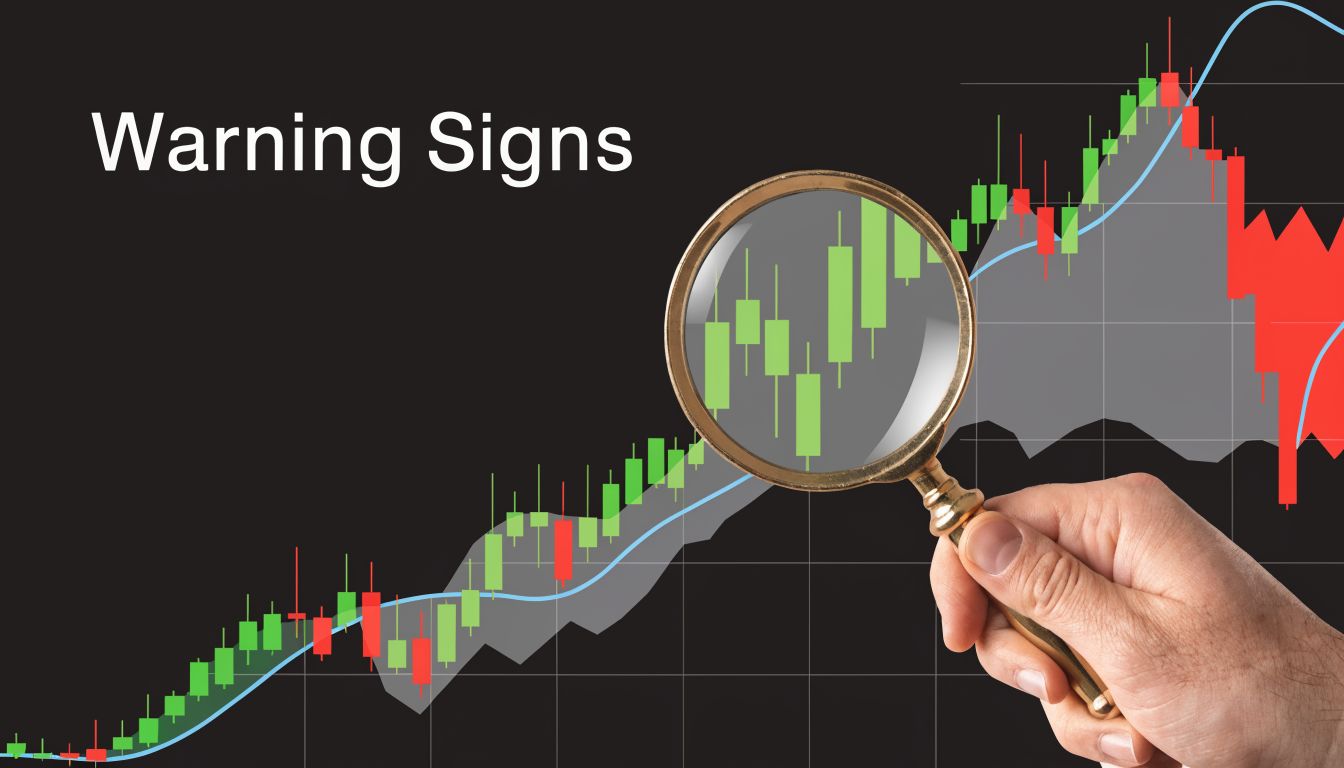
- Sudden volume without a clear business reason. A thinly followed stock starts trading heavily even though there is no credible news, filing, or earnings development to explain it.
- Sharp price movement tied to hype. Promotional emails, social posts, chatroom activity, or coordinated commentary appear at the same time the stock spikes.
- Low-liquidity securities behaving like fast momentum trades. Thinly traded names, microcaps, and some illiquid products can move on relatively little buying or selling pressure.
- Price action near the close that seems unusually important. If the closing price affects reported values, margin treatment, or performance reporting, late-day trading deserves a closer look.
Aggressive trading is not always illegal. Some securities are volatile because they are speculative, illiquid, or driven by genuine market interest. The legal problem starts when trading or promotion is intended to create a false appearance of demand, price support, or market interest.
Warning signs inside your account
For many investors, the stronger claim is not that they can prove a market-wide scheme from the outside. It is that their own broker or advisory firm recommended, executed, or supervised activity that did not fit the account and then failed to explain the actual risks.
Look closely at:
| Record | What to check |
|---|---|
| Account statements | Repeated in-and-out trading, unusual turnover, or concentration in one speculative position |
| Trade confirmations | Transactions you did not authorize, prices that look out of line, or timing clustered around unusual market activity |
| Emails and texts | Sales pressure, assurances about safety or liquidity, or explanations that shift after losses |
| New account forms | Risk tolerance, investment experience, or liquidity needs recorded in a way that does not reflect reality |
| Concentration levels | Large exposure to an illiquid, complex, or proprietary product that could not withstand a downturn |
The HBSS discussion of detecting market manipulation and investor response points investors to practical checks such as reviewing trade confirmations for suspicious patterns and checking FINRA BrokerCheck for disciplinary history. That is useful advice, but for a FINRA claim the question is usually more specific. Did your broker recommend or place you into trading or products that were unsuitable, unauthorized, excessively active, or sold through misleading statements?
A suspicious chart may explain why you became concerned. A stronger investor case usually ties that concern to what the broker recommended, what the firm supervised, and what your records show.
Red flags investors often explain away
Investors often give the broker the benefit of the doubt for too long. I see that regularly in claims involving concentrated positions, structured products, non-traded REITs, private placements, and accounts that became far more active after the relationship began.
- You were rushed. Pressure to act immediately often appears where a recommendation falls apart under careful review.
- The sales pitch focused on upside and brushed past liquidity, valuation, or exit risk. That matters in many FINRA cases, especially with complex or thinly traded products.
- The explanation changed after the losses. What was first described as safe, income-producing, or short-term tradable later becomes a long-term hold that you supposedly misunderstood.
- Trading activity increased without a client-centered reason. Excessive trading, switching, or repeated purchases and sales can support claims even if proving manipulation in the broader market is difficult.
- Your account became concentrated in one theme, issuer, or illiquid product. That is often where suitability and supervision issues become easier to show.
If several of those facts are present, focus on preserving the record and matching each red flag to a document, date, or communication. That is often how a concerning trading pattern turns into a credible FINRA arbitration claim against the broker or firm.
How Stock Manipulation Is Investigated and Proven
Suspicion isn’t enough in a legal case. A claimant has to connect conduct, intent, and loss in a way an arbitrator, judge, or regulator can follow. That doesn’t mean every case needs a cinematic smoking gun. It means the facts need to form a credible chain.

The first layer of proof
The opening step is usually document-driven. Lawyers and experts review account statements, confirms, communications, product materials, suitability records, notes, and the timing of recommendations against the timing of losses.
That sounds basic, but it’s where many cases turn. If a broker described an illiquid product as safe, omitted key risk information, or traded an account in a pattern that had no client-centered rationale, those facts can matter whether or not the broader market conduct is ultimately labeled manipulation.
The expert methods that make the case stronger
When market manipulation is central, experts often rely on two technical tools. According to this Econone explanation of securities litigation analysis, Event Study Analysis compares actual returns to expected benchmarks such as the S&P 500, and a t-statistic over 2.0 indicates impact with 95% confidence. The same source explains that Market Microstructure Analysis uses Trade and Quote data at millisecond resolution to reconstruct order books and detect spoofing through large, non-bona fide orders that were placed and then canceled.
Here’s the practical difference between the two:
| Method | What it asks | What it helps prove |
|---|---|---|
| Event Study Analysis | Did this security move abnormally compared with a reasonable benchmark? | Causation and price impact |
| Market Microstructure Analysis | Did the order flow show deceptive behavior? | Trading mechanics and manipulative intent |
One focuses on the effect. The other focuses on the method.
Why communications often matter as much as trading data
Trading records can show a pattern. Communications can show purpose.
Emails, text messages, internal chats, call notes, compliance alerts, and supervisory records may reveal whether the person involved knew the appearance of demand or price was false. That’s especially important in broker cases. A firm may deny knowledge of a problematic recommendation, but branch emails, exception reports, or prior complaints can tell a different story.
Proof often comes from combining ordinary documents. A recommendation memo, a text message, a trade confirm, and a timing analysis can tell a much stronger story together than any one item can alone.
What doesn’t work well
Investors often hurt their own cases in three ways.
- They rely only on the chart. A bad chart raises suspicion, but it doesn’t explain who did what.
- They delete communications after becoming angry. Even a frustrated email exchange may later prove notice, misrepresentation, or unauthorized conduct.
- They wait for a regulator to act first. By then, records may be harder to obtain and deadlines may be closer than expected.
A strong case is built from preserved documents, a precise timeline, and a theory that fits the facts. Sometimes that theory is direct manipulation. Sometimes it’s unsuitable advice, churning, unauthorized trading, failure to supervise, or fiduciary breach linked to the same underlying events.
Your Next Steps if You Suspect Manipulation
If you think manipulation or broker misconduct may have contributed to your losses, your next move should be deliberate, not emotional. Investors often make the worst decisions right after discovering the problem. They argue with the broker on the phone, delete messages, move assets impulsively, or assume they need a complete case file before asking for legal advice.
They don’t.
Step one is preservation
Start gathering the record now.
- Account statements from the period before the recommendation through the loss
- Trade confirmations for every purchase and sale at issue
- Emails, texts, and voicemails with your broker, advisor, or firm
- New account forms and updates showing your objectives, income, net worth, liquidity needs, and risk tolerance
- Product documents such as offering materials, prospectuses, or summary sheets
- Personal notes about what you were told and when you were told it
Write out a timeline while it’s still fresh. Include who contacted you, what they recommended, what risks they described, and how the story changed once the investment performed badly.
Step two is avoid self-inflicted damage
Don’t assume every loss means you should immediately liquidate. Don’t confront the broker in a way that gives them time to reshape their explanation before the records are reviewed. And don’t let the firm frame the issue for you too early.
Some cases are about market manipulation. Others are better framed as unsuitable recommendations, concentration, unauthorized trading, breach of fiduciary duty, or supervision failures. The wrong label can distract from the stronger claim.
Step three is check deadlines and forum issues early
Securities claims don’t stay open forever. Waiting because you hope the investment rebounds or because you’re embarrassed about what happened is a costly mistake. If you’re wondering about timing, review this summary of the statute of limitations on securities fraud claims.
That doesn’t replace legal advice, but it highlights an important point. Delay can affect not just evidence, but your right to pursue recovery at all.
A practical standard for deciding whether to act
Ask yourself these questions:
| Question | If the answer is yes |
|---|---|
| Were you pushed into a product you didn’t understand? | Preserve the sales materials and account forms |
| Did the trading in your account feel excessive or unauthorized? | Pull every confirmation and statement |
| Did the investment’s trading pattern look artificial? | Save the chart, news timeline, and communications |
| Did your broker’s explanation change after losses started? | Write out the sequence immediately |
You do not need certainty to act. You need enough concern to preserve evidence and get a professional assessment.
If you’ve suffered significant losses, especially in a thinly traded stock, a non-traded REIT, a BDC, a private placement, options strategy, structured product, or an account with suspicious trading activity, treat the situation seriously. Manipulation cases are fact-specific. So are FINRA claims. What matters most at the start is not having every answer. It’s making sure the evidence survives long enough for the right questions to be asked.
If you’d like a free consultation about possible recovery options, contact Kons Law. The firm focuses on recovering money for investors through FINRA arbitration and court actions, and can help assess whether your losses involve stock manipulation, unsuitable recommendations, unauthorized trading, churning, or other broker and advisor misconduct. Call (860) 920-5181 for a FREE, NO OBLIGATION consultation.
